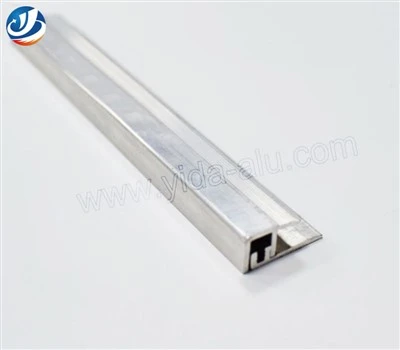
As a prominent supplier of CNC aluminium profiles, I am elated to delve into the fascinating manufacturing process that brings these high - precision products to life. This overview aims to provide a comprehensive understanding of the steps involved, offering insight into the craftsmanship and technology that goes into creating our top - notch products.
1. Raw Material Selection
The journey of a CNC aluminium profile begins with the careful selection of raw materials. Aluminium alloys are favored for their excellent combination of properties, including high strength - to - weight ratio, corrosion resistance, and good machinability. The choice of alloy depends on the specific requirements of the final product. For instance, 6061 and 6063 alloys are commonly used in the industry. 6061 offers a good balance of strength and formability, making it suitable for structural applications. On the other hand, 6063 provides better surface finish, which is ideal for applications where aesthetics matter, such as CNC Display Frame Aluminum Profile.
We source our raw aluminium from trusted suppliers. These suppliers adhere to strict quality control standards, ensuring the chemical composition and mechanical properties of the aluminium meet our specifications. This initial step is crucial as the quality of the raw material directly impacts the performance and durability of the final CNC aluminium profile.
2. Extrusion Process
Extrusion is a fundamental step in the manufacturing of aluminium profiles. It involves forcing the heated aluminium billet through a die with a specific cross - sectional shape. First, the aluminium billets are heated to a temperature between 400 - 500°C in a furnace. The precise temperature control is crucial to achieve the optimal plasticity of the aluminium, allowing it to be easily shaped.
Once the desired temperature is reached, the heated billet is transferred to the extrusion press. The press applies a high - pressure force, pushing the aluminium through the die. The die is a carefully designed tool, usually made of high - strength tool steel, which gives the aluminium profile its specific shape. After passing through the die, the extruded profile emerges in a continuous length.
During the extrusion process, factors such as extrusion speed, pressure, and temperature must be carefully monitored and controlled. Any deviation from the optimal parameters can lead to surface defects, dimensional inaccuracies, or other quality issues. Our state - of - the - art extrusion facilities are equipped with advanced monitoring systems to ensure these parameters are maintained within the required range.
3. Quenching
Immediately after extrusion, the aluminium profiles undergo a quenching process. Quenching is a rapid cooling process that helps to lock in the desired properties of the aluminium alloy. The extruded profiles are passed through a cooling system, which can use either air or water as the cooling medium. The choice of cooling medium depends on the alloy type and the specific requirements of the profile.
For some alloys, air quenching is sufficient to achieve the desired mechanical properties. However, for alloys that require higher strength, water quenching may be used. Water quenching provides a more rapid cooling rate, which results in a finer grain structure and improved strength. But it also requires careful control to prevent warping or cracking of the profiles. Our experienced technicians use advanced quenching techniques to ensure that the profiles are cooled uniformly, maintaining their dimensional stability and mechanical integrity.
4. Aging
Aging is a heat - treatment process that further enhances the strength and hardness of the aluminium profiles. After quenching, the profiles are placed in an aging oven and heated to a specific temperature for a set period of time. This process allows the alloying elements in the aluminium to precipitate out, forming fine particles that strengthen the material.
There are two types of aging processes: natural aging and artificial aging. Natural aging occurs at room temperature over a period of several days or weeks. However, for most industrial applications, artificial aging is preferred as it allows for more precise control of the aging process. By carefully controlling the temperature and time of artificial aging, we can achieve the desired mechanical properties of the aluminium profiles, such as yield strength, tensile strength, and hardness.
5. CNC Machining
Once the aluminium profiles have undergone extrusion, quenching, and aging, they are ready for CNC (Computer Numerical Control) machining. CNC machining is a highly precise manufacturing process that uses computer - controlled machines to remove material from the profile and create the final shape.
Our CNC machines are programmed with detailed blueprints, which specify the dimensions, tolerances, and surface finish requirements of the final product. Using tools such as end mills, drills, and lathes, the CNC machines can perform a variety of operations, including cutting, drilling, milling, and tapping. This allows us to create complex shapes and features that are not possible with conventional machining methods.
CNC machining offers several advantages, such as high precision, repeatability, and efficiency. It enables us to produce aluminium profiles with tight tolerances, ensuring that they fit perfectly into the final assembly. Whether it's for Diy Cnc Router Aluminium Profile or other custom - made products, our CNC machining capabilities can meet the most demanding requirements.
6. Surface Treatment
Surface treatment is an important step that enhances the appearance, durability, and corrosion resistance of the CNC aluminium profiles. There are several methods of surface treatment available, including anodizing, powder coating, and painting.
Anodizing is a popular surface treatment method for aluminium. It involves creating an oxide layer on the surface of the aluminium through an electrochemical process. The anodized layer is hard, wear - resistant, and provides excellent corrosion protection. It also allows for the addition of colors to the aluminium profiles, enhancing their aesthetic appeal.
Powder coating is another common surface treatment option. In powder coating, a dry powder is electrostatically applied to the surface of the aluminium profile and then cured in an oven. The powder coating provides a smooth, durable, and uniform finish, and it is available in a wide range of colors.
Painting can also be used to enhance the appearance of the aluminium profiles. However, compared to anodizing and powder coating, painting may not provide the same level of durability and corrosion resistance.
7. Quality Control
Throughout the manufacturing process, strict quality control measures are implemented to ensure that the CNC aluminium profiles meet the highest standards. We use a variety of inspection methods, including dimensional inspection, visual inspection, and mechanical testing.
Dimensional inspection is performed using precision measuring tools such as calipers, micrometers, and coordinate measuring machines (CMMs). These tools allow us to verify that the profiles meet the specified dimensions and tolerances. Visual inspection is carried out to detect any surface defects, such as scratches, dents, or discoloration.
Mechanical testing, such as tensile testing, hardness testing, and impact testing, is used to evaluate the mechanical properties of the aluminium profiles. These tests ensure that the profiles have the required strength, hardness, and toughness for their intended applications.
Any profiles that do not meet the quality standards are immediately rejected and sent for rework or recycling. This commitment to quality control ensures that our customers receive only the best - quality CNC aluminium profiles.
8. Finishing and Packaging
After passing the quality control checks, the aluminium profiles are finished and packaged. The finishing process may involve deburring, chamfering, or polishing to remove any sharp edges or improve the surface finish.


The profiles are then carefully packaged to prevent damage during transportation. We use appropriate packaging materials, such as plastic wraps, cardboard boxes, or wooden crates, depending on the size and quantity of the profiles.
Conclusion
In conclusion, the manufacturing process of CNC aluminium profiles is a complex and highly - controlled operation that involves multiple steps, from raw material selection to finishing and packaging. Each step plays a crucial role in ensuring the quality, performance, and aesthetics of the final product.
As a leading supplier of CNC aluminium profiles, we are dedicated to providing our customers with high - quality products that meet their specific needs. Whether you require Aluminum Profile Automation Processing, Aluminium U Clamp, or Cnc Machined Aluminium Parts, our advanced manufacturing facilities and experienced team can deliver solutions that exceed your expectations.
If you are interested in our CNC aluminium profiles or have any specific requirements, we invite you to contact us for a procurement discussion. We look forward to the opportunity to serve you and build a long - term partnership.
References
- ASM Handbook, Volume 14A: Metalworking - Bulk Forming, ASM International
- Aluminum Association. Aluminum Design Manual.