

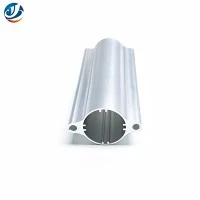


Aluminum Extrusion Profiles

What is Aluminum Extrusion Profiles?
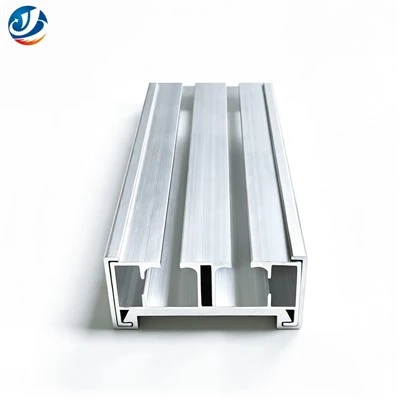
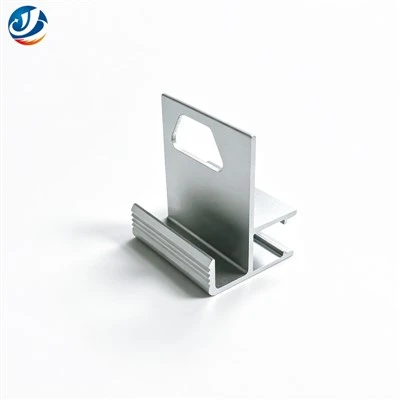
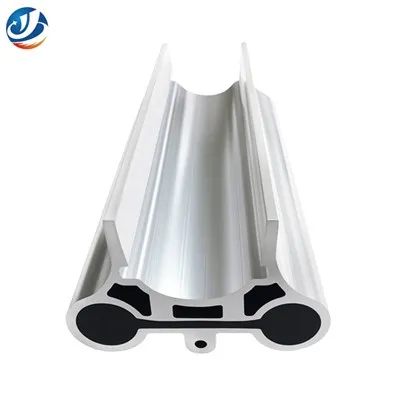
Aluminum extrusion profiles are aluminum components formed by forcing heated aluminum rods through specially designed molds to create various shapes and cross-sections. This versatile material is prized for its lightweight, corrosion resistance, and high strength-to-weight ratio. Aluminum extrusion profiles come in a wide range of shapes and sizes to suit the specific needs of each industry.
Advantages of Aluminum Extrusion Profiles
Aluminum material is light and durable
Compared with other metals, aluminum extrusion profiles are lighter in weight and have strong corrosion resistance. Very suitable as building components, decoration materials and materials in industrial fields.
Good thermal conductivity
Aluminum is a good thermal conductive material and helps dissipate heat. Aluminum extrusion profiles can therefore be used to make radiators and electronic device housings. It is very popular in applications in the cooling field.
Recyclability
Aluminum is a recyclable metal, and its recycling process has a small impact on the environment. This is in line with the modern concept of sustainable development and makes aluminum extrusion profiles an environmentally friendly choice.
Diverse appearance
The surface of aluminum extrusion profiles can undergo various treatments, such as anodizing, powder coating, etc., sandblasting and wood grain transfer, etc. Various appearances meet people's pursuit of beauty today.




Why Choose Us
Our factory
Yida aluminum has 3 advanced extrusion lines, capacity namely 2000 tons, 800 tons and 700 tons. The factory equipped with 25 tons of punching production lines, 5 cnc engraving machines, 50 modern oxidation tanks.
Our product
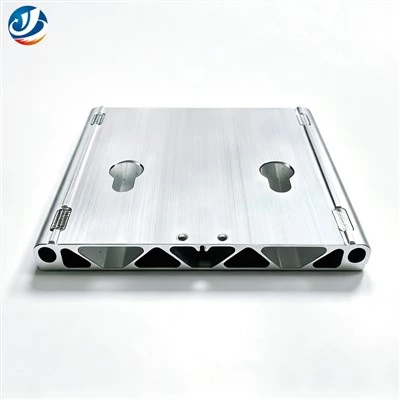
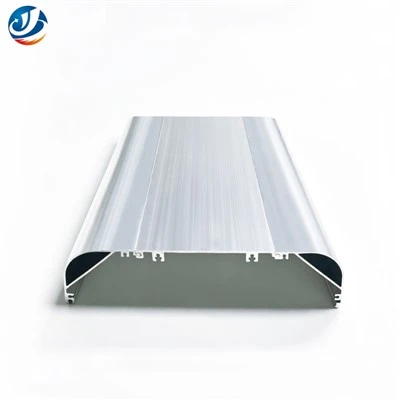
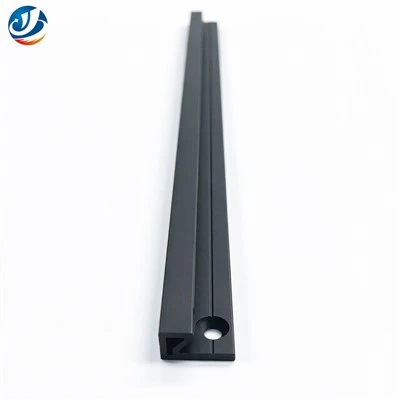
Aluminum extruded profiles, aluminum tubes, frame-like structural aluminum profiles, aluminum high-precision cnc machining profiles and aluminium trim profiles. The profiles produced by our company are widely used in all ranges such as industry, construction and home appliances.
Production market
The company has set up a marketing branch in hongkong, and established sales networks in germany, spain, russia and other countries and regions, and its export volume ranks among the top among many aluminum manufacturing companies.
Our certifications
Our factory is an aluminum industry base integrating the most advanced production and processing equipment and functions. And we certificated of the iso9001:2015 factory in april 2019.
Types of Aluminum Extrusion Profiles
Hollow Beam Profile
This is a variation of the aluminum square profile with a hollow interior that makes it light and strong. It is the most suitable type of aluminum profile that you can use in fabricating door and windows.
Triangular Aluminum Extrusion Profile
This type of aluminum extrusion profile assumes the triangular shape with a hollow or semi-solid interior. You can also get a triangular aluminum extrusion profile with a sold interior that will increase strength and weight ratio.
Single Radius Aluminum Extrusion Profile
This type of aluminum extrusion profile has a curved back and two straight surfaces thus making a quarter circle. It can also be hollow, solid, or semi-solid depending on the application specifications.
L-Shaped Aluminum Extrusion Profile
Just from the name you can note that the L-shaped aluminum extrusion profile assumes the L shape. It is the simplest form of aluminum extrusion profile that you can use at various angles for reinforcement purposes.
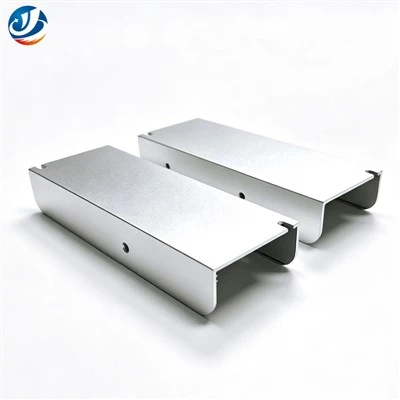
U-Channel Extrusion Profiles
U-shaped channels provide a reliable option for a variety of applications, including protective covers, rims, railing, and brackets, among many others.
I-Beam Extrusion Profiles
I-shaped extrusions are standard aluminum extrusion profiles for use in ceiling and floor joists. They’re available in a variety of shape and size configurations, including traditional I-beams and uneven or tapered iterations.
Aerospace Industry
The aerospace industry requires lightweight materials that can withstand extreme temperatures and high stress. The most commonly used aluminum profiles in the aerospace industry are extrusions. Extrusions are created by forcing aluminum through a die to create a specific shape. This process allows for the creation of complex shapes that are lightweight and strong, making them ideal for use in the aerospace industry.
Automobile Industry
The automobile industry is another major user of aluminum extrusion profiles. Aluminum extrusion profiles are used in the automobile industry for their light weight and high strength-to-weight ratio. This helps to reduce the overall weight of the vehicle, improving fuel efficiency and reducing emissions.
Renewable Energy Industry
The renewable energy industry is a growing user of aluminum extrusion profiles. Aluminum extrusion profiles are used in the renewable energy industry for their light weight and resistance to corrosion.
Architectural
The architectural industry is a major user of aluminum extrusion profiles. Aluminum extrusion profiles are used in the architectural industry for their light weight, strength, and resistance to corrosion.


Transmission and Distribution
The transmission and distribution industry is another major user of aluminum extrusion profiles. Aluminum extrusion profiles are used in this industry for their light weight and high strength-to-weight ratio. It is lightweight, corrosion-resistant, and has a high strength-to-weight ratio. Aluminum extrusion profiles are typically used for overhead transmission lines.
Electrical
The electrical industry is another major user of aluminum extrusion profiles. Aluminum extrusion profiles are used in this industry for their electrical conductivity, light weight, and high strength-to-weight ratio.
Electronics
Electronics enclosures demand precision and durability, which aluminium extrusion profiles deliver. These profiles provide a secure housing for sensitive electronic components, protecting them from environmental factors.
Medical Equipment
The medical equipment industry is a growing user of aluminum extrusion profiles. Aluminum extrusion profiles are used in this industry for their light weight, strength, and resistance to corrosion. Aluminum extrusion profiles are used to create the frames for hospital beds.
Process of Aluminium Extrusion Profiles
Billet Preparation: The process begins with the preparation of aluminum billets, which are cylindrical logs of aluminum alloy. These billets are typically heated to a specific temperature to make them more malleable for extrusion.
Container Heating: The extrusion press container, also known as the "container" or "billet holder," is preheated. This preheating helps in reducing the force required for extrusion and ensures a smoother process.
Die Heating: The extrusion die, a specially designed tool that shapes the aluminum, is also heated. The die is often made of tool steel and must withstand high temperatures and pressures during the extrusion process.
Billet Loading: The heated aluminum billet is loaded into the container of the extrusion press. The press is designed to exert tremendous pressure on the billet to force it through the extrusion die.
Extrusion Process: The press applies pressure to the billet, forcing it through the shaped opening of the extrusion die. As the aluminum passes through the die, it takes on the desired profile, forming a continuous length of the extruded shape.
Cooling: The extruded aluminum profile is then rapidly cooled using air or water quenching methods. This step is crucial for setting the shape and ensuring the structural integrity of the extruded profile.
Stretching and Straightening: Some profiles may undergo a stretching process to align the aluminum molecules and reduce any internal stresses. Straightening is also performed to ensure the extruded profiles meet the specified tolerances.
Cutting to Length: The continuous length of extruded aluminum is cut into individual profiles of the desired lengths. Precision cutting ensures uniformity and facilitates further processing.
Surface Treatment and Finishing (Optional): Depending on the application and design specifications, extruded profiles may undergo surface treatments such as anodizing, painting, or powder coating to enhance their appearance, corrosion resistance, and durability.
Quality Control: The final step involves rigorous quality control measures. This may include inspections for dimensional accuracy, surface finish, and overall compliance with specifications to ensure the extruded profiles meet the required standards.
How to Distinguish the Quality of Aluminum Extrusion Profiles?
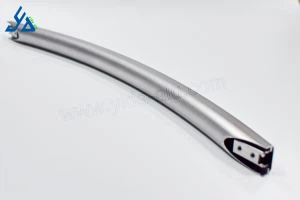


Check the Weight
The weight of an aluminum extrusion profile can serve as a strong indicator of its quality. High-quality aluminum extrusion profiles tend to have a heavier weight due to the higher density of the material used. Poor-quality profiles, on the other hand, may use thinner material or incorporate fillers, which reduce their weight. You can calculate the weight per meter to gauge the quality; the weight should align with the theoretical weight based on the profile’s dimensions and the known density of aluminum.
Look for Smooth Edges
Smooth edges are another hallmark of high-quality aluminum extrusion profiles. The finishing process of these profiles should result in edges that are smooth to the touch and free of sharp or irregular protrusions. Precise machining and careful handling of quality profiles prevent damages and inconsistencies on the surface. In contrast, rough or jagged edges could signal subpar manufacturing processes or mishandling during transportation or storage.
Inspect for Dents and Scratches
Dents and scratches are telltale signs of poor handling or low-quality materials. High-quality aluminum extrusion profiles should be free from unnecessary dents, scratches, or other surface imperfections. Any such flaws can weaken the structure of the profile and compromise its durability, potentially causing problems in the final application. Therefore, inspecting each piece for any such imperfections is crucial.
Ensure Proper Sealing
Sealing is an essential factor to consider when determining the quality of aluminum extrusion profiles. A well-sealed profile demonstrates superior levels of corrosion resistance and durability. You should seal high-quality aluminum profiles in a hot water sealing process, which results in a uniform, protective oxide layer on the surface. This coating is crucial in preventing the aluminum from reacting with atmospheric oxygen, thus avoiding corrosion.
Test for Corrosion Resistance
Corrosion resistance is a fundamental attribute of high-quality aluminum extrusion profiles. Aluminum inherently has good corrosion resistance due to a thin, protective oxide layer forming when the metal comes into contact with air. However, you can further enhance this resistance by anodizing, painting, or powder coating. You can subject the aluminum profile to a salt spray test (SST), a common method for evaluating the corrosion resistance of materials, to test for corrosion resistance.
Material Composition
The first step in choosing an aluminium extrusion profile is understanding its material composition. Aluminium alloys vary in strength, durability, and corrosion resistance. The most common alloys include 6061 and 6063. While the 6061 offers high strength and machinability, the 6063 is renowned for its excellent corrosion resistance, making it ideal for outdoor applications.
Profile Shape and Size
The next consideration is the shape and size of the profile. Different projects require specific shapes, such as T-slotted, square, or rectangular profiles. Additionally, the size of the profile must align with the intended use. Assess your project requirements carefully, taking into account dimensions, weight-bearing capacity, and structural demands.
Surface Finish
The surface finish of an aluminium extrusion profile impacts both aesthetics and functionality. Common finishes include anodized, powder-coated, or mill finish. Anodizing provides enhanced corrosion resistance and colour options, while powder coating offers a durable, decorative finish. The choice depends on the environmental conditions and visual preferences of your project.
Tolerance and Precision
Precision is crucial in many applications, especially those involving assembly or mounting. Check the tolerance levels of the aluminium extrusion profile to ensure it meets the precision requirements of your project. Tightly controlled tolerances are essential for applications where components need to fit together seamlessly.
Cost Considerations
While quality is paramount, it's essential to consider your budget constraints. Aluminium extrusion profiles are available in various price ranges, and the cost may vary based on factors such as material, finish, and complexity of the profile. Evaluate your budget and find a balance between quality and affordability.
Environmental Factors
Consider the environmental conditions the aluminium extrusion profile will be exposed to. If your project involves outdoor applications, exposure to harsh weather elements should be taken into account. In such cases, profiles with superior corrosion resistance, such as those with an anodized finish, are preferable.
Customization Options
Projects often demand unique specifications that may not be met by standard profiles. Look for a supplier that offers customization options, allowing you to tailor the profile to your specific requirements. Customization can involve alterations in dimensions, finishes, or even the creation of entirely unique profiles.
Choice of cleaning agent
The surface treatment and coating of aluminum extrusion profiles have a great influence on its corrosion and wear resistance. Cleaning agents containing acid-base components should be avoided when choosing cleaning agents, as they may damage the treatment and coating of the surface of aluminum extrusion profiles. It is recommended to use a soft cloth and a neutral detergent such as water and soapy water.
Storage and placement
Aluminum extrusion profiles should be stored and placed to avoid moisture, dryness, direct sunlight and polluting the environment. At the same time, the storage and placement site should be flat and unobstructed to avoid damage such as deformation and bending of aluminum extrusion profiles during storage. It is recommended to place the aluminum extrusion profile in a dry, ventilated, free of direct sunlight and use a mat or wooden frame to isolate the aluminum extrusion profile from direct contact with the ground or storage area to avoid friction or corrosion.
Maintenance of fasteners
Aluminum extrusion profiles need to be regularly checked for looseness during use. If the fasteners are found to be loose or damaged, they should be treated and repaired in time to avoid problems such as deformation, bending or corrosion of aluminum extrusion profiles.
Surface protection
Aluminum extrusion profiles need surface protection during use to enhance their corrosion resistance and wear resistance. Protective coatings such as varnishes, acrylic coatings, etc. can be used to protect the surface of aluminum profiles.
Regular inspection
Aluminum extrusion profiles need to be regularly checked during use, including whether the surface is damaged, deformed, whether the fasteners are loose, etc. If a problem is found, it should be dealt with and repaired in time to avoid the problem from expanding.
Our Factory

YIDA Aluminum Technology Co., Ltd. was formerly a distributor of aluminum products. In view of the market demand and R&D of new products, the company established a small factory with only 10 people in 2005.With the continuous innovation of R&D technology and expansion of production, it has become a high-tech enterprise integrating research, design, production, sales of aluminum construction profiles and industrial aluminum profiles. The company covers an area of 10,000 square meters and has extrusion workshop, deep processing workshop, oxidation workshop and packaging workshop. It is located in ZHAOQING high-tech area.


Certifications

Video