

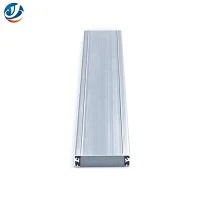
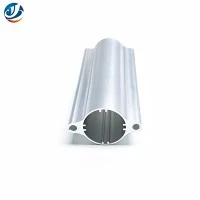


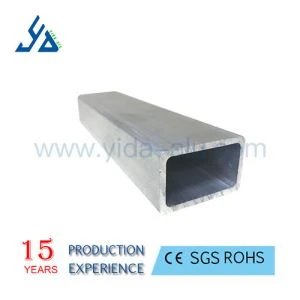
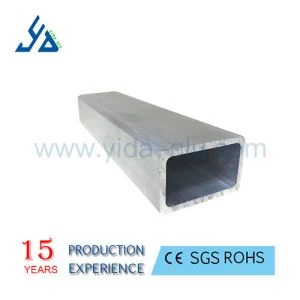
Aluminum Square Tube
YIDA Aluminum Technology Co., Ltd. was formerly a distributor of aluminum products. In view of the market demand and R&D of new products, the company established a small factory with only 10 people in 2005.With the continuous innovation of R&D technology and expansion of production, it has become a high-tech enterprise integrating research, design, production, sales of aluminum construction profiles and industrial aluminum profiles. The company covers an area of 10,000 square meters and has extrusion workshop, deep processing workshop, oxidation workshop and packaging workshop. It is located in ZHAOQING high-tech area.
Why Choose Us?
One-stop solution
With the continuous innovation of r&d technology and expansion of production, it has become a high-tech enterprise integrating research, design, production, sales of aluminum construction profiles and industrial aluminum profiles.
Global shipping
The company has a marketing network all over the country and cooperates with partners to develop the market.
Advanced equipment
We has 3 advanced extrusion lines, he factory equipped with 25 tons of punching production lines, 5 CNC engraving machines, 50 modern oxidation tanks.
Quality control
Our factory is an aluminum industry base integrating the most advanced production and processing equipment and functions. And we certificated of the iso9001:2015 factory in april 2019.
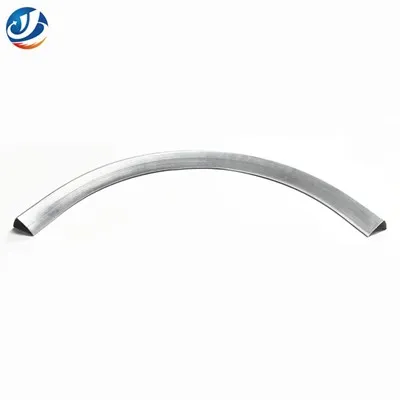

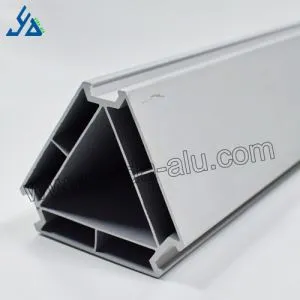


Aluminum square tubing stands out as a versatile and reliable material in construction and design. Crafted from high-quality aluminum, this tubing combines strength with a lightweight structure, making it an ideal choice for a wide range of applications. Its square shape provides excellent stability and ease of fabrication, allowing seamless integration into various projects such as frames, support structures, and architectural designs. The inherent corrosion resistance of aluminum ensures durability, making it suitable for indoor and outdoor use.
Benefits of Aluminum Square Tube
Corrosion resistance. Many choose to use aluminum square tubing because of its ability to resist corrosion. What makes aluminum so resistant to corrosion is that it naturally produces a protective coating on its surface. This means that even in particularly harsh environments, aluminum square tubing will not rust or lose structural integrity over time.
Lightweight. Another big advantage to using aluminum square tubing over tubing made from other materials is that it is lightweight. Only 1/3 the weight of steel, aluminum is easy and more cost-effective to use and transport. Even with its lightweight, aluminum is an extremely strong metal.
Impermeability. Despite its lightweight and ability to be produced in smaller gauges, aluminum square tubing is totally impermeable. Additionally, aluminum is odorless and without taste, making it an ideal choice for packaging or manufacturing food and beverage items.
Versatility. Aluminum is one of the most versatile metals, able to be extruded to a wide variety of shapes and sizes to suit specific needs. Through the extrusion process, complex aluminum square tubing shapes are created to fit even the most unique applications. This ability to customize makes it an attractive material choice for many projects.
Types of Aluminum Square Tube
6061 aluminum square tubes
6061 and 6063 are very popular choices for extrusion. Alloy 6061 is often used for structural applications like screw machine parts, cover plates, trench covers, truck runways, running boards, steps, and walkways.
6063 aluminum square tubes
Alloy 6063 is the most popular choice for extrusion. It is mainly used for structural applications such as railing, window frames, roofs, shop fittings, marine piping, recreational equipment, lawn furniture, luggage racks, irrigation piping, and storage tanks.

5083 aluminum square tubes
Examples of some typical applications of 5083 alloys include 5182 in a beverage can lid, 5052 in electronics, and 5083 in marine applications.
5086 aluminum square tubes
Because of its excellent corrosion resistance, alloy 5086 is ideal for marine applications.
Structural support
Aluminum square pipes are often used in the construction of building frames. Their high strength-to-weight ratio makes them ideal for creating lightweight yet durable structures. This is especially beneficial for large buildings where weight is a major concern. For example, the burj khalifa, the world’s tallest building, uses aluminum square pipes extensively in its construction.
Facades and cladding
Aluminum square pipes can also be used to create beautiful and modern facades and cladding for buildings. They can be anodized or painted in a variety of colors to create unique and eye-catching designs. Additionally, aluminum square pipes are highly weather-resistant, making them ideal for use in exterior applications.
Skylights and roofs
Aluminum square pipes can be used to create lightweight and durable skylights and roofs. This allows for natural light to enter the building while also providing protection from the elements. Aluminum square pipes are also recyclable, making them a more environmentally friendly choice than other materials.
Interior design
Aluminum square pipes can also be used in a variety of interior design applications. They can be used to create furniture, partitions, and other decorative elements. Aluminum square pipes can be powder-coated to create a variety of finishes, making them ideal for a variety of design styles.
Process of Aluminum Square Tube
The production process of aluminum square tubes typically involves several steps, including extrusion, cutting, surface treatment, and final inspection. Here's an overview of the typical production process:
Extrusion: The production process begins with the extrusion of aluminum alloy billets. The billets are heated to a specific temperature and then forced through a shaped die under high pressure. The die imparts the desired cross-sectional shape,such as a square, onto the aluminum, forming a continuous length of aluminum profile.
Cooling: After extrusion, the aluminum profile is cooled using air or water to solidify the metal and stabilize its shape. This cooling process is crucial for preventing distortion or warping of the profile.
Cutting: Once the extruded aluminum profile has cooled and solidified, it is cut into specific lengths according to customer requirements. Precision cutting equipment, such as saws or CNC machines, is used to achieve accurate and consistent cuts.
Surface treatment: The surface of the aluminum square tubes may undergo various surface treatments to improve appearance, corrosion resistance, and durability. Common surface treatments include:
●Anodizing: An electrochemical process that forms a protective oxide layer on the surface of the aluminum, providing enhanced corrosion resistance and a decorative finish.
●Powder coating: The application of a dry powder coating to the surface of the aluminum followed by curing in an oven. Powder coating provides a durable and decorative finish in a wide range of colors and textures.
●Mill finish: Some aluminum square tubes may be left with a natural mill finish, which retains the appearance of the extruded aluminum without any additional surface treatment.
Final inspection: Once the surface treatment process is complete, the aluminum square tubes undergo a final inspection to ensure they meet quality standards and customer specifications. This inspection may involve visual inspection, dimensional measurement, and mechanical testing to check for defects, surface finish, dimensions, and mechanical properties.
Packaging and shipping: After passing inspection, the aluminum square tubes are packaged according to customer requirements and prepared for shipping or distribution.
Surface protection
The outer surface of extruded aluminum tubes often serves as an aesthetic or functional element. To preserve its pristine appearance and integrity, regular cleaning is essential. Utilize mild detergents and soft cloths to remove dirt or debris. Abrasive cleaners should be avoided, as they can mar the surface and compromise its protective oxide layer.
Inspection and maintenance
Periodic inspections are indispensable for early detection of any potential issues. Conduct thorough visual examinations of the tubes, paying particular attention to areas where corrosion or deformation may be likely to occur. Regular maintenance, such as tightening loose connections or applying anti-seize compounds to prevent galling, can proactively address potential problems and prolong the tubes’ lifespan.

6061 T6 Aluminum Square Tube vs. 6063 T5 Aluminum Square Tube
There are numerous similarities and several key differences between 6061 aluminum square tube and 6063 aluminum square tube. Both alloys provide excellent corrosion resistance, strength-to-weight ratios and can be worked in the same types of ways. However, 6061 aluminum rectangular tubing is precipitation-hardened, which is used to increase the yield strength of the malleable materials. The major difference between the two alloys is the minority elements of which they are composed. Both 6061 and 6063 aluminum are majorly composed of magnesium and silicon, but 6061 aluminum possesses a tensile strength of at least 290 MPa or 42,000 psi, where 6063 has a tensile strength of at least 140 MPa or 20,000 psi.
How to Cut and Weld Aluminum Square Tubes
Cutting and welding aluminum square tubes can be challenging, but with the right tools and techniques, it can be done successfully. Here are some tips for cutting and welding aluminum square tubes:
Choose the right cutting tool: Aluminum can be cut using a variety of cutting tools, including a hacksaw, circular saw, or jigsaw. Choose the tool that will provide the cleanest and most precise cut for your specific project.
Use the correct blade: Make sure to use a blade that is designed for cutting aluminum. A blade with carbide teeth or a high-speed steel blade will work best.
Lubricate the blade: To prevent the blade from overheating and to ensure a clean cut, apply a lubricant.
Mark the cut line: Use a ruler or measuring tape to mark the cut line on the aluminum square tube. This will ensure a precise cut and minimize waste.
Secure the tube: Use a clamp or vise to secure the aluminum square tube in place before cutting. This will prevent the tube from moving or vibrating during the cutting process.
Choose the right welding method: There are several methods for welding aluminum square tubes, including MIG, TIG, and Stick welding. Choose the method that is best suited for your specific project.
Use the correct filler rod: Aluminum filler rods are available in a variety of alloys and sizes. Choose the correct filler rod that matches the alloy type of your aluminum square tube.
Prepare the surfaces: Before welding, make sure to clean and prepare the surfaces that will be joined. This will ensure a strong and durable weld.
Use a proper welding technique: Welding aluminum square tubes requires a different technique than welding other metals. The key is to use a low heat setting and move the welding torch quickly to prevent the aluminum from melting.
Practice first: If you’re new to welding aluminum square tubes, it’s important to practice on scrap pieces before starting your project. This will help you get a feel for the welding process and ensure that your welds are strong and durable.
Square Tubing vs Round Tubing: Differences & Applications
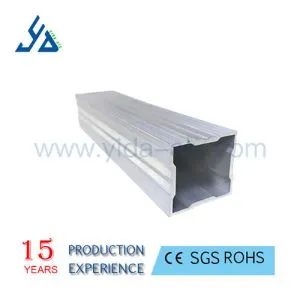

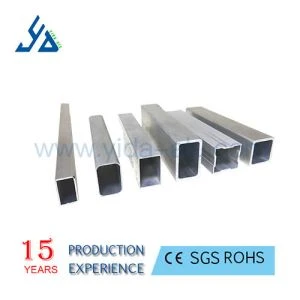
Square tubing vs. Round tubing
With the right extrusion die, it’s possible to shape aluminum into nearly any profile. Still, square and round tubing remain two of the most common shapes for their broad utilities.
To that end, square and round tubing can be produced by appropriately bending a flat piece of aluminum into shape and welding it. Additionally, manufacturers can use a tool called a “mandrel” to maintain the hollow center as the aluminum is extruded around it.
Round tubing will generally offer greater structural benefits when comparing them without considering your use case. However, square tubing is often the ideal choice when:
●Cutting
●Affixing hardware to the tube
●Fitting the piece(s) into tight spaces
●Welding
●Decorative purposes
When purchasing aluminum tubing, remember that the sizes are measurements of the outside diameter (OD) and wall thickness. Pipes, on the other hand, are measured by their inside diameter (ID).
Strength and durability
Round tubing offers greater strength and durability because of how the cylindrical shape distributes both characteristics.
●Square tube strength
The 90° right angles of square tubing affect its strength and ability to withstand stress because they unevenly distribute them throughout the material, with torsional twisting being a greater concern. When under pressure, square tubing will lose some of its strength and durability.
●Round tube strength
With the cylindrical shape, all pressure is distributed evenly through round aluminum tubing. This makes it incredibly strong and durable—more so than square tubing when comparing the same weight, especially since round tubing is roughly 20% lighter when comparing equivalent lengths.
Cutting and shaping
Square tubing is far easier to cut, while round tubing generally responds better to bending and other shaping.
However, their distinct malleabilities and ease of shaping partially depend on factors such as wall thickness and overall sizing.
For example, the greater the OD and the thinner the wall, the more likely tubing—round or square—is to distort under compressive and tensile forces during shaping.
Being hollow, tubing always risks ripping, rippling or buckling if too much force is applied during shaping. This phenomenon is exacerbated for square tubing.
●Square tube malleability
Because of the flat surfaces, it’s significantly easier to cut square tubing with whatever tool necessary—from a powered cutter to a handheld hacksaw. The flat surfaces also generally make it easier to position the tubing in a vice—or tools adjacent—to hold it in place while you work.
But the flat surfaces and unevenly distributed pressure don’t help with shaping, as the material—particularly the two walls parallel to the bend—will be subjected to higher amounts of tension and compression.
●Round tube malleability
With evenly distributed pressure and no corners, round tubing is superior when it comes to bending and shaping. The aluminum will bend and flow more consistently and smoothly throughout the shaping process, minimizing distortion and preserving strength afterward.
Weldability
Again, the flat surfaces of square tubing provide a workability advantage, making welding easier along four straight lines. With round tubing, it’s more challenging to follow the circular path, and the continuous weld is inherently longer for similar sizes. Precision begets more complexity with round tubing, especially for difficult-to-reach or more complex welds.
Applications/use cases
Square tubing is often used for various projects because the use case demands outweigh the more robust structural properties that round tubing offers. Square tubing is also generally used for structural and aesthetic purposes.
While round tubing may have the same application, it’s sometimes used for carrying fluids and gasses in smaller quantities than would necessitate pipes.
Our Factory

YIDA Aluminum has 3 advanced extrusion lines, capacity namely 2000 tons, 800 tons and 700 tons. The factory equipped with 25 tons of punching production lines, 5 CNC engraving machines, 50 modern oxidation tanks. Besides, we have series oftechnology in mold development, extrusion, anodizing, single and double salt coloring, industrial profiles and aluminum deep processing (drilling, punching, polishing, wire drawing, fine carving).Around 200 employees are hired in production and technical personnel field.


Certificate
