

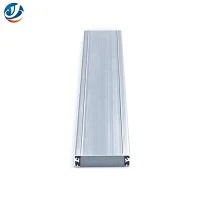
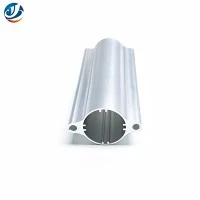


Aluminum Handle Profile
YIDA Aluminum Technology Co., Ltd. was formerly a distributor of aluminum products. In view of the market demand and R&D of new products, the company established a small factory with only 10 people in 2005.With the continuous innovation of R&D technology and expansion of production, it has become a high-tech enterprise integrating research, design, production, sales of aluminum construction profiles and industrial aluminum profiles. The company covers an area of 10,000 square meters and has extrusion workshop, deep processing workshop, oxidation workshop and packaging workshop. It is located in ZHAOQING high-tech area.
Why Choose Us?
One-stop solution
With the continuous innovation of r&d technology and expansion of production, it has become a high-tech enterprise integrating research, design, production, sales of aluminum construction profiles and industrial aluminum profiles.
Global shipping
The company has a marketing network all over the country and cooperates with partners to develop the market.
Advanced equipment
We has 3 advanced extrusion lines, he factory equipped with 25 tons of punching production lines, 5 CNC engraving machines, 50 modern oxidation tanks.
Quality control
Our factory is an aluminum industry base integrating the most advanced production and processing equipment and functions. And we certificated of the iso9001:2015 factory in april 2019.
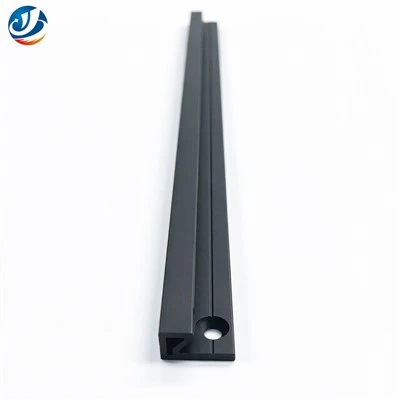


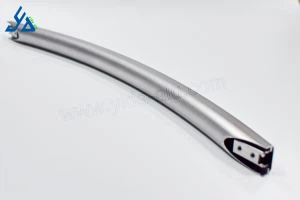


The combination of aluminum profile handles with flat panel doors is not limited to just residential projects, for instance in a contemporary kitchen or a modern vanity cabinet for a bathroom. Over the course of time the use of continuous pulls has also become very common for modern commercial projects such as clothing stores, fashion shops, dental clinics, opticians and many offices looking for a clean and elegant modern style.
Many designers of modern closets and wardrobes have considered the installation of aluminum integrated handles vertically as a practical hardware solution to open slab doors comfortably while keeping a clean and elegant modern look on their closets.
The bottom line is that aluminum profile pulls are a perfect match for slab doors regardless if they are installed in a modern residential project or a commercial application.
Benefits of Aluminum Handle Profile
Built to last: Aluminum might be lightweight, but don't let that fool you - it's one tough cookie. It can withstand corrosion and take a beating, making it perfect for high-traffic areas and environments.
Design flexibility: With extrusion, the sky's the limit for design. You can create anything from sleek, straightforward bar pulls to intricate, eye-catching handles. Aluminum can be shaped into just about any form you can dream up.
Finish options galore: Want a specific color or texture? No problem. Anodizing and powder coating give you a spectrum of options to find the perfect match for your design vision.
Easy to maintain: Keeping aluminum looking sharp is a breeze. It's a cinch to clean, so your pulls and handles will keep their great look for years, even with minimal upkeep.
Types of Aluminum Handle Profile
Cabinet pull handles
Cabinet pull handles are aluminum door handles for cabinets. They are a popular choice for pulls, and they come in various sizes and designs. They can be found in simple and sleek styles, or they can be in more decorative options. These handles are usually mounted with screws that go through the back of the cabinet or drawer.
Cabinet knobs
These are aluminum drawer handles that provide a different kind of grip than pull handles. They are easy to install and use, and they come in different shapes and sizes. Some common designs are round, square, and mushroom-shaped. Cabinet knobs can add a decorative touch to a cabinet or drawer.
Door handles
These are specifically designed for doors. They are made with high-quality aluminum material, which is durable. These handles come in different styles, such as lever handles and pull handles. Lever handles are used for internal doors, while pull handles are used for external doors.
Aluminum drawer handles
These handles are specifically made for drawers. They are made with lightweight aluminum material. Aluminum drawer handles come in different designs, such as bar pulls and arch pulls. Bar pulls are straight handles, while arch pulls are curved handles.
Aluminum cup pull handles
These handles are recessed and shaped like a cup. They are easy to grip, and they are suitable for drawers and cabinets. Aluminum cup pull handles are common on old-fashioned dressers, and they add a vintage feel to a cabinet or drawer.
Aluminum d-shape handles
These handles are in the shape of the letter d. They are easy to grab and pull, and they are suitable for drawers and cabinets. Aluminum d-shape handles make a clean and modern look that can fit different types of drawers and cabinets.
Application of Aluminum Handle Profile


Furniture: Aluminum handles are used for wardrobe doors, drawers, cabinets, chests of drawers, and other storage units. They are also used in dressers, consoles, sideboards, and media units.
Windows and doors: Aluminum can be used as handles for sliding doors, patio doors, entrance doors, and french doors. They can also be used on casement windows, awning windows, and hopper windows.
Commercial spaces: Aluminum handles are often used in offices, hotels, restaurants, hospitals, schools, and other public buildings. They are suitable for file cabinets, storage units, desk drawers, and buffet counters.
Appliances: Aluminum handles are commonly used in kitchen appliances such as refrigerators, ovens, microwaves, dishwashers, and washing machines. They are also used in commercial kitchen equipment like meat counters, bakery display cases, and food storage containers.
Workshops and garages: Aluminum handles are used for toolboxes, storage cabinets, workbench drawers, and garage doors. They are also used in utility carts, rolling cabinets, and tool chests.
Recreational vehicles: Aluminum handles are used for rvs, trailers, and camper vans. They are used for storage compartments, sliding doors, windows, and interior cabinets.
Marine industry: Aluminum handles are used for boats, yachts, and ships. They are used for hatches, doors, windows, and storage compartments.
Hospitality industry: Aluminum handles are used in hotels, resorts, and restaurants for cabinets, drawers, and buffet units. They are also used in guest room furniture and dining area storage.
Interior design: Aluminum handles can be integrated into furniture designs for seamless aesthetics. They are used in modern and minimalist interior designs, where clean lines and simplicity are desired.
Outdoor furniture: Aluminum handles are used for outdoor storage units, cabinets, and furniture. They are weather-resistant and suitable for patios, balconies, and outdoor kitchens.
Healthcare facilities: Aluminum handles are used for medical cabinets, drawers, and storage units in hospitals, clinics, and healthcare facilities. They are easy to clean and sanitize.
Laboratories: Aluminum handles are used in laboratory cabinets, drawers, and workstations. They are durable and resistant to chemicals.
Process of Aluminum Handle Profile
Step 1: Aluminum alloy selection
Aluminum alloy selection is the vital first step in crafting precise extrusion profiles. Choosing the right alloy dictates the profile’s strength, corrosion resistance, and other characteristics. This decision forms the foundation for a successful extrusion process, ensuring the final product meets design requirements and performance expectations.
Step 2: Custom extrusion design and die preparation
Begin by designing the desired shape and dimensions of the aluminum extrusion profile using specialized software. Once the design is finalized, create a die, which is a tool that shapes the aluminum under pressure. The die should match the profile’s specifications and intricacies.
Step 3: Billet heating
Load an aluminum billet, a cylindrical piece of aluminum, into a furnace and heat it to the required temperature. Heating makes the aluminum malleable and ready for extrusion.
Step 4: Extrusion tooling process
The heated billet is pushed through the die using a hydraulic press. The pressure forces the aluminum to take on the shape of the die’s opening. As the aluminum passes through, it forms the desired profile.
Step 5: Cooling and cutting
After extrusion, the newly shaped aluminum profile is rapidly cooled using water or air to maintain its structural integrity. Once cooled, the continuous extrusion is cut into desired lengths using a saw or other cutting tools.
Step 6: Straightening and quality check
The extruded profiles may undergo a straightening process to correct any distortions caused during extrusion. Finally, conduct a quality check to ensure that the dimensions, surface finish, and overall quality meet the required standards.
Step 7: Packaging and distribution
Approved profiles are packaged securely to prevent damage during transportation. They are then distributed to manufacturers for use in various applications.
How to Maintain Aluminum Handle Profile
Regular cleaning is essential to prevent dirt and grime from accumulating on the aluminum surface. Use a mild detergent mixed with warm water and a soft cloth for daily cleaning. Avoid using harsh chemicals or abrasive cleaners, as they can damage the finish. After cleaning, rinse the surface thoroughly with clean water and dry it with a clean, soft cloth.
Aluminum is inherently corrosion-resistant, but exposure to moisture can lead to oxidation. To prevent corrosion, keep the aluminum surface dry and avoid prolonged exposure to moisture. Use a damp cloth to wipe away any spills or condensation immediately. If the surface does come into contact with acidic or corrosive substances, neutralize them with a baking soda solution and rinse thoroughly with water.
Aluminum is relatively soft, so it is important to handle it with care to prevent scratches and dents. Use a cutting board when preparing food on the aluminum surface and avoid placing heavy or sharp objects directly on it. When cleaning, use a soft cloth or sponge and avoid using abrasive materials.
Regular inspection is key to identifying potential problems early on. Check the aluminum profiles for any signs of corrosion, scratches, or dents. If any issues are detected, address them promptly to prevent further damage. Tighten any loose fittings or connections to ensure the profiles remain secure.
Our Factory

YIDA Aluminum has 3 advanced extrusion lines, capacity namely 2000 tons, 800 tons and 700 tons. The factory equipped with 25 tons of punching production lines, 5 CNC engraving machines, 50 modern oxidation tanks. Besides, we have series oftechnology in mold development, extrusion, anodizing, single and double salt coloring, industrial profiles and aluminum deep processing (drilling, punching, polishing, wire drawing, fine carving).Around 200 employees are hired in production and technical personnel field.


Certificate
