



T Slot Aluminum
YIDA Aluminum Technology Co., Ltd. was formerly a distributor of aluminum products. In view of the market demand and R&D of new products, the company established a small factory with only 10 people in 2005.With the continuous innovation of R&D technology and expansion of production, it has become a high-tech enterprise integrating research, design, production, sales of aluminum construction profiles and industrial aluminum profiles. The company covers an area of 10,000 square meters and has extrusion workshop, deep processing workshop, oxidation workshop and packaging workshop. It is located in ZHAOQING high-tech area.
Why Choose Us?
One-stop solution
With the continuous innovation of r&d technology and expansion of production, it has become a high-tech enterprise integrating research, design, production, sales of aluminum construction profiles and industrial aluminum profiles.
Global shipping
The company has a marketing network all over the country and cooperates with partners to develop the market.
Advanced equipment
We has 3 advanced extrusion lines, he factory equipped with 25 tons of punching production lines, 5 CNC engraving machines, 50 modern oxidation tanks.
Quality control
Our factory is an aluminum industry base integrating the most advanced production and processing equipment and functions. And we certificated of the iso9001:2015 factory in april 2019.


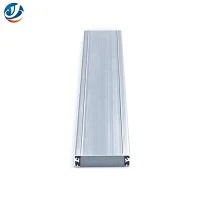
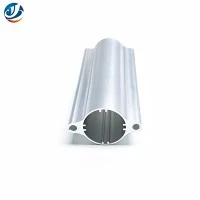
T-slot framing consists of extruded aluminum profiles with T-shaped slots that run along the length of the profiles. These slots allow T-nuts and other fasteners to slide into position and provide a customizable connection point for various components.
Benefits of T Slot Aluminum
Flexible design
The great thing about t slot extruded aluminum is that it’s modular so you can easily add to a profile, remove what’s no longer needed or even re-position workstation set-ups easily. That reduces the need to buy new set-ups when changes take place and saves investment dollars for other areas of the business. This flexibility is a leading reason so many manufacturers are choosing it as a build option over welded steel. The ability to quickly react to changing business needs is critical in today’s demanding, fast paced market.
Cost / labor savings
Since the frames can easily be added to or changed and components are reusable, cost savings can be realized. From material costs to time saved compared to building steel welded solutions, the savings in costs and efficiency provided to employees at these stations is great.
Strong, reliable structure
Extruded aluminum is a very strong material and in manufacturing industry applications is capable of handling high load applications. Think: Machine bases and frames, conveyors, cutting tables, pick and place units.
Fast, precise assembly
Precision is important and with the combination of t slots and extruded aluminum, a secure fit is attainable. Not to mention the fact that even employees can easily assemble structures onsite since there are no complicated pieces or configurations.
Lightweight, appealing
A machine that works well should also look good in the workplace. Aluminum is shiny, appealing to the eye and will look good while providing a strong, reliable solution for your guarding and other project needs.
Application of T Slot Aluminum
T-slot aluminum's industrial applications
T-slot aluminum is widely used in industrial machinery and equipment where robustness and safety are critical. Due to its sturdiness and low maintenance costs, it is a popular material in the construction of industrial workstations, guardings, automation systems, and conveyor systems. Fabricating specific workstations for different applications becomes more straightforward and cost-effective by eliminating the need for welding, drilling, or other complicated processes. You can also fine-tune this material to produce tailored fixtures that are more efficient and safer than mainstream industrial products.
T-slot aluminum in furniture and home improvement
T-slot aluminum is also ideal for furniture construction and home improvement projects. It offers an easy and robust way to customize shelves, cabinets, and fittings. With t-slot aluminum, you can fashion a wide range of diy furniture ideas that best suit your style and needs. You can seamlessly integrate t-slot aluminum profiles into home automation systems and security solutions. For instance, you can use t-slot aluminum to build led downlights, a smart mirror, and an automated curtain system.


T-slot aluminum in the automotive industry
T-slot aluminum is gaining market prominence in the automotive industry, replacing cast iron, steel, and other heavy materials. Aluminum profiles are excellent for handling vibrations and shocks, making them suitable for constructing shock absorbers, pedals, steering columns, and door frames. Aluminum extrusions comprise different parts of cars, such as the suspension systems, dashboards, and console parts.
T-slot aluminum in aerospace
T-slot aluminum also has significant use in aerospace. It is perfect for constructing lightweight parts that resist deformation and fatigue. One of the reasons T-slot aluminum is ideal for aerospace applications is that it's lightweight and easy to machine, and it has excellent strength-to-weight ratios. T-slot aluminum profiles are also highly customizable, with design options such as door rails, panels, and floor reinforcements that support the creation of complex aerospace structures.
Components of T Slot Aluminum
Extrusion
The core structure, usually a square or rectangular cross-section with T-shaped slots along the sides. The slots’ size and configuration determine compatibility with accessories and fasteners.
T-nuts
Special nuts designed to slide into the T-shaped slots, providing secure anchor points for attaching accessories, panels, or other profiles.
Fasteners and connectors
A variety of screws, bolts, brackets, angle brackets, and joining plates are available to secure profiles together or attach accessories, creating a robust and customizable structure.
Process of T Slot Aluminum
Choose the right profile: The first step in using t-slot hardware is to choose the right profile for your application. Consider factors such as the size, shape, and load-bearing capacity of the profile, as well as any specific requirements for your project. T-slot profiles come in various sizes, ranging from small profiles for lightweight applications to large profiles for heavy-duty industrial use. The shape of the profile, such as square or rectangular, will also affect the type of fasteners and accessories that can be used.
Cut the profile to length: Once you have chosen the right profile, the next step is to cut it to the desired length using a saw or other cutting tools. Measure and mark the profile accurately before cutting to ensure precise and clean cuts. Remember to consider any additional length required for the fasteners and accessories that will be attached to the profile.
Insert t-nuts: After cutting the profile, you can start inserting t-nuts into the t-slots. T-nuts come in various sizes and shapes, so make sure to choose the right ones that fit your profile. Insert the t-nuts into the t-slots at the desired positions along the length of the profile, and make sure they are properly seated and aligned.
Components: Once the t-nuts are in place, you can start attaching components and accessories to the profile. Use bolts, screws, or other appropriate fasteners to connect components to the t-nuts. Depending on the application, you can attach various types of components, such as brackets, panels, hinges, or other hardware, to create a structure or system.
Adjust and reassemble: One of the benefits of t-slot hardware is its adjustability, allowing for easy modifications and reconfigurations. If needed, you can easily adjust the position of the components along the length of the profile by loosening the fasteners, repositioning the components, and tightening the fasteners again. This allows for easy customization and reassembly without the need for complex tools or extensive modifications.
Add accessories: T-slot hardware also offers a wide range of accessories that can be used to enhance the functionality and aesthetics of your project.
How to Maintain T Slot Aluminum


Regular inspection: Regularly inspect the appearance of t slot aluminum extrusions for any signs of cracks, deformation, wear, or corrosion. Pay special attention to the slot openings and connection areas, ensuring that these critical parts are free from damage or looseness.
Cleaning maintenance: Use a soft cloth or specialized cleaning tools to remove dust, grease, and other debris from the surface of the extrusions. Avoid using highly corrosive cleaners to prevent damage to the extrusion surface.
Lubrication: For parts that require sliding, such as sliding grooves or connectors, regularly apply an appropriate amount of lubricant to reduce friction and wear. When selecting a lubricant, ensure that it does not chemically react with the extrusion material.
Avoid harsh environments: Try to install t slot aluminum extrusions in dry, ventilated, and non-corrosive environments. Avoid long-term exposure to moisture, high temperatures, or strong ultraviolet light, as these conditions can lead to deformation, aging, or corrosion of the extrusions.
Temperature control: Pay attention to controlling the operating environment's temperature. Avoid excessively high or low temperatures that could adversely affect the performance of the extrusions. Particularly in regions or seasons with significant temperature fluctuations, take appropriate insulation or cooling measures.
Avoid overloading: When using t slot aluminum extrusions, adhere to their rated load capacity and usage conditions to avoid overloading, which could damage the extrusions.
Correct installation: Ensure the extrusions are installed correctly and securely. During installation, pay attention to details such as bolt torque and connector clearance to ensure installation quality.
How Aluminum Stacks up Against Steel
Weighs less than steel
While one-third the weight of steel, aluminum yields a strength of 35,000 psi. Depending on the alloy and processing technique used, pound for pound, it’s possible to forge aluminum to be just as strong as steel.
No welding required
Aluminum t-slot frames and designs do not require welding like steel does.
Costs less than steel
80/20 aluminum framing systems often save you hundreds of dollars versus welding steel framing. When comparing the two alloys, the cost of steel-vs-aluminum is one of the most important factors in determining which materials to use for a job. Affordable tooling costs make designing a custom aluminum extrusion shape or profile surprisingly inexpensive.
Strength similar to steel
Aluminum has a better strength-to-weight ratio and is almost 2x stronger at the same weight. Aluminum’s better strength-to-weight ratio makes aluminum a better solution for applications where lighter weight is important. Aluminum structures can be assembled on-site and are easier and less costly to move than steel structures.
Machining not required
A wide range of standard and custom machining services are available with 80/20. However, unlike steel, they are not required. Steel requires metal machining (cut, drilled, etc.) to remove material and be shaped into the desired product.
Corrosion resistant
When it comes to corrosion resistance of aluminum-vs-steel, aluminum clearly wins. Aluminum resists corrosion, without requiring the need of additional treatments after it has been extruded. In addition, aluminum requires less maintenance over time. This is because it doesn’t rust and does not require any coatings or paint that will wear or scratch off. Naturally occurring oxide film protects aluminum. Aluminum can be further enhanced with a variety of finishes such as anodizing, powder coating, brushed finish, media blasting, painting, polishing or chemical wash techniques.
How to Choose T Slot Aluminum
If there will be linear motion, go for the strongest profiles and fastening systems to withstand the dynamic forces. However, if what you’re making will be static, consider the loads involved as these determine the profile required.
You might want to break your design or project into separate parts. Depending on what you’re making, you might need structural elements that bear heavy loads, non-load bearing elements like doors and guards, and possibly even decorative features like windows and panels.
T-slot aluminum profile is produced in square cross-sections from 1″ to 45mm and larger. This mixing of units is unfortunately part of how extruded aluminum has evolved. To avoid complications, decide if you will be using metric or fractional units. This will also dictate whether you’re using metric or fractional fasteners. If you already have a standard, stick with that.
Aluminum extrusion can be slightly bent and twisted. In a linear motion application this could be a huge problem, and if you’re building a machine structure it could have a significant impact. However, for guards, screens and enclosures you may have a bigger tolerance for geometric deviation in the extrusion.
There are several t-slot aluminum manufacturers, and they don’t all work to the same tolerances. If your application needs ‘perfect’ straightness, check material specifications and buy the best you can fin
After sketching the structure you need, think about the other components needed. Will it need casters or will it be bolted to the floor? Are wire mesh fillers sufficient or do you need solid panels to protect workers from flying debris? Can panels be clear, and are there impact-resistance requirements to consider?
These are just a few points: There are so many options and possibilities it’s usually best to partner with someone who really knows about t-slot aluminum systems, which is our next tip.
T-slot aluminum extrusion is a very simple method of building structures, enclosures, and almost anything else you might want, but there are some complications. There are many different fasteners, and a lot of accessories that can improve the utility of what you’re designing. Unless you have deep experience with a particular brand of extrusion you will almost certainly overlook some things.
You can avoid this by working with a supplier who provides no-cost engineering services. They can design for you and will generate a complete list of parts, which helps ensure you don’t suffer any delays during assembly.
Ideally, this supplier will have complete control over all the cutting and machining processes needed to cut and shape the parts you’ll be using. This guarantees quality and helps minimize delivery lead time, which together help your project go smoothly.
Our Factory

YIDA Aluminum has 3 advanced extrusion lines, capacity namely 2000 tons, 800 tons and 700 tons. The factory equipped with 25 tons of punching production lines, 5 CNC engraving machines, 50 modern oxidation tanks. Besides, we have series oftechnology in mold development, extrusion, anodizing, single and double salt coloring, industrial profiles and aluminum deep processing (drilling, punching, polishing, wire drawing, fine carving).Around 200 employees are hired in production and technical personnel field.


Certificate
