

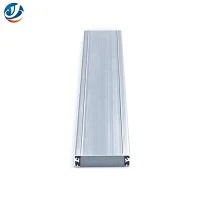
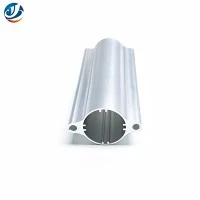


Extruded Aluminum Channel
YIDA Aluminum Technology Co., Ltd. was formerly a distributor of aluminum products. In view of the market demand and R&D of new products, the company established a small factory with only 10 people in 2005.With the continuous innovation of R&D technology and expansion of production, it has become a high-tech enterprise integrating research, design, production, sales of aluminum construction profiles and industrial aluminum profiles. The company covers an area of 10,000 square meters and has extrusion workshop, deep processing workshop, oxidation workshop and packaging workshop. It is located in ZHAOQING high-tech area.
Why Choose Us?
One-stop solution
With the continuous innovation of r&d technology and expansion of production, it has become a high-tech enterprise integrating research, design, production, sales of aluminum construction profiles and industrial aluminum profiles.
Global shipping
The company has a marketing network all over the country and cooperates with partners to develop the market.
Advanced equipment
We has 3 advanced extrusion lines, he factory equipped with 25 tons of punching production lines, 5 CNC engraving machines, 50 modern oxidation tanks.
Quality control
Our factory is an aluminum industry base integrating the most advanced production and processing equipment and functions. And we certificated of the iso9001:2015 factory in april 2019.
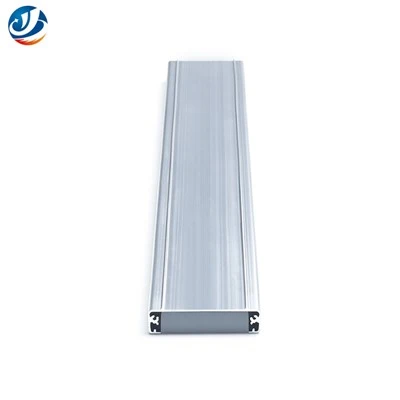
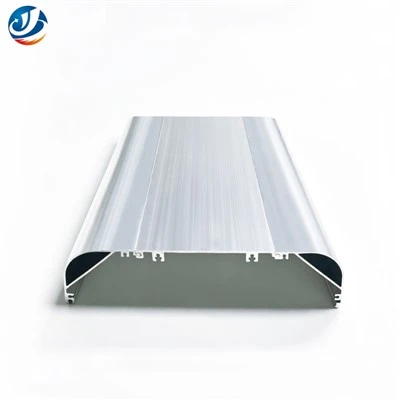
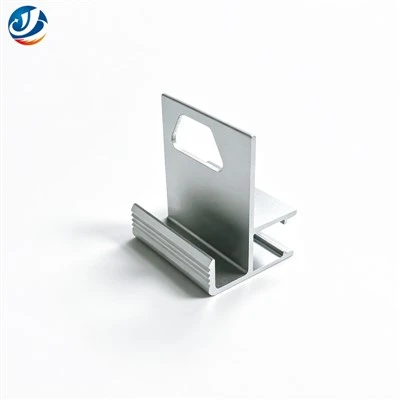


Extruded aluminum channels, also known as aluminum track channels, are characterized by their long, narrow shape. They can be used as a guide for sliding doors, as a base for hanging signs and posters, or as a support for shelving and cabinetry.
Benefits of Extruded Aluminum Channel
High electrical and heat conductivity. Conductivity properties of aluminum are twice that of copper by weight, making it the most common material used in large capacity overhead power lines.
Lightweight strength. Aluminum has a high strength to weight ratio, making it the best solution where lightweight load bearing is a challenge.
Heat transfer and shielding. Where weight and rigidity are major considerations (aerospace applications), the heat transfer and shielding properties of aluminum hold the advantage over copper shields.
Corrosion and rust resistance. When exposed to air, aluminum forms an oxide coating that protects it against rust and corrosion, enhanced through anodizing if necessary.
Non-magnetic. In applications where magnetic properties of materials create issues, the non-magnetic properties of aluminum are particularly valuable.
Non-sparking. Because it does not spark, aluminum is often the best solution for highly flammable or explosive applications.
100% recyclable. During the process of recycling, aluminum is equal to virgin material without degradation. Additionally, aluminum recycling requires only 5% of the energy input necessary to process virgin material.
Types of Extruded Aluminum Channel


Aluminum hat channels: Aluminum hat channels are named for their unique, hat-like appearance, being composed of two horizontal flanges that reach outward and two vertical dimensions. Hat channels can be designed in a range of sizes, varying in thickness and height depending on what is required. Typically, the thickness of a hat channel will range between .005” and .150”. In terms of height, aluminum hat channels can be as high as 5.25”. Hat channels are incredibly useful for the leveling or furring of masonry walls and ceilings, providing a level and structurally sound surface. Hat channels, or furring channels, as they are sometimes called, are used in a wide variety of ways including drop ceiling installment, concrete wall applications, exterior applications, architectural curtainwall applications, and more.
Aluminum u channel & j channel: U and J channels are a type of aluminum channel that typically feature additional fabrication following extrusion, the process by which long lengths of aluminum shapes are extruded through a press formed from raw aluminum billet into a desired cross-section. During manufacturing, the inline fabrication that is most often applied post extrusion includes holes, notches, tabs, key slots, depressions, embossing, material insertion, and more. Aluminum U & J channels both offer a large range of applications across many industries. The most common uses for these types of channels include framing, tracks, slides, protective edges, railings, rails, rims, and decoration, to name just a few.
Aluminum c channel: Another type of aluminum channel is the aluminum C channel. Aluminum C channel, like all other channels, is available in a variety of lengths and thicknesses, typically between .003” thick and .500” thick. Much like aluminum U and J channel, the addition of inline fabrication during the extrusion process is common for aluminum C channels. The uses of aluminum C channel vary but including for framing, covers, decoration, trim, railings, posts, and tracks, among the list of wide applications.
Z-Channels: Z-channels, as the name suggests, have a unique "Z" shape. They are characterized by two flanges that run parallel to each other and are connected by a vertical web. Z-channels are commonly used for applications that require extra strength, such as load-bearing structures, shelving systems, and support frames. Their design allows for efficient weight distribution and increased rigidity.
T-channels: T-channels, as the name implies, resemble the letter "T." They consist of a vertical web connected to a horizontal top flange, creating a T-shaped profile. T-channels offer versatility and are widely used for applications such as framing, supports, and reinforcement. Their design allows for easy integration of other components and provides stability in various structural systems.
H-channels: H-channels are similar to T-channels but feature an additional horizontal bottom flange, forming an "H" shape. This design enhances the load-bearing capacity of the channel, making H-channels suitable for heavy-duty applications. They are commonly used in construction, infrastructure, and industrial projects where strength and stability are crucial.
Application of Extruded Aluminum Channel
Architecture and construction
This category of extruded aluminum channel application range from railings and balustrades to building facades and more. Aluminum channels can be an ideal option for applications like canopies where the structure must handle loads without weighing much.
Display equipment
Most types of stands and furniture used in trade shows or exhibitions are constructed with structural aluminum channels. Extruded aluminum channel applications make it easy for structures to move around and assemble quickly.


Electrical system
Extruded aluminum applications are generally good conductors and can be used for busbars and related electrical equipment. Extruded applications with fins make an excellent radiator or heat exchanger that can be easily mounted to and colored.
Industrial and transportation
Aluminum channels are the first choice of many organizations across the globe. They are widely used for equipment like workbenches, inspection tables, carts, and more. Due to their lightweight and high durability levels, aluminum channels are the top choices in the transportation industry.
Process of Extruded Aluminum Channel
Die
The extrusion process starts with a round die crafted from high-grade steel. For many standard aluminum channels, pre-existing dies are used, which are retrieved from storage. The die is preheated to temperatures ranging from 400°c up to 500°c to enhance its durability and ensure consistent metal flow. Once the die reaches the desired temperature, it is installed in the extrusion press.
Aluminum billet
Aluminum used for manufacturing channels is provided in the form of solid cylindrical blocks, or billets. These billets are heated to temperatures ranging from 750°c up to 930°c to make them malleable for the extrusion process. The heating raises the billet to a temperature just below its melting point, making it pliable enough to be forced through the die.
Extrusion press
The malleable, heated billet is mechanically transferred to the extrusion press, where it is treated with a release agent or lubricant to prevent it from sticking to the ram or die.
The loading process of the billet is illustrated in the diagram below. The billet is placed into the extrusion press chamber and pushed through the die. In this example, the flow direction is from left to right, with the extruded aluminum channel emerging on the right.
Ram movement
Hydraulic pressure, up to 15,000 tons, is applied by the ram to push the billet through the die. As the pressure increases, the billet material expands to fill the walls of the extrusion chamber and is compressed against the die. This force causes the billet to become smaller and wider until it completely fills the chamber, forcing the softened aluminum to exit solely through the die. The aluminum takes on the desired shape as it is squeezed through, forming the final aluminum channel profile.
Run out table
After the extruded channel exits the die, it is captured by a puller that guides it along the runout table. The channel is then cooled through quenching methods, which may involve a water bath, spray mist, air, or fans. Once the channel has traversed the length of the table, it is cut by a hot saw to make space for the next extrusion.
Cooling table – stretch and straightening
After the extrusions are removed from the runout table, they are transferred to a cooling table where they remain until they reach room temperature. During the extrusion process, twisting may occur, causing imperfections in the profiles. These issues are addressed through a stretching and straightening process.
Stretching and straightening involve a mechanism that grips the aluminum channel at both ends. The channel is then pulled and stressed until it is fully straightened and meets the required tolerances and specifications.
Final finishing
Once the extrusions have cooled to room temperature, they are cut to the required lengths using a finishing saw, typically a circular saw.
Final stages
After the aluminum channels are cut to length, they may undergo additional processes such as anodizing, powder coating, or aging. The choice of these final treatments depends on the intended application of the channels and the specific protective features required.
After installation:
●Wash down with clean warm water containing a non alkaline liquid detergent (in a concentration which can be handled safely with bare hands) using a non abrasive cloth, sponge or soft bristle brush. Rinse thoroughly with clean water.
●Dry using a soft cloth or leather.
●After drying, apply furniture cream or wax, to maintain the highest quality surface finish. The frequency of cleaning anodised surfaces in the external environment will vary depending on atmospheric conditions.
●Anodised surfaces which have been neglected for considerable periods of time will often require a more aggressive cleaning procedure. Unfortunately abrasive cleaning does cause some removal of the anodic film and the objective is to minimise the amount of abrasive cleaning to achieve the desired standard finish.
Choosing the Right Aluminum Channels
Selecting the appropriate aluminum channel for your project requires considering several factors:
Aluminum channels come in a wide range of sizes, including width, height, and thickness. The ideal size will depend on the specific application. For instance, a thin u channel might suffice for cable management, while a thicker c channel might be necessary for building a sturdy frame.
The thickness of the channel directly affects its weight capacity and structural integrity. Thicker channels naturally offer greater load-bearing capabilities but come at the expense of increased weight.
The temper of aluminum refers to its strength and hardness, achieved through various heat treatment processes. Common temper designations for aluminum channels include t5 (high strength) and t6 (extra high strength). Choosing the right temper depends on the intended use. High-stress applications might necessitate a t6 temper, while a t5 temper might be sufficient for less demanding projects..
Aluminum channels are available in various finishes, including mill finish (natural aluminum), anodized (corrosion-resistant oxide coating), and painted finishes. The choice of finish depends on the desired aesthetics, environmental conditions, and potential exposure to elements.
Aluminum channels are generally sold in standard lengths, ranging from a few feet to over 10 feet. If your project requires a specific length, you may need to cut the channel to size. Ensure you have the appropriate tools and cutting techniques to achieve clean, straight cuts.
Depending on the application, you might require additional components to use your aluminum channels effectively. For example, brackets, fasteners, and connectors might be necessary for building frames or attaching channels to other materials.
Our Factory

YIDA Aluminum has 3 advanced extrusion lines, capacity namely 2000 tons, 800 tons and 700 tons. The factory equipped with 25 tons of punching production lines, 5 CNC engraving machines, 50 modern oxidation tanks. Besides, we have series oftechnology in mold development, extrusion, anodizing, single and double salt coloring, industrial profiles and aluminum deep processing (drilling, punching, polishing, wire drawing, fine carving).Around 200 employees are hired in production and technical personnel field.


Certificate
