

When I’m chatting with customers who source extruded aluminum rails, one question comes up almost every time—especially for folks using these rails outdoors, in humid basements, or around saltwater (think boat docks, window tracks, or workshop setups): “Will these rails rust?”
Full transparency: pure aluminum doesn’t rust. But wait—when we talk about extruded aluminum rails, we’re not dealing with 100% pure aluminum. The extrusion process mixes in small amounts of other metals (like magnesium, silicon, or copper) to make the rail strong enough to hold heavy loads—say, a curtain that’s 50lbs, or a sliding gate for a backyard shed. Those alloying elements, plus exposure to moisture, road salt, or industrial grime, can trigger surface corrosion that people often mix up with rust. That’s why anti-rust methods aren’t just a “nice-to-have” for us as a supplier—they’re critical to making sure your rail lasts years, not months.
Over the years, I’ve tested every trick in the book for our products like Aluminium Rail Track, Aluminum Curtain Track Profiles, Aluminum T Track Extrusion, Extruded Aluminum Profile Track, and Curtain Track Aluminum Profiles. Let’s break down what actually works, what’s just marketing fluff, and what’s tailored to different uses.
First, let’s get one thing straight: surface corrosion on aluminum is not the same as the red, flaky rust you see on steel. It’s a white, powdery residue that eats away at the metal over time if left unchecked. The good news? We can prevent this with a mix of in-factory treatments and simple on-site care. Let’s start with the most effective methods, because that’s what most of our customers care about.
- In-Factory Surface Treatments (The “Pre-Rust” Guardrails We Build Into Every Rail)
This is the stuff we do before your order even leaves our warehouse, and it’s the most reliable way to stop corrosion before it starts. No one wants to spend extra time coating every rail they install, right?
The first and most common treatment we use is anodizing. A lot of people confuse anodizing with painting, but it’s way better for aluminum. Here’s how it works: we dip the extruded rail into an electrolytic solution, which grows a thick, durable oxide layer on the surface. This layer is like a tough, waterproof shield that blocks moisture and contaminants from reaching the aluminum underneath. For our standard outdoor-rated rails, we use a 15-micron anodized finish that’s scratch-resistant too—perfect for track applications that get a lot of use, like sliding garage doors or outdoor window tracks.
We also offer colored anodizing for customers who want a custom look—black, bronze, even clear anodizing that lets the natural silver shine through. The added color doesn’t hurt the rust protection at all, so it’s a win-win. If you’re looking for something specific for a project, our team can adjust the anodizing thickness too: 25-micron for coastal areas where salt spray is a constant enemy, or a thinner 10-micron for indoor curtain tracks where corrosion risk is low.
Next up, powder coating. This is another go-to for many of our customers, especially those who want a super smooth, customizable finish. Unlike liquid paint, powder coating is a dry pigment that we electrostatically apply to the rail, then bake it on to create a hard, chip-resistant layer. It’s thicker than anodizing (we usually do 60-80 microns for rails) and comes in every color under the sun—matte, glossy, metallic, you name it. I’ve had customers use our powder-coated Curtain Track Aluminum Profiles for high-end home renovations, and they’ve held up great for 3 years without a single spot of corrosion.
One thing to note: we don’t use liquid paint for our rails. It chips way too easily, especially on extruded profiles with sharp edges, and the cracks let moisture get in, which is bad. Powder coating and anodizing are the only factory treatments we trust for long-term rust protection.
Wait, there’s also something called chromate conversion coating, or “chromating” for short. This is a thin, chemical layer we can add if the rail is going to be stored for a while before installation. It’s a quick dip that prevents surface corrosion during transport or warehousing, but it’s not as durable as anodizing or powder coating for long-term use. We mostly use this for bulk orders that sit in a warehouse for a few months, just to keep them in top shape until they’re shipped out.
- Proper Installation and Handling (Small Moves, Big Corrosion Prevention)
Even the best factory treatment can fail if you install the rail wrong. I’ve seen this happen more times than I can count: a customer installs a rail outdoors, but uses regular steel screws that rust and leave stains on the aluminum, or they mount the rail directly on a porous concrete wall that wicks moisture over time. Let’s talk about the basics that take 2 minutes but save you months of headaches.
First, use compatible fasteners. If your rail is going anywhere near moisture, don’t use steel screws or bolts. Opt for 304 or 316 stainless steel fasteners—316 is even better for coastal areas because it resists salt spray way more. We actually sell matching stainless steel screws with all our bulk orders, so you don’t have to hunt them down. Another trick: add a small rubber or plastic washer between the rail and the mounting surface. This creates a gap that lets air circulate, so moisture doesn’t get trapped between the two metals.
Second, avoid direct contact with other metals. Aluminum is a “sacrificial metal,” meaning it corrodes to protect other metals it touches. If you mount an aluminum rail directly to a steel bracket, the rail will start corroding at the contact point because the steel pulls electrons from the aluminum. This is called galvanic corrosion, and it’s a sneaky one—you might not see it for a year, but by then it’s too late. The fix? Use non-conductive mounting brackets, or apply a thin coat of silicone sealant to the contact areas to separate the two metals.
Third, give it drainage. For rails that are mounted outdoors, like window tracks or patio gate rails, make sure there are small holes drilled at the ends to let water run out. I can’t tell you how many customers I’ve had come back saying their rail “rusted” because it was holding standing water for weeks. It’s an easy fix, and we can pre-drill drainage holes for you if you let us know when you order, no extra cost.
- On-Site Maintenance (The Lazy Person’s Guide to No Corrosion)
Here’s the thing: you don’t have to polish your rail every week to keep it corrosion-free. A little simple maintenance a couple times a year is enough. Most of this just boils down to cleaning off grime before it has a chance to sit on the surface.
For indoor rails (like our Aluminum Curtain Track Profiles), all you need is a soft cloth and warm, soapy water to wipe down the rail once every 6 months. Avoid abrasive cleaners or steel wool—they’ll scratch the anodized or powder-coated layer and leave gaps where corrosion can start. For heavy dust or pet hair, a lint roller works even better than a cloth, and it takes 10 seconds.
For outdoor rails (like our Aluminium Rail Track or Aluminum T Track Extrusion), you’ll need to do a deeper clean 2-3 times a year, depending on your location. If you’re in a dusty area (think Arizona or a construction site), use a pressure washer on low setting to blow off dirt and grime—just keep it 2 feet away so you don’t damage the finish. If you’re near the coast or a snowy area (where they use road salt), use a mild vinegar-water solution (1 part vinegar, 4 parts water) to wipe down the rail. Salt is the worst enemy here— it sticks to the surface and eats through the oxide layer over time, so getting it off quickly is key.
Another quick tip: if you notice a small spot of white corrosion (the powdery stuff I mentioned earlier), don’t panic. It’s easy to fix. Grab a soft brush, wipe the spot with baking soda mixed with a little water, then rinse it off and dry it. If it’s a deeper spot, you can use a fine-grit (1000+ grit) sandpaper to lightly buff it out, then touch it up with a little clear nail polish or a small can of matching paint we sell for all our powder-coated finishes. It takes 2 minutes, and it stops the corrosion from spreading.
- Specialized Anti-Rust Methods For Specific Use Cases
Let’s be real: not all rails are the same. A curtain rail in a living room has way different needs than a rail for a boat dock or a factory conveyor system. Here’s what works for the most common applications our customers ask about.
-
Coastal applications: If you’re using our extruded aluminum rails in a beach house or a boat dock, go for the 25-micron anodized finish or a full powder coat. You can also add a thin layer of marine-grade silicone sealant along the edges of the rail every year—this creates an extra barrier against salt spray. I’ve had customers use our Aluminum T Track Extrusion for boat lift tracks and they’ve gone 5+ years without any corrosion, which is unheard of for steel tracks.
-
Industrial or heavy-use applications: For conveyor rails or workshop door tracks that get exposed to oil, grease, or heavy machinery grime, go with a powder coat that’s rated for industrial use—we have a polyester powder coat that’s resistant to chemicals and abrasion, so it stands up to spills and heavy use way better than standard finishes.
-
Long-term storage: If you’re ordering bulk rails for a future project, ask us to add the chromate conversion coating I mentioned earlier. It’s only a small extra cost, and it keeps the rails from corroding while they sit in your warehouse. We also wrap all bulk orders in waterproof plastic, so they don’t get exposed to moisture during shipping.
Wait, I should address the elephant in the room: are there any anti-rust methods that are overhyped? Yeah, a few. A lot of suppliers will try to sell you “rust-proof” aluminum, but there’s no such thing—even pure aluminum will corrode over time if it’s exposed to enough moisture and contaminants. Another one is “clear coating” rails after installation—we don’t recommend that, because it adds an extra layer that can trap moisture if you don’t apply it perfectly, and it chips easily. Stick to the factory treatments and the simple maintenance, and you’re good.

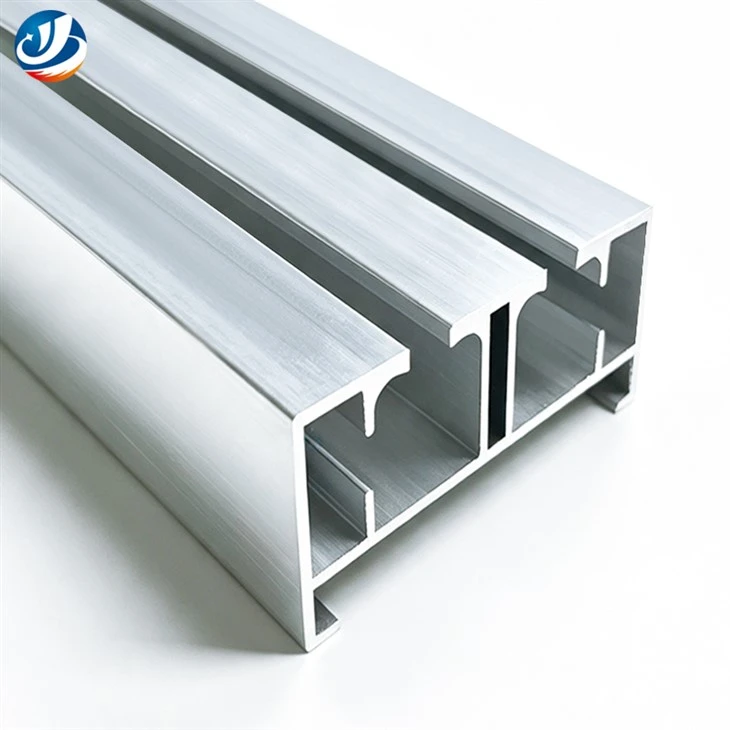
At the end of the day, the best anti-rust method for extruded aluminum rails is a combination of good factory processing, smart installation, and minimal upkeep. We’ve spent years refining these methods for all our products—whether you’re looking for Extruded Aluminum Profile Track for a commercial project, Curtain Track Aluminum Profiles for a home renovation, or any of our other extruded aluminum rails.
If you’re working on a project and want to talk about which anti-rust method is right for your needs, our team is here to help. We can send samples, answer questions about finishes, or even help you customize a rail to fit your exact use case. Just reach out whenever you’re ready to chat.
References
- Aluminum Extrusion Council. (2022). Anodizing of Aluminum Extrusions: Performance and Applications.
- American Galvanizers Association. (2021). Galvanic Corrosion Between Aluminum and Other Metals.
- International Organization for Standardization. (2019). ISO 7599:2019, Anodizing of Aluminum and Aluminum Alloys.
- Surface Engineering Association. (2020). Powder Coating for Aluminum Components: Durability and Maintenance.


