

If you’ve ever stood in an airport baggage claim, staring down a conveyor belt full of rolling suitcases, you might’ve wondered what keeps that whole system running smoothly. Turns out, a lot of it comes down to something you might not notice at first— the tracks that guide those bags from check-in to the plane, and back again to the carousel. Most people assume these tracks are made of steel, right? It’s the go-to for heavy-duty industrial stuff, so why not here? But lately, as an Aluminum Rail Track supplier, I’ve been fielding tons of questions from airport maintenance teams and baggage system engineers: can aluminum rail track actually hold up to the chaos of airport baggage handling? Spoiler alert: yes, and it’s a game-changer that a lot of folks haven’t caught onto yet. Let’s break this down without all the boring jargon, because let’s be real— no one wants a tech lecture when they’re trying to figure out if their next track upgrade will save them money and headaches.
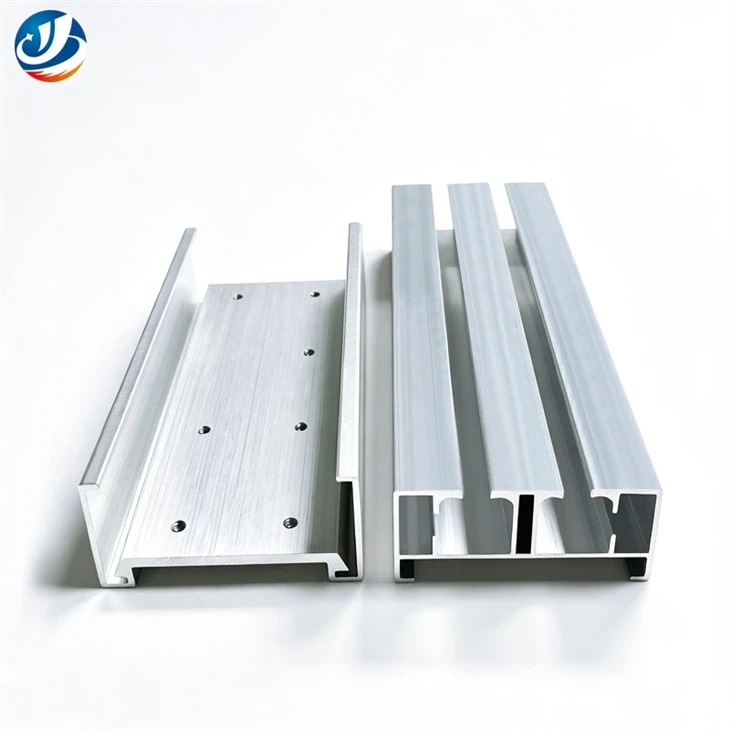

First, let’s talk about what airport baggage handling systems (BHS) actually put tracks through. These aren’t like the tracks in your basement for a curtain rod (though I’ll get to that later). We’re talking 24/7 operation, thousands of bags a day— some hard-shell, some with wheels that could scratch concrete, some even with random metal bits sticking out. The tracks have to support heavy loads, resist corrosion from airport cleaning chemicals (airports use some intense stuff to keep those halls sanitized), stand up to constant friction from wheels rolling over them, and be durable enough to last for years without breaking down. Steel has been the default for decades, but it’s not perfect. It’s heavy, hard to work with when you need to reroute tracks for new terminals, and it rusts if you don’t coat it properly. That’s where aluminum rail track comes in—and I’m not just saying that because I sell it.
Let’s start with the basics: aluminum as a material. It’s lightweight, but way stronger than people give it credit for, especially when it’s extruded into profiles. Wait, what’s an extruded profile? Think of it like squeezing toothpaste, but for metal— you heat up aluminum billets and push them through a die to get a consistent shape with precise dimensions. That’s why the tracks we make, like the ones linked as [Extruded Aluminum Profile Track], are so uniform— no weird warping that can throw off a baggage cart or conveyor. For airports, uniformity is huge. If a track’s even a tiny bit off, a bag can get stuck, leading to delays, angry passengers, and maintenance crews scrambling at 2 a.m. when the airport’s quiet.
Now, compare that to steel. Steel tracks are heavy— like, so heavy that when installers have to bend or cut them on-site, it takes twice as many people and twice as much time. Aluminum? It’s about 1/3 the weight of steel, so a single installer can handle sections on their own, cutting and shaping them with basic tools in minutes. That’s a massive win for airports that need to do quick, after-hours upgrades without closing down entire concourses. I’ve had a client at a mid-sized airport tell me they cut their track installation time for a new BHS section by 40% when they switched from steel to our [Aluminium Rail Track]— that’s not just a number, that’s millions saved in lost operational time.
But wait, can aluminum handle the load? I know that’s the big question. Airport bags aren’t just purses— some are roller bags that weigh 50+ pounds, and conveyor systems are moving them in long lines, so the tracks have to support that weight over hundreds of feet without sagging. The key here is the profile design. Our [Aluminum Track Profile] is engineered with a reinforced base and smooth, rounded edges that distribute weight evenly. Unlike steel, which can develop sharp edges after years of friction, aluminum has a natural corrosion resistance (we add a protective anodized coating for extra durability) that keeps the surface smooth, so baggage wheels roll easily instead of grinding and wearing down the track. I’ve seen steel tracks in older airports that have deep grooves from 10+ years of use— those grooves cause bags to jam, and every jam is a maintenance call. With aluminum, that’s way less of a problem because the material doesn’t wear down that quickly.
Speaking of corrosion, airports are harsh environments. They use cleaning agents that are acidic, humid from jet fuel and aircraft exhaust, and salt air if they’re coastal. Steel rusts— even galvanized steel will eventually corrode, especially if the coating gets scratched during installation. Aluminum? It forms a natural oxide layer when it’s exposed to air, which actually seals it out from moisture and chemicals. That means our tracks don’t need constant repainting or re-coating, which cuts down on long-term maintenance costs. A major international airport in Europe recently switched all their BHS tracks to our [Aluminum Rail Track] after noticing their steel tracks needed to be replaced every 7 years— they’re projecting their aluminum tracks will last 20+ years. That’s a no-brainer when you’re looking at total cost of ownership, not just the initial price tag.
Now, I know what some people are thinking: “Aluminum is for curtain tracks, not industrial stuff.” Wait, hold on— yes, you can get lightweight [Aluminum Curtain Track Profiles] for your home, but that’s a totally different profile than what we make for airport BHS. The curtain track stuff is thin, meant for holding fabric, not 50-pound bags rolling nonstop. Our industrial aluminum tracks are thicker, reinforced, and designed for constant high loads— don’t let the curtain track name confuse you, that’s just one tiny part of what we do. In fact, the same extrusion process that makes heavy-duty BHS tracks also makes the [Curtain Track Aluminum Profiles] you see in offices and homes, but we adjust the shape and thickness for industrial use. It’s like how a car and a lawnmower both run on gas, but they’re not the same machine.
Another big perk for airports? Fire safety. Aluminum has a high melting point, but it doesn’t release toxic fumes when it’s heated, which is a huge deal in enclosed airport spaces. Steel can get extremely hot in a fire, warping and collapsing, which is a safety hazard for both passengers and crew. Aluminum maintains its structural integrity longer at high temperatures, so it’s a safer choice for BHS that run through basements, tunnels, and other enclosed areas of an airport. I know fire safety isn’t something every supplier talks about, but when you’re moving millions of people a year, it’s non-negotiable.
Wait, let’s address the counterarguments, because I don’t want to sound like a salesperson with a one-sided story. Some engineers worry that aluminum is less strong than steel. But when you factor in weight and design, it’s a fair tradeoff. For example, a steel track might be stronger per unit, but it’s three times heavier, so you end up using more material per foot to get the same load capacity as aluminum. Also, aluminum’s flexibility is actually a good thing in some cases— if a bag hits the track hard, it might bend a little instead of cracking, which prevents sudden failures that can bring the whole BHS down. Steel would crack under that impact, leading to a much bigger problem. Another point: noise. Airport BHS is already loud— steel tracks amplify the noise of rolling bags, which can be a problem for both staff working near the systems and passengers waiting in the terminal. Aluminum tracks dampen that noise, so it’s a quieter environment for everyone. That’s a small detail, but it’s one that airport maintenance teams actually care about because it improves morale for the people working in those areas.
So why aren’t more airports using aluminum rail track? Good question. For decades, steel was the only option, so a lot of engineers default to it without considering alternatives. Also, there’s a learning curve— if you’ve only worked with steel tracks for your entire career, switching to aluminum takes some getting used to, especially with installation. But from what I’ve seen, the airports that make the switch never look back. They save money on installation, maintenance, and replacement, plus they have fewer delays and happier staff.
Let me give you a real example. A regional airport in the US had been using steel tracks for their baggage handling system, but they were constantly dealing with rust, grooving, and jams that caused 2-3 hours of delays every month. Last year, they decided to test our [Aluminium Rail Track] on one of their main conveyor lines. Within six months, they reported zero track-related jams, no sign of corrosion, and installation time was cut in half. They just finished switching the rest of their BHS tracks this year, and they’re projecting they’ll save over $200,000 in the next 10 years on maintenance and replacement costs. That’s real money, for a small airport.
Now, if you’re in charge of airport BHS maintenance or upgrades, you’re probably thinking about next steps. Can aluminum rail track work for your system? The short answer is: probably yes, but it depends on the specific load, layout, and environment of your airport. But the best way to find out is to work with a supplier that knows what they’re doing, like us. We’ve been working with [Extruded Aluminum Profile Track] for BHS for years, and we can help you design a track system that fits your needs, whether you’re upgrading a small regional airport or a major international hub.
Wait, I should also mention that our products aren’t just for BHS. We have a range of extruded aluminum profiles, from the heavy-duty tracks for airports to the [Aluminum Curtain Track Profiles] for commercial spaces like offices and hospitals. So if your airport also needs new curtain tracks for meeting rooms or staff areas, we can handle that too— same quality, same reliability, all from one supplier.
At the end of the day, airports are all about efficiency. Delays cost money, upset passengers, and damage a brand’s reputation. The small stuff— like the tracks that carry bags— might seem trivial, but they make a huge difference. Steel was the right choice 50 years ago, but aluminum rail track is the better choice now. It’s lighter, easier to install, more durable in harsh environments, safer, and quieter. I know switching materials can feel risky, but the airports that have made the switch are already reaping the rewards.
If you’re tired of dealing with rusty steel tracks, constant jams, and sky-high maintenance costs, let’s talk. We can send you a sample of our [Aluminium Rail Track], walk you through the design process, and help you figure out if aluminum is right for your airport. Don’t wait until your next track replacement— make the switch now and save yourself the headache later. Your passengers (and your maintenance crew) will thank you.
References
- Aluminum Extrusion Council. "Benefits of Aluminum Extrusions for Industrial Applications." 2023.
- International Air Transport Association (IATA). "Baggage Handling System Maintenance Best Practices." 2022.
- American National Standards Institute (ANSI). "Aluminum Alloy Specifications for Structural Applications." 2021.


