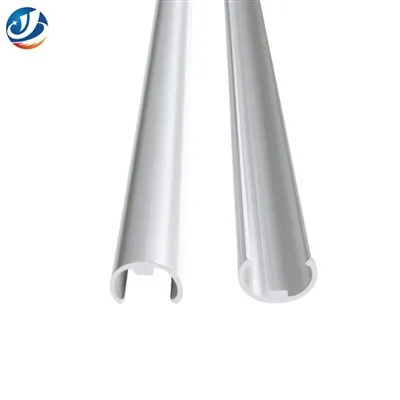
If you’ve ever worked with industrial structures—whether building a custom workbench, a piece of automation equipment, or a heat exchanger for electronics—chances are you’ve considered CNC aluminum profile. This lightweight, high-strength material has transformed how industries design modular, cost-effective structures, but getting it right requires more than just grabbing a length of extrusion and bolting it together. As a supplier of CNC aluminum profiles, I’ve seen firsthand how small design oversights lead to wobbly assemblies, wasted material, and delayed projects. Today, I’m breaking down the step-by-step process to design a structure with CNC aluminum profiles, based on years of working with engineers, makers, and manufacturers across sectors.
Start with Your Core Requirements: Not All Aluminum Profiles Are the Same
Before you fire up CAD software, pause to map your non-negotiables. The biggest mistake I see is skipping this step and designing for a generic profile, only to realize later that it can’t handle your load, fit your space, or work with your assembly. Let’s ground this in real examples: if you’re building a lightweight mobile cart for a lab, you’ll prioritize weight savings and mobility; if you’re designing a robotic arm for manufacturing, rigid load-bearing capacity is non-negotiable.
First, define your structure’s primary purpose and constraints. Ask:
- What’s the maximum load the structure will bear? Static (like a shelf holding equipment) or dynamic (like a moving robotic part)?
- Will it be exposed to extreme temperatures, moisture, or corrosive environments?
- What’s your workspace footprint? Do you need modularity to adjust the size later, or a fixed, one-off assembly?
- Do you need to integrate other parts—like electronics, plumbing, or fasteners—into the profile?
This is where choosing the right type of aluminum extrusion comes in. As a supplier, we stock a range of profiles, but the best fit for many designs is CNC aluminum extrusion tailored to modular framing. For example, a small workbench might use a 40x40mm square extrusion with a 6mm wall thickness, while a heavy-duty conveyor frame would need a 60x60mm profile with a 10mm wall. If your design needs heat dissipation—say, an enclosure for power electronics—you’ll want to look at CNC machining aluminum heatsinks integrated into your profile frame, rather than adding separate components later.
A common question from new designers: should I go with a T-slot profile for easy assembly, or a solid extruded bar? T-slot profiles are the workhorse of modular designs because they let you slide fasteners into slots without drilling, making reconfiguring the structure quick and cheap. Solid extrusions, on the other hand, offer higher rigidity for load-bearing parts like machine bases. For most projects, T-slot profiles strike the best balance—just confirm your profile has the slot size that matches the fasteners you plan to use (M5, M6, or M8 are standard).
Choose the Right Profile Cross-Section for Rigidity and Weight
Once you’ve nailed down your requirements, the next step is picking the cross-section of your aluminum profile. Aluminum’s strength-to-weight ratio is its superpower, but that doesn’t mean every profile is equal. The two most critical factors here are moment of inertia (which determines how much the profile bends under load) and profile weight (a big deal for mobile or overhead structures).
Let’s use a practical test: if you’re building a shelf that will hold 50kg of tools, a 30x30mm profile will bend far more than a 40x40mm one, even if both have the same wall thickness. The difference comes from the cross-section’s moment of inertia—essentially, how far the material is from the profile’s center. For example, a square extrusion has higher rigidity than a flat bar of the same material, because the material is positioned farther from the bending axis.
Here’s a pro tip from our team: for horizontal loads (like beams supporting a shelf), orient the profile so its taller side is vertical. That sounds obvious, but I’ve seen dozens of designers flip a 40x80mm profile so the 40mm side is vertical, cutting its load capacity by almost half. For vertical columns, prioritize wall thickness over cross-section size if you’re looking to save weight—an 80x80mm profile with a 6mm wall is stiffer than a 100x100mm profile with a 4mm wall, because thicker walls resist buckling better.
Another consideration: tolerance. CNC aluminum profiles are precision-machined, but some applications require tighter tolerances than others. If you’re building a mating surface for a machine part that needs to align within 0.1mm, you’ll want to specify a precision-machined profile rather than a standard commercial grade. If you’re a hobbyist building a DIY CNC router aluminium profile for a small home workshop, a standard tolerance profile will work perfectly and save you money.
By now, you might be wondering how CNC machining factors in here. Even with the right profile, small parts like mounting brackets or fastener inserts often need custom machining to fit perfectly. For these, CNC machining aluminum heatsinks or small aluminum parts can be tailored to your design—just make sure you include machining in your material budget, not just the profile itself.
Design for Modularity (and Avoid Costly Mistakes)
One of the biggest advantages of CNC aluminum profiles over traditional steel framing is modularity. But that modularity only works if you design for it. Modularity means your structure can be disassembled, adjusted, and reassembled without compromising strength or alignment—something that’s a game-changer for startups scaling production or makers updating their designs.
Let’s talk fasteners first. T-slot profiles rely on internal hex bolts, slot nuts, and end caps, but many designers forget to account for the clearance needed to slide the slot nuts into place. If your CAD model shows a bolt that’s too long for the slot depth, or a nut that can’t fit around the profile’s edge, you’ll end up wasting hours sanding or modifying parts on the shop floor. The rule of thumb here is: add 2mm of clearance around all fastener slots, and use standard bolt lengths that fit within the profile’s width (not longer than the profile’s cross-section, otherwise it will stick out and interfere with adjacent parts).
Modularity also means planning for future changes. Even if you’re building a fixed structure today, design for possible adjustments tomorrow. For example, if you’re building a robot arm, leave 5cm of extra profile length at the joints instead of cutting them to exact size—this lets you tweak the arm’s reach later without ordering new parts. For enclosures, add extra slot space to mount fans, sensors, or new panels down the line.
I’ve seen too many designs where the structure is built from profiles that can’t be easily modified, leading to expensive reworks. Last year, a small robotics startup came to us with a design for an assembly line frame—they’d cut all their profiles to exact length, and when a part needed to be moved 10cm, they had to buy entirely new profiles instead of reusing the old ones. A small adjustment in their initial design to leave a little extra length would have saved them 30% on material costs.
Another common pitfall: not accounting for the weight of the profile itself. Aluminum is light, but a 2-meter 60x60mm profile weighs around 3kg—add 10 profiles together, and that’s 30kg just for the frame. If your structure is mobile, that weight adds up quickly, so balance rigidity with weight. For example, use a smaller profile for non-load-bearing parts of the frame, like side panels, and a larger profile for the base that takes the main load.
Integrate Machining and Finishing for Longevity
CNC aluminum profiles are versatile, but no structure is just extrusions and bolts. You’ll likely need custom parts, from mounting brackets to heat sinks, and finishing to protect the aluminum from corrosion. Here’s how to integrate these into your design seamlessly.
First, CNC machining. Most standard profiles work for basic assemblies, but when you need mating surfaces, tight tolerances, or custom features, you’ll need to machine parts. For example, if your structure needs a mounting plate for a motor, a CNC machined aluminum part will be far more precise than a cut-to-size profile. For heat-related applications, a CNC machining aluminum heatsink can be integrated directly into the structure’s frame, eliminating the need for separate heat-dissipation components. A quick note: when designing machined parts, avoid tight corner radii (less than 1mm) because they’re hard to machine and can weaken the part. For small aluminum parts like fastener adapters, stick to a minimum wall thickness of 2mm to prevent warping during machining.
Finishing is another step that’s easy to overlook. Aluminum is naturally corrosion-resistant, but if your structure will be exposed to moisture, chemicals, or outdoor elements, you’ll want to add a finish. Anodizing is the most common finish for CNC aluminum profiles—it adds a protective oxide layer that also lets you color-code parts. Powder coating is another option, which is more durable for heavy-use structures. If you’re building a structure for a lab with corrosive cleaning agents, a hard anodized finish will hold up far better than a clear coat.
Test and Iterate Before Production
Once you have a draft design, don’t jump straight to ordering materials. Testing your design with a prototype will save you from costly mistakes. For aluminum profiles, a prototype doesn’t have to be perfect—build a small-scale version to test load capacity, alignment, and assembly ease.
Here’s a simple test you can do at home (or in the shop): if your structure is a shelf, stack 1.5 times the maximum intended load on it for 24 hours, then check for bending. If it bends more than 0.5mm (the limit for most precision structures), you’ll need to upgrade to a thicker-walled profile. For dynamic structures, like a moving cart, test it on uneven surfaces to make sure the joints don’t wobble—tighten the bolts and adjust the slot nuts if needed.
As a supplier, we offer custom cutting and machining services, so many of our customers send us a prototype design to test before ordering bulk materials. Last quarter, a maker building a DIY CNC router aluminium profile came to us with a prototype that had too much vibration—we adjusted the profile cross-section and added a reinforcing rib, which cut vibration by 40% and made their router usable for precision cutting. That small iteration saved them from redoing their entire build.
Before finalizing, confirm all your parts fit together. Even with precision profiles, small machining tolerances can cause misalignment. Double-check that mounting brackets are the right size for your profile, and that any custom machined parts don’t interfere with the profile’s slots or fasteners. If you’re ordering aluminum CNC machining parts from a supplier, send them your CAD files early so they can flag any design issues—many suppliers will offer free design feedback for small orders.
Final Checks Before Ordering
Let’s wrap this up with a quick checklist to make sure you don’t miss anything:


- Confirm your profile cross-section and wall thickness match your load requirements (thicker walls = more rigidity, but more weight).
- Account for fastener clearance and profile length to avoid assembly headaches.
- Plan for modularity—leave extra profile length if you might need adjustments.
- Budget for CNC machining for custom parts, and finish for corrosion resistance if needed.
- Test a prototype to catch bending, wobble, or misalignment issues.
If you’re just starting out, remember: CNC aluminum profiles are flexible, but they work best when your design aligns with their strengths. Whether you’re building a small hobbyist project or a large industrial structure, taking the time to get these steps right will save you money, time, and frustration down the line.
If you’re ready to source CNC aluminum profiles, or need help refining your design for your structure, feel free to reach out for procurement and design consultation.
References
- Aluminum Extrusion Design Handbook, Extruders Association of America
- CNC Machining of Aluminum: Best Practices, Modern Machine Shop
- Modular Framing for Industrial Structures, IndustryWeek
- Heat Sink Design for Aluminum Extrusions, Electronics Cooling Magazine