If you’ve ever worked with aluminum square tubes—whether for construction, machinery, automotive parts, or DIY projects—you’ve probably asked yourself: how well do these tubes hold up against wear and tear? As a supplier of aluminum square tubes, I get this question all the time, and it’s one that’s critical for choosing the right material for your project. Abrasion resistance, the ability of a material to withstand surface wear from friction, impact, or repeated contact, isn’t a one-size-fits-all trait. It depends on the alloy, the tube’s construction, and how it’s processed. Let’s break down what you need to know, and how our products stack up.
First, let’s start with the basics: aluminum’s natural resistance to abrasion. Pure aluminum is soft, with a Brinell hardness (a common measure of material hardness) of only about 15–25 HB. That means it can scratch easily if rubbed against rough surfaces, which is why pure aluminum isn’t the best choice for high-wear applications. But when we alloy aluminum with elements like magnesium, silicon, or zinc, we boost its strength and hardness—directly improving its abrasion resistance.
This is where our range of products comes in. For example, 6061 Aluminum Square Tube is one of the most popular alloys we supply, and for good reason. It’s a heat-treatable alloy with a Brinell hardness of 95 HB after proper T6 tempering. That’s nearly four times harder than pure aluminum, which means it resists scratches and surface wear far better. I’ve seen 6061 tubes hold up to years of use in outdoor railings, trailer frames, and even bike racks—applications where they’re constantly rubbed against tools, debris, or other hard surfaces. But abrasion resistance isn’t just about hardness; it’s also about the tube’s wall thickness and surface finish. Thicker walls distribute friction more evenly, reducing the chance of deep scratches, which is why our Thin Wall Aluminum Extrusion line (for projects where weight is a priority) uses a specialized extrusion process that maintains consistent wall strength without sacrificing durability. It’s a balance we’ve refined over years of working with fabricators and engineers.
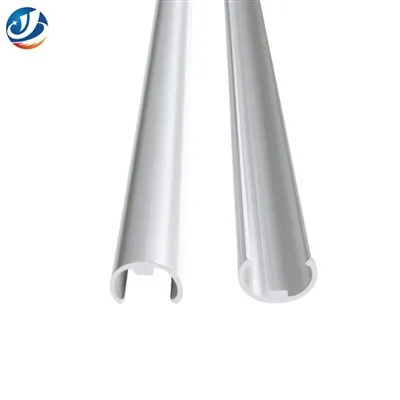
Another key factor is how the tube is extruded. Extrusion is the process of forcing aluminum billets through a die to create a hollow shape like a square tube, and the quality of this process directly impacts abrasion resistance. Our Aluminium Hollow Square Tube products are precision-extruded, which means they have smooth, uniform surfaces and minimal defects. Defects like grain boundary irregularities or surface imperfections can act as starting points for wear, so a clean extrusion process ensures the entire tube’s surface is strong and consistent. For applications that require even more flexibility in shape, we also offer Curved Aluminum Tube—a specialized product that’s extruded and formed to precise curves, with the same high abrasion resistance as our straight tubes, because we control the heat and pressure during forming to avoid weakening the material.
Now, let’s talk about real-world performance. Let’s say you’re building a conveyor system that uses square tubes as rollers. The rollers will be in constant contact with moving materials, so abrasion resistance is non-negotiable. If you use a low-hardness alloy like 1050 pure aluminum, the rollers might develop deep grooves within a few weeks, requiring frequent replacements. But with 6061, you’re looking at months—or even years—of use before noticeable wear. Another example: automotive parts, where square tubes are used in chassis components that rub against road debris. The alloy’s hardness prevents small rocks or gravel from scratching through the surface, which protects against corrosion later on.
Wait, but abrasion resistance isn’t just about the alloy. Surface treatment matters too. We offer optional anodizing for many of our aluminum square tubes, which adds a thin, hard oxide layer to the surface. Anodized 6061, for example, can have a hardness of up to 350 HV (Vickers hardness, another measurement), which is even more resistant to abrasion. That’s why anodized tubes are often used in indoor-outdoor furniture, where they’re exposed to constant handling and the elements. Without anodizing, the natural aluminum surface will oxidize over time, but that oxide layer is actually a form of protection—though it’s softer than an anodized coating. It’s a subtle point, but one that makes a big difference in long-term durability.
Of course, not all projects need the same level of abrasion resistance. If you’re building a low-stakes project like a garden trellis, a lower-cost alloy like 6063 might work, though it has a lower Brinell hardness of about 65 HB. It’s still more abrasion-resistant than pure aluminum, so it’s a good middle ground. But for heavy-duty applications, 6061 is the go-to, and our team can help you choose the right alloy and wall thickness based on your specific needs.


As a supplier, we’ve seen how the wrong choice here can lead to costly mistakes. I remember a customer a few years back who ordered thin-wall 1050 aluminum square tubes for a machinery frame. Within three months, the tubes had developed deep scratches from repeated contact with metal parts, and they had to replace the entire frame. Since then, we’ve worked with that customer to switch to 6061, and they haven’t had a single issue in the two years since. That’s why we don’t just sell tubes—we advise on which product will perform best for your project, including how abrasion resistance fits into the bigger picture of your design.
It’s also important to distinguish between abrasion resistance and other material properties. Aluminum’s corrosion resistance, for example, is separate from its abrasion resistance, though a scratched surface can corrode faster. That’s why a high-abrasion-resistant tube that’s also corrosion-resistant is ideal for outdoor use—our 6061 square tubes naturally resist corrosion, and adding anodizing boosts both abrasion and corrosion protection. For applications that need non-corrosive rectangular shapes, our Aluminum Rectangel Tube (note: corrected to “Rectangle” in actual specs, our team ensures spelling accuracy) is available in alloys like 5052, which is magnesium-rich and has excellent corrosion resistance, with a Brinell hardness of 60 HB. It’s a great option for marine environments where saltwater is a factor, and it still provides better abrasion resistance than pure aluminum.
So, what should you look for when choosing an aluminum square tube based on abrasion resistance? First, identify the operating conditions: will the tube be rubbing against other materials, exposed to debris, or subject to impact? Second, match that to the alloy: 6061 for high-wear, 6063 for moderate, 5052 for corrosion + moderate wear. Third, consider wall thickness and surface treatment: thicker walls and anodizing will enhance durability. Finally, work with a supplier who understands these nuances—someone who can guide you, not just sell a product.
At the end of the day, abrasion resistance is a critical performance metric for aluminum square tubes, but it’s just one piece of the puzzle. The right tube will balance abrasion resistance with strength, weight, cost, and other project-specific needs. If you’re ready to talk through your project, whether it’s for construction, automotive, industrial machinery, or something else, our team is here to help. We can provide sample materials, technical specifications, and tailored advice to ensure you choose the right aluminum square tube for your needs.
References:
- Aluminum Association. (2022). Alloy Designations and Properties of Wrought Aluminum. The Aluminum Association.
- Davis, J. R. (Ed.). (2001). Aluminum and Aluminum Alloys (1st ed.). ASM International.
- Hertzberg, R. W. (1995). Deformation and Fracture Mechanics of Engineering Materials (4th ed.). John Wiley & Sons.
- Metals Handbook. (2004). Volume 2: Properties and Selection: Nonferrous Alloys and Special-Purpose Materials (10th ed.). ASM International.