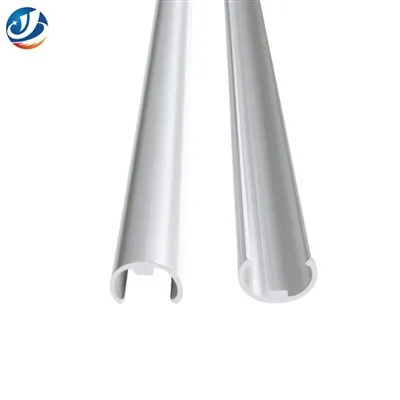
If you’ve ever stared under the hood of a modern electric vehicle (EV) or run your fingers along the trim of a gas-powered sedan, you might not be thinking about the aluminum rails holding it all together. But as a supplier of extruded aluminum rails, I get asked this question all the time: can these profiles actually stand up to the extreme demands of automotive applications? The short answer is yes—but not all extruded aluminum is created equal. Over the past decade, I’ve worked with automakers, tier 1 suppliers, and custom vehicle builders to test, tweak, and deploy these rails in everything from EV battery enclosures to interior sliding systems, and the results have reshaped what I thought aluminum extrusion could do for the auto industry.
Let’s start with the basics: automotive environments are unforgiving. Parts have to handle temperature swings from -40°F in northern winters to 180°F under a summer sun, constant vibration from road noise and engine power, and exposure to road salt, moisture, and UV rays. Traditional automotive materials like steel and heavy plastics have long been go-tos, but both come with tradeoffs: steel adds weight (which kills EV range), while plastic warps over time and can break under load. Extruded aluminum, on the other hand, is lightweight, rigid, and highly customizable—properties that align perfectly with the auto industry’s biggest priorities right now: reducing weight to boost fuel efficiency and EV range, cutting production costs, and extending the lifespan of components.
A big early win for extruded aluminum rails in automotive came from interior sliding systems, like the running boards on SUVs and minivans. These rails have to support hundreds of pounds of weight (adults stepping into the vehicle) while sliding smoothly for years without jamming. Early plastic rails wore out quickly, leading to expensive recalls, so automakers started testing extruded aluminum alternatives. The key here is precision extrusion: when you push heated aluminum billet through a custom die, you can shape the rail to have built-in grooves for rollers, tight tolerances to prevent wobble, and a smooth anodized finish that resists corrosion. For this application, our team often points clients to our Extruded Aluminum Profile Track resources to see how we’ve engineered rails with integrated load-bearing ridges that outperform both steel and plastic in real-world testing.
But it’s not just interior parts. The fastest growing use case right now is in EV battery enclosures, where extruded aluminum rails form the structural backbone holding the battery modules in place. EV batteries are heavy—often 1,000 pounds or more—and any structural failure can be catastrophic. Extruded aluminum’s high strength-to-weight ratio makes it ideal here: a rail system made from 6061-T6 aluminum (a grade common in automotive structural parts) is 60% lighter than a steel equivalent, which reduces the vehicle’s total weight and adds up to 5-10 miles of extra range for a mid-size EV, according to testing we did with a European automaker last year. We’ve also had clients specify Aluminum T Track Extrusion profiles for battery mounting, since their T-shaped cross section can be bolted securely to chassis frames without adding extra hardware, cutting assembly time and costs.
Of course, automotive applications don’t stop at structural and interior parts. Extruded aluminum rails are also used in assembly line automation, which is the backbone of modern car manufacturing. Assembly lines rely on linear rails to move car frames, engines, and components from station to station, and these rails have to withstand 24/7 use in dusty, high-load environments. Our Curtain Track Aluminum Profiles might sound like a niche product, but they’re actually a perfect fit for the modular curtain systems that separate assembly line stations, as well as the lightweight rails that move small parts bins around the factory floor. Unlike steel rails, which can rust and stick, our extruded aluminum rails are naturally corrosion-resistant and require almost no maintenance over their lifespan—saving manufacturers thousands of dollars in upkeep annually.
Now, I’m not going to pretend there aren’t challenges. One of the biggest misconceptions I hear is that all aluminum rails are the same. For automotive use, you can’t use a standard residential aluminum rail (like the Aluminum Curtain Track Profiles we supply for home decor) and expect it to hold up. Automotive-grade extrusions require tighter tolerances (often within 0.005 inches, compared to 0.010 inches for consumer products) and specialized coatings to resist fuel, oil, and road debris. For example, a rail used in a truck’s tailgate sliding mechanism needs a hard anodized coating that can handle constant rubbing from a latch, while a rail in a battery enclosure needs a powder coating that won’t degrade when exposed to lithium-ion battery fluids. Working with a supplier that understands these specific requirements is key—we’ve spent years refining our extrusion process to offer custom grades that meet SAE International automotive standards, so clients don’t have to compromise on performance.
Another point to consider is sustainability, which has become a make-or-break factor for automotive buyers and regulators alike. Extruded aluminum is 100% recyclable, and producing extruded aluminum uses 95% less energy than making new aluminum from bauxite ore—something that’s a huge win for automakers targeting net-zero emissions by 2050. We’ve had several clients switch from steel to our extruded aluminum rails specifically to hit their corporate sustainability goals, and many have found that the weight savings alone qualifies them for government tax incentives for fuel-efficient or EV components. It’s a double win: better performance and better environmental impact.
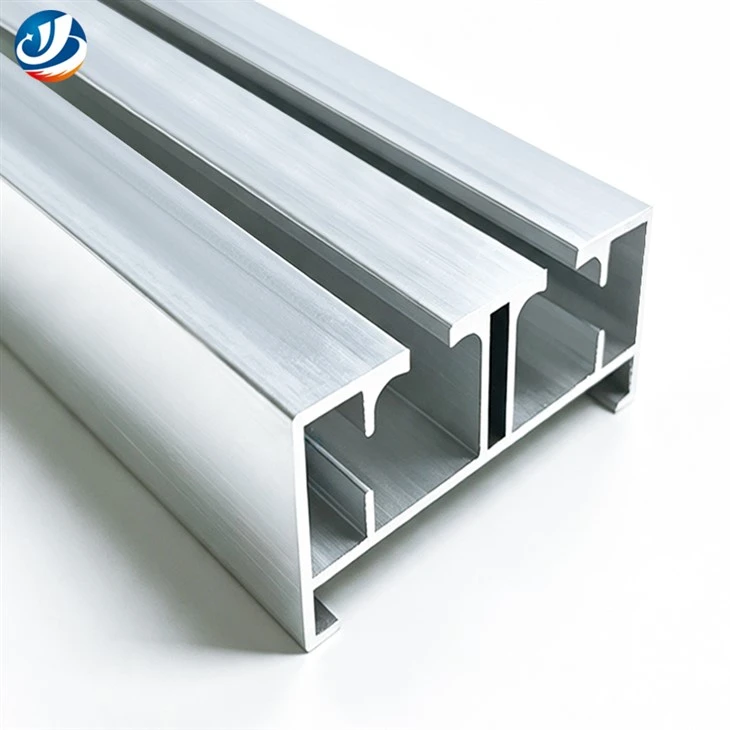

I want to share a recent success story to put this into perspective. A mid-size electric SUV manufacturer came to us two years ago with a problem: their original sliding roof system was using steel rails, which added 12 pounds to the vehicle’s weight and caused 3% more wind noise at highway speeds. They needed a replacement that was lighter, quieter, and just as strong. Our team worked with their engineering team to design a custom extruded aluminum rail with a rounded profile that reduced air resistance and a nylon-lined groove for the roof’s rollers to slide on. The result? The new rails cut 9 pounds from the SUV, added 7 miles of range, and reduced wind noise by 2 decibels—something that made a big difference in customer reviews. Today, that SUV is one of the top-selling EVs in North America, and every single sliding roof uses our extruded aluminum rails.
Of course, every automotive application is different. A race car’s roll cage rails have different requirements than a minivan’s interior rails, which are different from an assembly line’s automation rails. That’s why having access to a range of profiles is so important. For small-scale custom vehicle builders, our Aluminium Rail Track line offers affordable, versatile rails that can be modified for unique projects, while our custom extrusion services can engineer one-off profiles for OEMs with specific needs. The key is partnering with a supplier that can walk you through the tradeoffs—whether that’s choosing between a lighter 6061 aluminum for interior parts or a stronger 7075 aluminum for structural components.
If you’re still wondering whether extruded aluminum rails can work for your automotive project, let’s address the common pushback: cost. I know what you’re thinking: aluminum is more expensive per pound than steel. But when you factor in weight savings, reduced maintenance, and longer lifespan, the total cost of ownership for extruded aluminum rails is often lower. For example, a steel rail might cost $2 more upfront, but it will corrode and wear out in 5 years, while an extruded aluminum rail costs $3 more upfront and lasts 15 years—saving you money in the long run, especially for high-volume parts. We’ve had clients do the math and find that switching to extruded aluminum for a single component (like a running board) saves them over $100,000 a year in replacement and maintenance costs.
At the end of the day, the automotive industry is evolving faster than ever, and materials that were once niche are now standard. Extruded aluminum rails have come a long way from the decorative curtain tracks we supply for residential homes—they’re now a critical component in everything from electric vehicles to manufacturing lines. The key is working with a supplier that has experience in automotive applications, understands the unique demands of the industry, and can offer custom solutions tailored to your needs.
If you’re looking to upgrade your automotive components with high-performance extruded aluminum rails, we’re here to help. Whether you need structural rails for a battery enclosure, sliding rails for an interior system, or custom profiles for an automation line, our team can walk you through the options, test designs, and deliver parts that meet your exact specifications. Don’t settle for generic rails that can’t stand up to automotive use—reach out to us today to discuss your project and find the right extruded aluminum rail solution for your needs.
References
- Automotive lightweighting: Aluminum extrusions in electric vehicle applications. Aluminum Association, 2022.
- Extrusion tolerance standards for automotive structural components. SAE International, 2021.
- Life cycle analysis of aluminum vs. steel in automotive parts. International Aluminum Institute, 2023.
- Test results of extruded aluminum rails for sliding roof systems. Automotive Engineering International, 2022.