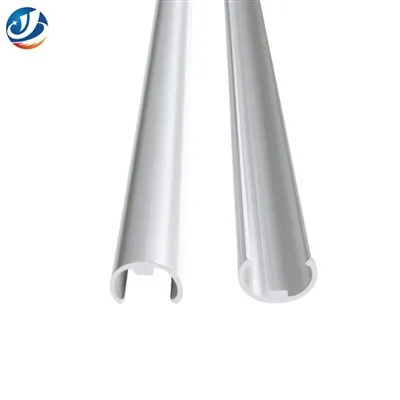
Hey there! I'm a supplier of extruded aluminum shapes, and today I wanna chat about the precision levels we can achieve with these awesome products.
First off, let's talk about what extrusion is. Extrusion is a process where we force aluminum through a die to create a specific shape. It's like squeezing toothpaste through a fancy - shaped nozzle, but way more high - tech. This process allows us to make all sorts of complex and useful aluminum shapes.


So, what kind of precision are we talking about? Well, the precision of extruded aluminum shapes can vary depending on a few factors. One of the main factors is the type of die we use. High - quality dies are made with extreme precision. They're designed using advanced CAD (Computer - Aided Design) software, which allows us to create very accurate blueprints. These dies are then machined to match those blueprints as closely as possible.
For basic extruded aluminum shapes, we can usually achieve a dimensional tolerance of around ±0.005 inches. That might not sound like much, but it's actually quite precise when you think about it. For example, if we're making an Aluminum Truck Side Steps, the exact dimensions are crucial for proper fitment on the truck. A small difference in size could mean that the side steps won't attach correctly or look out of place.
When it comes to more complex shapes or applications that require even higher precision, we can push the limits further. With advanced manufacturing techniques and state - of - the - art equipment, we can achieve tolerances as tight as ±0.001 inches. This level of precision is often needed in industries like aerospace and electronics. In aerospace, extruded aluminum parts need to be extremely precise to ensure the safety and performance of the aircraft. Even a tiny deviation in the shape or size of a part could have serious consequences.
Another aspect of precision is the surface finish. We can control the surface finish of extruded aluminum shapes to a great extent. The surface can be smooth, with a roughness average (Ra) of as low as 16 micro - inches. This smooth surface is not only aesthetically pleasing but also important for applications where friction needs to be minimized or where the part will be in contact with other components.
The straightness of the extruded aluminum shapes is also a key factor in precision. We can ensure that the extrusions are straight within a tolerance of ±0.01 inches per foot. This is vital for applications where the part needs to be installed in a straight line, like in construction or machinery.
Now, let's talk about some of the challenges we face in achieving these high precision levels. One of the biggest challenges is the thermal expansion of aluminum during the extrusion process. Aluminum expands when it's heated and contracts as it cools. This can cause dimensional changes in the extruded shape. To counter this, we use sophisticated cooling systems and carefully control the temperature throughout the process. We also perform post - extrusion heat treatments to relieve any internal stresses that could affect the shape's dimensions over time.
Another challenge is the wear and tear on the dies. As we extrude aluminum through the dies, the constant friction and pressure can cause the dies to wear down. This can lead to a decrease in precision over time. To solve this problem, we regularly inspect and maintain our dies. We use high - quality materials for the dies and apply special coatings to increase their durability.
In terms of the quality control measures we have in place, we use a variety of inspection tools. We have coordinate measuring machines (CMMs) that can measure the dimensions of the extruded shapes with extreme accuracy. These machines use a probe to touch the surface of the part at multiple points and then calculate the dimensions based on the data collected. We also use optical inspection systems that can detect surface defects and measure the surface finish.
When it comes to different types of extruded aluminum shapes, each has its own precision requirements. For example, Aluminium Solid Round Bar needs to have a consistent diameter throughout its length. The roundness of the bar is also important, and we can achieve a roundness tolerance of ±0.002 inches.
Extruded Aluminum Profiles come in a wide variety of shapes, from simple U - channels to complex multi - cavity profiles. The precision requirements for these profiles depend on their intended use. For profiles that will be used in architectural applications, the visual appearance and the fit between different parts are crucial. We need to ensure that the corners are sharp and the edges are straight to give a clean and professional look.
In conclusion, the precision levels achievable in extruded aluminum shapes are quite impressive. Whether it's a basic part with a moderate tolerance or a highly precise component for a high - tech industry, we have the expertise and the technology to meet the requirements. If you're in the market for extruded aluminum shapes and need a supplier who can deliver high - precision products, don't hesitate to reach out. We're here to work with you and provide the best solutions for your needs. Let's start a conversation and see how we can collaborate on your next project.
References
- "Aluminum Extrusion Technology Handbook"
- Industry reports on precision manufacturing in the aluminum extrusion sector