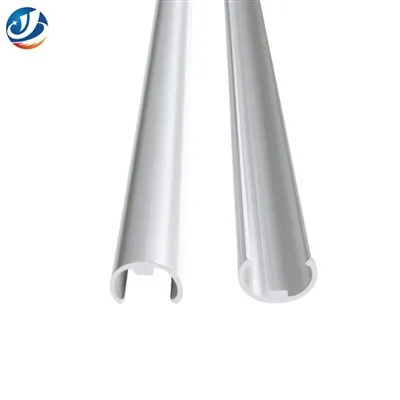
Hey there! As a supplier of Aluminium Rail Track, I often get asked about the elasticity of these tracks. So, let's dive right into it and explore what elasticity means for Aluminium Rail Track.
What is Elasticity?
Elasticity, in simple terms, is the ability of a material to return to its original shape after being deformed. When a force is applied to an object, it can cause the object to stretch, compress, or bend. If the material is elastic, it will go back to how it was once the force is removed.
For Aluminium Rail Track, elasticity is super important. Rails are constantly under stress from the weight of trains, the friction of wheels, and even changes in temperature. A good level of elasticity helps the rails handle these stresses without getting permanently damaged.
Why Elasticity Matters for Aluminium Rail Track
-
Load - Bearing Capability
Trains are heavy, and the rails need to support that weight. Elasticity allows the Aluminium Rail Track to bend slightly under the load of a passing train. This bending distributes the weight more evenly along the track, reducing the risk of localised stress points that could lead to cracks or breaks. -
Shock Absorption
As trains move, they generate a lot of vibrations. The elasticity of the Aluminium Rail Track acts like a shock absorber. It can absorb these vibrations and prevent them from being transferred directly to the ground or other parts of the railway infrastructure. This not only makes the ride smoother for passengers but also helps to extend the lifespan of the track and other components. -
Temperature Changes
Aluminium expands and contracts with changes in temperature. Elasticity enables the rail track to accommodate these thermal expansions and contractions without buckling or warping. This is crucial for maintaining the safety and integrity of the railway system, especially in regions with extreme temperature variations.
Factors Affecting the Elasticity of Aluminium Rail Track
-
Alloy Composition
The type of aluminium alloy used in the rail track plays a big role in its elasticity. Different alloys have different properties, and some are more elastic than others. For example, alloys with certain amounts of copper, magnesium, or silicon can enhance the elasticity of the aluminium. -
Manufacturing Process
How the Aluminium Rail Track is made also affects its elasticity. Extrusion is a common manufacturing method for aluminium rails. The quality of the extrusion process, including factors like temperature control and pressure, can influence the internal structure of the rail and thus its elasticity. -
Heat Treatment
Heat treatment can modify the properties of the aluminium. Annealing, for instance, can increase the ductility and elasticity of the rail track. By heating the aluminium to a specific temperature and then cooling it slowly, the internal stresses are relieved, making the material more elastic.
Measuring the Elasticity of Aluminium Rail Track
Engineers use a few different methods to measure the elasticity of Aluminium Rail Track. One common way is through the Young's modulus. The Young's modulus is a measure of the stiffness of a material. It's calculated by dividing the stress (force per unit area) by the strain (deformation per unit length). A higher Young's modulus means the material is stiffer, while a lower one indicates more elasticity.
Another method is the shear modulus, which measures the material's resistance to shearing forces. Shearing forces occur when two parts of the material slide past each other. By measuring the shear modulus, engineers can get a better understanding of how the Aluminium Rail Track will behave under different types of stress.


Our Aluminium Rail Track Offerings
At our company, we take pride in offering high - quality Aluminium Rail Track with excellent elasticity. Our Aluminum Track Profile is designed to meet the diverse needs of our customers. It's made from top - grade aluminium alloys and undergoes a strict manufacturing process to ensure optimal elasticity.
We also have Aluminium Track Extrusions that are known for their durability and elasticity. These extrusions are carefully crafted to provide the right balance of strength and flexibility, making them suitable for a wide range of applications, from industrial railways to curtain tracks.
And if you're looking for something specific for curtain applications, our Curtain Track Aluminum Profiles are a great choice. They offer just the right amount of elasticity to ensure smooth operation of curtains.
The Benefits of Choosing Our Aluminium Rail Track
-
Reliability
Our Aluminium Rail Track is built to last. The high elasticity ensures that it can withstand the rigors of daily use, whether it's in a busy railway or a simple curtain system. You can count on our tracks to perform consistently over time. -
Cost - Effectiveness
Because our tracks are more elastic, they are less likely to get damaged. This means fewer replacements and lower maintenance costs in the long run. You'll save money while still getting a high - quality product. -
Customization
We understand that different customers have different needs. That's why we offer customizable Aluminium Rail Track. Whether you need a specific length, shape, or alloy, we can work with you to create the perfect solution.
How to Contact Us for Purchase
If you're interested in purchasing our Aluminium Rail Track, we'd love to hear from you. We're always ready to discuss your requirements, answer your questions, and provide you with a detailed quote. You can reach out to us through the usual channels, and we'll get back to you as soon as possible.
In conclusion, the elasticity of Aluminium Rail Track is a crucial factor that affects its performance, durability, and cost - effectiveness. By choosing our high - quality tracks with excellent elasticity, you can ensure a smooth and reliable operation for your railway or curtain system. So, don't hesitate to contact us and start the conversation about your next project!
References
- Callister, W. D., & Rethwisch, D. G. (2018). Materials Science and Engineering: An Introduction. Wiley.
- Ashby, M. F., & Jones, D. R. H. (2012). Engineering Materials 1: An Introduction to Properties, Applications and Design. Butterworth - Heinemann.