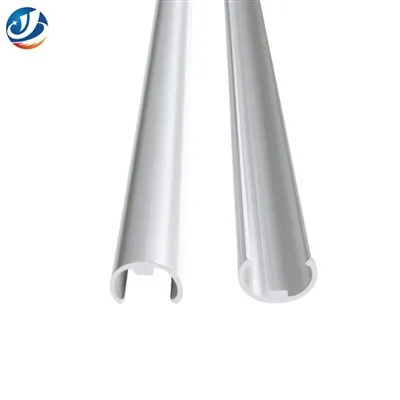
Hey there! As a supplier of Extruded Aluminium T Slot, I often get asked about the hardness of these products. So, let's dive right into it and explore what exactly the hardness of extruded aluminium T slot means and why it matters.
First off, what is extruded aluminium T slot? Well, it's a type of aluminium profile that's been shaped through an extrusion process. This process involves pushing heated aluminium through a die to create a specific cross - sectional shape, in this case, the characteristic T - slot design. You can check out more about Aluminium T Slot Profile on our website.
Now, onto hardness. Hardness is a measure of a material's resistance to deformation, such as scratching, indentation, or wear. In the case of extruded aluminium T slot, hardness plays a crucial role in determining its performance and suitability for different applications.
There are several ways to measure the hardness of aluminium. One of the most common methods is the Brinell hardness test. In this test, a hard ball is pressed into the surface of the aluminium with a specific load, and the diameter of the indentation is measured. The Brinell hardness number (BHN) is then calculated based on the load and the size of the indentation.
Another widely used method is the Rockwell hardness test. This test uses a diamond cone or a hard steel ball to make an indentation in the material. The depth of the indentation is measured, and the Rockwell hardness number is determined.
The hardness of extruded aluminium T slot can vary depending on several factors. One of the main factors is the alloy used. Different aluminium alloys have different chemical compositions, which can significantly affect their hardness. For example, some alloys are specifically designed to be harder and more durable, making them suitable for applications that require high - strength and wear - resistance.
The temper of the aluminium also plays a role. Temper refers to the heat treatment and mechanical working that the aluminium has undergone. Different tempers can result in different levels of hardness. For instance, a fully - hardened temper will generally have a higher hardness than an annealed temper.
The extrusion process itself can also influence the hardness. During extrusion, the aluminium is subjected to high pressure and deformation, which can cause changes in its microstructure. These changes can affect the hardness of the final product.
Let's talk about some of the typical hardness values for extruded aluminium T slot. For common aluminium alloys used in T - slot profiles, the Brinell hardness can range from around 20 to 120 BHN, depending on the alloy and temper. The Rockwell hardness can vary from approximately 15 to 100 HRB (Rockwell B scale).
So, why does the hardness of extruded aluminium T slot matter? Well, if you're using the T - slot in a structural application, a higher hardness can provide better load - bearing capacity and resistance to deformation. This is especially important in applications where the T - slot will be subjected to heavy loads or stresses.
In applications where the T - slot will be in contact with other moving parts, a harder surface can reduce wear and tear, extending the lifespan of the product. For example, in machinery and automation systems, the T - slot may be used to guide and support moving components. A harder T - slot will be less likely to get scratched or damaged, ensuring smooth operation over time.
If you're interested in Extruded Aluminium T Slot, you'll want to consider the hardness based on your specific needs. If you're using it for a light - duty application, such as a display stand or a simple frame, a lower - hardness T - slot may be sufficient. However, for heavy - duty industrial applications, you'll probably want a harder T - slot.
We also offer Triangular V - shaped Linear Cabinet Aluminum, which has its own unique hardness requirements depending on its use. This type of aluminium profile is often used in cabinetry and linear motion systems, where hardness can affect its stability and performance.
When choosing an extruded aluminium T slot, it's important to work with a reliable supplier who can provide accurate information about the hardness and other properties of the product. At our company, we have a team of experts who can help you select the right T - slot based on your application and requirements.
We conduct thorough quality control checks to ensure that our extruded aluminium T slots meet the highest standards of hardness and other mechanical properties. We use advanced testing equipment to measure the hardness and verify that it falls within the specified range for each alloy and temper.
In addition to hardness, we also consider other factors such as corrosion resistance, machinability, and weldability when manufacturing our T - slots. This ensures that our products are not only hard and durable but also easy to work with and suitable for a wide range of applications.
If you're in the market for extruded aluminium T slot, don't hesitate to reach out to us. We're here to answer all your questions and help you find the perfect solution for your project. Whether you need a small quantity for a prototype or a large order for a full - scale production, we can accommodate your needs.
In conclusion, the hardness of extruded aluminium T slot is a critical factor that affects its performance and suitability for different applications. By understanding the factors that influence hardness and working with a reliable supplier, you can ensure that you get the right T - slot for your specific needs. So, if you have any questions or are ready to start a project, just let us know. We're looking forward to working with you!


References:
- Metals Handbook: Properties and Selection - Nonferrous Alloys and Pure Metals, ASM International
- Aluminum Association Technical Papers on Aluminium Alloys and Their Applications