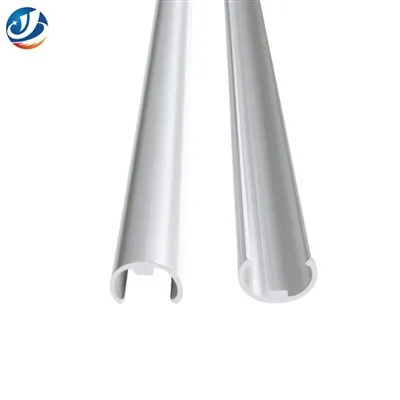
As a long - time supplier of Extruded Aluminium T Slot, I've had numerous conversations with clients, engineers, and designers. One question that often pops up is related to the Poisson's ratio of extruded aluminium T slot. In this blog, I'll take a deep dive into what the Poisson's ratio is, its significance for extruded aluminium T slots, and how it impacts the performance of these products.
Understanding Poisson's Ratio
Before we get into the specifics of extruded aluminium T slots, let's first understand what Poisson's ratio is. Poisson's ratio, denoted by the Greek letter ν (nu), is a measure of the ratio of transverse strain to axial strain in a material when it is subjected to an axial load.
When a material is stretched or compressed in one direction (axial direction), it will also deform in the perpendicular (transverse) directions. For example, when you pull a rubber band, it gets longer (axial deformation) and at the same time, it becomes thinner (transverse deformation). Poisson's ratio quantifies this relationship.
Mathematically, Poisson's ratio is defined as:
ν = - ε_transverse / ε_axial
where ε_transverse is the transverse strain and ε_axial is the axial strain. The negative sign is included because when a material is stretched axially (positive axial strain), the transverse strain is negative (the material gets thinner).
Poisson's Ratio of Aluminium
Aluminium is a widely used metal in various industries due to its excellent combination of properties such as light weight, high strength - to - weight ratio, corrosion resistance, and good formability. The Poisson's ratio of pure aluminium typically ranges from 0.32 to 0.36.
This value can vary slightly depending on factors such as the alloy composition, heat treatment, and manufacturing process. For extruded aluminium T slots, which are usually made from aluminium alloys, the Poisson's ratio is also in a similar range.
Significance of Poisson's Ratio for Extruded Aluminium T Slots
The Poisson's ratio of extruded aluminium T slots has several important implications for their performance and applications.
Structural Integrity
In structural applications, the Poisson's ratio affects how the T - slot profiles respond to loads. When a T - slot is subjected to an axial load, the transverse deformation due to the Poisson's effect can influence the fit and connection with other components. For example, if a T - slot is part of a frame structure and is tightened against other members, the transverse expansion or contraction can affect the clamping force and the overall stability of the structure.
Machining and Assembly
During machining operations such as cutting, drilling, or milling of extruded aluminium T slots, the Poisson's ratio plays a role in determining the dimensional changes. The transverse deformation can cause the slot width or the overall dimensions of the profile to change slightly, which needs to be accounted for in the machining process to ensure the required tolerances are met.
In assembly, the Poisson's effect can also impact the alignment and fitting of components. If two T - slot profiles are joined together, the transverse deformation under load can either improve or degrade the joint quality depending on how the components are designed and assembled.
Design Considerations
Engineers and designers need to take the Poisson's ratio into account when designing structures using extruded aluminium T slots. For example, in a complex framework where multiple T - slot profiles are interconnected, the cumulative effect of the Poisson's ratio on each component can lead to significant dimensional changes. By accurately considering the Poisson's ratio, designers can optimize the design to ensure proper fit, function, and long - term performance of the structure.
Our Extruded Aluminium T Slot Products
As a supplier of Extruded Aluminium T Slot, we offer a wide range of high - quality T - slot profiles. Our products are made from carefully selected aluminium alloys, which are extruded to precise dimensions and undergo strict quality control measures.
Our Aluminium T Slot Profile is known for its excellent surface finish, accurate dimensions, and consistent mechanical properties. The Poisson's ratio of our T - slot profiles is well within the industry - standard range, ensuring reliable performance in various applications.
We also offer U - Shaped Groove Aluminum Profile, which is a popular choice for applications where a U - shaped slot is required. These profiles are designed to provide easy installation and secure connection of components.
Factors Affecting the Poisson's Ratio of Extruded Aluminium T Slots
Although the general range of Poisson's ratio for aluminium is well - established, there are several factors that can cause variations in the Poisson's ratio of extruded aluminium T slots.


Alloy Composition
Different aluminium alloys have different microstructures and mechanical properties. Alloys with higher levels of alloying elements such as copper, magnesium, or zinc can have slightly different Poisson's ratios compared to pure aluminium. For example, some high - strength aluminium alloys may have a Poisson's ratio that is slightly different from the typical range due to the influence of the alloying elements on the atomic bonding and crystal structure.
Heat Treatment
Heat treatment processes such as annealing, quenching, and tempering can alter the microstructure of the aluminium alloy. This, in turn, can affect the Poisson's ratio. For instance, annealing can relieve internal stresses and change the grain size of the alloy, which may result in a change in the Poisson's ratio.
Extrusion Process
The extrusion process used to manufacture the T - slot profiles can also have an impact on the Poisson's ratio. The temperature, pressure, and speed during extrusion can affect the alignment of the grains in the alloy. A well - controlled extrusion process can result in a more uniform microstructure, which may lead to a more consistent Poisson's ratio.
Measuring the Poisson's Ratio of Extruded Aluminium T Slots
Measuring the Poisson's ratio of extruded aluminium T slots typically involves performing mechanical tests on sample specimens. One common method is the tensile test, where a sample of the T - slot profile is subjected to an axial tensile load while measuring the axial and transverse strains simultaneously.
Strain gauges are usually attached to the sample to measure the strains accurately. The axial strain is measured along the direction of the applied load, and the transverse strain is measured perpendicular to the load direction. By recording the strain values at different load levels and calculating the ratio of the transverse strain to the axial strain, the Poisson's ratio can be determined.
Conclusion
The Poisson's ratio of extruded aluminium T slots is an important property that affects their performance, design, and application. As a supplier, we understand the significance of this property and ensure that our products have consistent and reliable Poisson's ratios within the industry - standard range.
Whether you are an engineer designing a new structure, a manufacturer looking for high - quality T - slot profiles, or a contractor in need of reliable aluminium components, our extruded aluminium T slots are the ideal choice. We are committed to providing the best products and services to meet your specific requirements.
If you are interested in our extruded aluminium T slot products or have any questions regarding the Poisson's ratio or other technical aspects, please feel free to contact us for a detailed discussion. We look forward to working with you on your next project.
References
- Callister, W. D., & Rethwisch, D. G. (2016). Materials Science and Engineering: An Introduction. Wiley.
- ASM Handbook Committee. (2000). ASM Handbook Volume 2: Properties and Selection: Nonferrous Alloys and Special - Purpose Materials. ASM International.