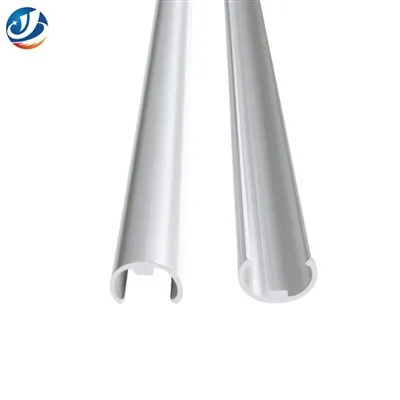
When it comes to extruded aluminum shapes, one of the most frequently asked questions is about their weight. As a supplier of extruded aluminum shapes, I have encountered this query countless times from clients across various industries. Understanding the weight of extruded aluminum shapes is crucial for multiple reasons, including transportation, structural design, and cost - effectiveness.
Factors Affecting the Weight of Extruded Aluminum Shapes
The weight of extruded aluminum shapes is primarily determined by several key factors. Firstly, the volume of the shape plays a significant role. The larger the volume of the extruded aluminum piece, the heavier it will be. This is intuitive, as more aluminum material is used to create a larger - sized shape. For example, a long and thick Aluminium Alloy Flat Bar will weigh more than a short and thin one.
Secondly, the alloy composition of the aluminum has a direct impact on its weight. Different aluminum alloys have different densities. For instance, some high - strength alloys may contain elements such as copper, magnesium, or zinc in varying proportions. These added elements can increase the density of the alloy compared to pure aluminum. As a result, extruded shapes made from these alloys will be heavier than those made from pure aluminum or alloys with lower - density additives.
The cross - sectional area of the extruded shape also matters. A shape with a larger cross - sectional area will have more material in each unit length, leading to a greater weight per unit length. For example, an Aluminium Solid Round Bar with a larger diameter will weigh more than one with a smaller diameter, assuming the same length.
Calculating the Weight of Extruded Aluminum Shapes
To calculate the weight of an extruded aluminum shape, we can use a relatively straightforward formula based on the principles of density. The density of aluminum is approximately 2.7 g/cm³. However, as mentioned earlier, the density can vary depending on the alloy.
The general formula for calculating the weight (W) of an extruded aluminum shape is:
W = ρ × V
where ρ is the density of the aluminum alloy and V is the volume of the shape. To find the volume, for simple geometric shapes like bars or tubes, we can use basic geometric formulas.
For a rectangular bar, the volume V = l × w × h, where l is the length, w is the width, and h is the height. For a round bar, V = π × (r²) × l, where r is the radius and l is the length.
Let's take an example. Suppose we have an Aluminium Solid Round Bar with a radius of 2 cm and a length of 100 cm. Using the density of pure aluminum (ρ = 2.7 g/cm³), we first calculate the volume:
V = π × (2²) × 100 = 400π cm³ ≈ 1256.64 cm³
Then, the weight W = ρ × V = 2.7 g/cm³ × 1256.64 cm³ ≈ 3392.93 g or approximately 3.39 kg
If we were dealing with an alloy with a different density, say 2.8 g/cm³, the weight would be W = 2.8 g/cm³ × 1256.64 cm³ ≈ 3518.59 g or approximately 3.52 kg
Importance of Knowing the Weight in Different Industries
In the construction industry, knowing the weight of extruded aluminum shapes is essential for structural design. Architects and engineers need to ensure that the building's structure can support the weight of the aluminum components. For example, if they are using aluminum beams or columns, the weight will affect the load - bearing capacity of the overall structure. Additionally, during transportation, the weight of these large - scale extruded shapes needs to be considered to determine the appropriate transportation methods and costs.
In the automotive industry, weight is a critical factor as it directly impacts fuel efficiency. Lighter extruded aluminum shapes can be used to replace heavier steel components in vehicles, reducing the overall weight of the car and improving its performance. For instance, Aluminum Truck Side Steps made from lightweight aluminum alloys can contribute to better fuel economy for trucks.
In the electronics industry, where precision and lightweight are often required, the weight of extruded aluminum shapes is carefully considered. Aluminum is commonly used for heat sinks due to its good thermal conductivity. The weight of these heat sinks needs to be optimized to ensure they can be easily integrated into electronic devices without adding excessive weight.
How Our Company Helps with Weight - Related Concerns
As a supplier of extruded aluminum shapes, we understand the importance of providing accurate weight information to our clients. We have a team of experts who can assist in calculating the weight of custom - designed extruded shapes. Our state - of - the - art manufacturing facilities are equipped to produce extruded aluminum shapes with high precision, ensuring that the actual weight of the products closely matches the calculated weight.
We also offer a wide range of aluminum alloys, allowing our clients to choose the one that best suits their needs in terms of both weight and other properties such as strength and corrosion resistance. For example, if a client needs a lightweight component for a portable device, we can recommend an alloy with a lower density. On the other hand, if high strength is the priority, we can suggest alloys with appropriate additives, even if they result in a slightly higher weight.
In addition, we provide detailed product specifications that include the weight per unit length or per piece for our standard extruded shapes. This information helps our clients in their planning and budgeting processes. Whether it's for a small - scale project or a large - scale industrial application, we are committed to providing the best solutions based on the weight requirements of our clients.
Conclusion
The weight of extruded aluminum shapes is a complex but crucial aspect that affects various industries. It is influenced by factors such as volume, alloy composition, and cross - sectional area. By understanding these factors and using appropriate calculation methods, we can accurately determine the weight of these shapes.
As a reliable supplier of extruded aluminum shapes, we are dedicated to helping our clients make informed decisions regarding the weight and other properties of our products. If you are in need of extruded aluminum shapes for your project, we invite you to reach out to us. Our team is ready to discuss your specific requirements, provide detailed information, and assist you in finding the perfect solutions for your needs.


References
- "Aluminum Alloys: Structure and Properties" by Geoffrey E. Totten and David Scott MacKenzie.
- "Handbook of Aluminum" edited by Joseph R. Davis.