

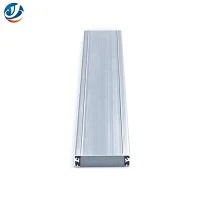
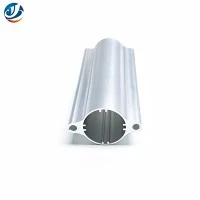


Industrial Computer Aluminum Casing

Aluminum enclosure of an industrial computer is precisely manufactured for the installation and protection of computer hardware. Its design aims to provide physical protection for internal components, support heat dissipation, offer electromagnetic shielding, and adapt to environmental conditions, ensuring stable operation under harsh conditions such as high temperature, high humidity, dust, corrosive gases, or mechanical vibrations.
Product parameters
| Products name | Industrial Computer Aluminum Casing |
| Material | Aluminum 6061-T6 |
| Size | OEM |
| Color | Primarily black and silver, other colors can be customized. |
| Surface finishing | Sanding, brushing, and sandblasting treatments to enhance aesthetics and wear resistance. |
| Impact resistance | Absorbs energy through deformation to protect internal hardware from mechanical damage. |
| Sealed structure | Optional IP54/IP65 protection rating, dustproof and waterproof, suitable for harsh environments. |
| Modular design | Supports DIN rail slots, U-shaped ventilation holes, and removable panels, facilitating hardware installation and maintenance. |
| Installation | Enclosures may be mounted on walls, pendants, embedded, etc., depending on the application scenario and needs. |
| Customized Services | Supports processing of non-standard sizes and irregular structures, with a minimum order quantity (MOQ) as low as 100 pieces. |
Dimensional drawings


High-quality materials
Made from extruded aluminum profiles, offering both lightweight and high strength. The surface is treated with oxidation to form a dense oxide layer, enhancing corrosion resistance.

Professional Equipment
Industrial computer aluminum enclosure Precision cutting and CNC machining ensure the dimensional accuracy of the aluminum profile, meeting your engineering requirements.

Modular design
Supports customizable structures, such as detachable panels, guide rail slots, and U-shaped ventilation holes, facilitating hardware installation and maintenance.

Quality Control
A comprehensive quality management system ensures that every production process meets strict quality standards and procedural requirements.
About the advantages of the product


1. Lightweight yet high-strength, suitable for complex scenarios
Density Advantage: Aluminum alloy has a density of approximately 2.7 g/cm³, only one-third that of steel, significantly reducing equipment weight while maintaining structural strength. For example, the TP-LPC aluminum alloy profile housing reduces weight by over 30% through optimized section design while ensuring impact resistance, making it suitable for mobile industrial equipment or scenarios requiring frequent handling.
Forming Flexibility: Aluminum alloy can be customized into complex shapes through processes such as extrusion and die casting, supporting modular design. For instance, embedded industrial computers use CNC-machined aluminum alloy housings, precisely fitting different sizes of motherboards and interfaces, meeting the customization needs of industries such as automation and medical applications.
2. Thermal management performance to ensure equipment stability
High Thermal Conductivity: Aluminum alloy has a thermal conductivity of 205 W/(m·K), far exceeding steel (50 W/(m·K)) and plastic (0.2 W/(m·K)). Through designs such as heat sinks and heat pipes, fanless cooling can be achieved, reducing failure rates. For example, the SIN-10 series embedded industrial computer uses an aluminum alloy casing with heat pipe technology, running continuously for 72 hours at 40°C, with core temperatures stabilized below 65°C.
Passive Cooling Efficiency: The surface of aluminum alloy casings can undergo anodizing to form a dense oxide layer, further improving radiative heat dissipation. Experimental data show that under the same power conditions, devices with aluminum alloy casings have surface temperatures 15-20°C lower than those with plastic casings, thereby extending the lifespan of electronic components.
3. Electromagnetic shielding and anti-interference capability, meeting strict standards
Natural Shielding Layer: Aluminum alloy, as a conductive metal, can effectively block electromagnetic interference (EMI) and radio frequency interference (RFI). With a grounded enclosure design, the shielding effectiveness can reach 60-80dB, meeting the IEC 61000-6-2 industrial environment electromagnetic compatibility standards.
Enhanced Surface Treatment: Anodizing can form an insulating oxide layer to prevent static electricity buildup; sandblasting can increase surface roughness, improving electromagnetic wave absorption.
4. Corrosion resistance and weather resistance, suitable for harsh environments
Oxide film protection: The naturally formed oxide film on the surface of aluminum alloy (thickness about 5-10 μm) can resist corrosion from salt spray, humidity, and other factors. Salt spray tests (no red rust after 500 hours) and damp heat tests (85°C/85% RH for 1000 hours) have proven it suitable for high-corrosion environments such as marine and chemical industries.
Sealing design: The aluminum alloy casing can achieve IP65/IP67 protection ratings. With designs such as silicone sealing rings and waterproof connectors, it prevents the intrusion of dust and liquids.
5. Environmental protection and sustainability, in line with the trend of green manufacturing
Recyclability: The recycling rate of aluminum alloy reaches up to 95%, and the energy consumption during recycling is only 5% of that of primary aluminum. Using recycled aluminum alloy shells can reduce carbon emissions by more than 30%, complying with environmental regulations such as RoHS and REACH.
Non-toxic materials: Aluminum alloy does not contain harmful substances such as lead or mercury, meeting the EU WEEE Directive. It is suitable for industries with high material safety requirements, such as medical and food processing sectors.
6. Aesthetics and Brand Value Enhancement
Variety of surface treatments: Aluminum alloys can achieve diverse appearances through processes such as anodizing (matte, glossy), sandblasting, and brushing, enhancing the product's texture. For example, silver brushed aluminum alloy housings can create a high-end, professional brand image in industrial equipment.
Customized services: Suppliers offer value-added services such as laser engraving and CNC hollowing.
7. Application Scenarios and Cost-Benefit Analysis
Cost-effective scenarios: Standard aluminum alloy enclosures (such as 6063 profiles) cost 20-30% more than steel enclosures, but by reducing cooling fans and extending maintenance cycles, the overall cost can be reduced by 15-20%. Suitable for low-power scenarios such as data acquisition and monitoring.
High-end demand scenarios: Magnesium-aluminum alloy enclosures cost 40-50% more than aluminum alloy ones, but provide better strength and shielding performance. Suitable for fields with extremely high reliability requirements, such as autonomous driving and aerospace.
Hot Tags: industrial computer aluminum casing, China industrial computer aluminum casing manufacturers, suppliers, factory, extruded aluminum box, Aluminum Camera Housing, extruded aluminum chassis, aluminum extrusion enclosure, extruded aluminum project box, custom extruded aluminum enclosures
You Might Also Like




Send Inquiry