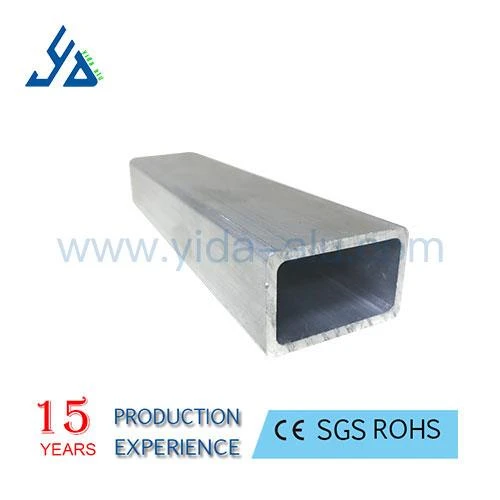
Hey there! As a supplier of Aluminum Square Tubes, I often get asked if there are any special tools required for working with these bad boys. Well, let's dive right in and find out.
First off, let's talk about what aluminum square tubes are. They're super versatile and can be used in a whole bunch of applications, from construction and architecture to automotive and DIY projects. We offer different types, like the Large Aluminum Profiles For Square Tube, Thin Wall Aluminum Extrusion, and 6063 Aluminum Square Tube. Each has its own unique properties and uses, but the tools for working with them share some common ground.
Cutting Tools
When it comes to cutting aluminum square tubes, you've got a few options. One of the most common tools is a hacksaw. It's a simple and affordable option, especially if you're doing small-scale projects at home. Just make sure to use a blade with a fine tooth count, like 32 teeth per inch. This will give you a cleaner cut and reduce the chances of the aluminum getting stuck in the blade.

For more precise and efficient cutting, a miter saw is a great choice. You can set the angle you want and make quick, accurate cuts. There are also circular saws that can be used with a carbide-tipped blade designed for cutting aluminum. These saws can handle larger tubes and are often used in industrial settings.
Another option is a band saw. Band saws are known for their ability to make smooth, straight cuts. They're great for cutting long lengths of aluminum square tubes. Just like with other saws, using the right blade is crucial. A blade with a variable tooth pitch is usually a good choice for aluminum.
Drilling Tools
If you need to drill holes in your aluminum square tubes, a drill press is the way to go for precision work. It allows you to control the speed and pressure, ensuring clean and accurate holes. You can use high-speed steel (HSS) drill bits for most aluminum drilling tasks. However, for harder aluminum alloys or larger holes, cobalt drill bits are a better option as they're more durable and can handle the heat generated during drilling.
If you don't have a drill press, a handheld drill can also do the job. Just make sure to keep the drill perpendicular to the surface of the tube to avoid angled holes. And don't forget to use cutting fluid to lubricate the drill bit and reduce friction.
Bending Tools
Bending aluminum square tubes can be a bit tricky, but with the right tools, it's definitely doable. For small bends, a simple hand bender can be used. It's a manual tool that allows you to bend the tube by applying force. However, for larger or more complex bends, a hydraulic tube bender is a better option. These machines use hydraulic pressure to bend the tube to the desired shape.
There are also electric tube benders available. They're more automated and can provide consistent bends. When using any bending tool, it's important to measure and mark the tube accurately to ensure the bend is in the right place.
Joining Tools
If you need to join two aluminum square tubes together, welding is a common method. TIG (Tungsten Inert Gas) welding is often used for aluminum because it provides a high-quality, clean weld. You'll need a TIG welding machine, a tungsten electrode, and a shielding gas like argon. MIG (Metal Inert Gas) welding is another option, which is faster but may not be as precise as TIG welding.
For non-welded joints, you can use rivets or screws. A rivet gun is used to install rivets, creating a strong and permanent joint. Screws can be installed using a screwdriver or a power drill with a screwdriver bit. Make sure to choose the right size and type of rivets or screws for your application.
Finishing Tools
After cutting, drilling, bending, and joining, you may want to finish the surface of your aluminum square tubes. Sandpaper is a simple and effective way to smooth out rough edges and surfaces. You can start with a coarse-grit sandpaper to remove any burrs and then move on to a finer-grit sandpaper for a smoother finish.
There are also deburring tools available. These tools are designed to remove the sharp edges left after cutting or drilling. They can be handheld or attached to a power tool for more efficient deburring.
Safety Equipment
No matter which tools you use, safety should always be your top priority. When working with aluminum square tubes, you should wear safety glasses to protect your eyes from flying debris. Gloves are also important to protect your hands from sharp edges and cuts.
If you're using power tools, ear protection is a must as they can be quite noisy. A dust mask is also recommended, especially when cutting or sanding aluminum, as it can produce fine dust particles that can be harmful if inhaled.
Assembly and Fastening Tools
When it comes to assembling aluminum square tubes into a structure, you'll need some additional tools. Wrenches are essential for tightening nuts and bolts. You'll want a set of combination wrenches that include both open-end and box-end wrenches. Socket wrenches are also useful, especially for hard-to-reach areas.
Pliers can come in handy for gripping and holding small parts during assembly. Needle-nose pliers are great for reaching into tight spaces, while slip-joint pliers can be adjusted to different sizes.
Measuring Tools
Accurate measurements are crucial when working with aluminum square tubes. A tape measure is a basic tool that you'll use all the time. Make sure to get a good-quality tape measure with clear markings.
A combination square is another useful tool. It can be used to measure angles, check for square, and mark straight lines. A caliper is also handy for measuring the thickness of the tube walls or the diameter of holes.
Welding Accessories
If you're into welding aluminum square tubes, there are some accessories that can make your job easier. A welding helmet with an auto-darkening lens is a must. It protects your eyes from the intense light of the welding arc and adjusts the shade automatically.
Welding gloves are also important. They should be made of heat-resistant material to protect your hands from the heat and sparks. A welding jacket or apron can provide additional protection for your body.
Specialized Tools for Specific Applications
Depending on your project, you may need some specialized tools. For example, if you're working on a project that requires a lot of intricate bends, a tube notcher can be very useful. It allows you to make precise notches in the tube, which can then be bent to form complex shapes.
If you're working with thin-wall aluminum square tubes, like the ones in our Thin Wall Aluminum Extrusion range, you may need tools that are more gentle to avoid damaging the tube walls.
Maintenance of Tools
To keep your tools in good working condition, regular maintenance is essential. After each use, clean your cutting tools to remove any aluminum debris. You can use a wire brush or a solvent to clean the blades.
For drilling tools, make sure to sharpen the drill bits regularly. Dull drill bits can cause rough holes and increase the risk of the drill bit breaking.
Lubricate your bending and joining tools to ensure smooth operation. Check the hydraulic fluid levels in hydraulic tube benders and replace it if necessary.
Conclusion
So, as you can see, there are several tools required for working with aluminum square tubes, but they're not overly complicated or hard to find. Whether you're a DIY enthusiast or a professional in the industry, having the right tools will make your projects go much smoother.
If you're in the market for high-quality aluminum square tubes, we've got you covered. We offer a wide range of products, including Large Aluminum Profiles For Square Tube, Thin Wall Aluminum Extrusion, and 6063 Aluminum Square Tube. If you have any questions or want to discuss your specific requirements, feel free to reach out. We're here to help you with your aluminum square tube needs.
References
- "Aluminum: Properties, Processing, and Applications" by ASM International
- "The Complete Guide to Metalworking Tools" by Simon J. Wells
- Various online resources on metalworking and aluminum fabrication