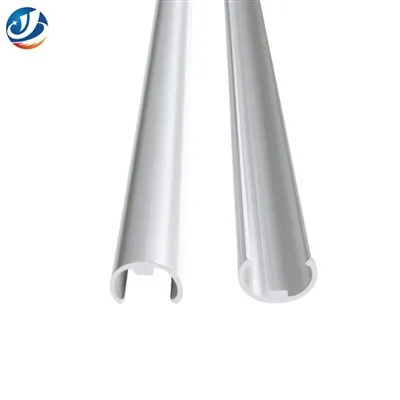
Hey there! As a supplier of extruded aluminum rails, I've seen firsthand how crucial it is to optimize these rails for specific applications. In this blog, I'll share some insights on how to do just that, covering everything from material selection to design features and manufacturing processes.
Understanding the Requirements
The first step in optimizing the design of extruded aluminum rails is to understand the specific requirements of the application. This involves looking at factors like the load capacity, the environment the rail will be in, movement requirements, and aesthetic needs.
Let's say you're working on a conveyor system. The load capacity is super important here. You need to figure out how much weight the rail will need to support and at what speed. For instance, a high - speed conveyor moving heavy industrial parts will require a much sturdier rail compared to a slow - moving conveyor for light - weight items.
The environment also plays a huge role. If the rail will be used in a corrosive environment, such as a chemical plant or near the ocean, you'll need to choose an aluminum alloy that can resist corrosion. On the other hand, if it's for an indoor, climate - controlled environment, you have more flexibility in your material choice.
Movement requirements are another key consideration. Is the rail going to be used for linear motion, or will it need to accommodate curves and turns? Some applications might require smooth, continuous movement, while others might need the rail to lock in specific positions.
Aesthetic needs can't be overlooked either. In consumer products, like furniture or display cases, the appearance of the rail can be just as important as its functionality. You might want a sleek, polished look or a specific color to match the overall design.
Choosing the Right Aluminum Alloy
Once you understand the requirements, it's time to choose the right aluminum alloy. Different alloys have different properties, such as strength, corrosion resistance, and machinability.
For high - strength applications, alloys like 6061 and 7075 are popular choices. 6061 is known for its good combination of strength, weldability, and corrosion resistance. It's often used in structural applications, such as frames and supports. 7075, on the other hand, is one of the strongest aluminum alloys available. It's commonly used in aerospace and high - performance automotive applications.
If corrosion resistance is your top priority, alloys like 3003 and 5052 are great options. 3003 has excellent corrosion resistance and is easy to work with, making it suitable for a wide range of applications, including outdoor furniture and signage. 5052 is also highly corrosion - resistant and has good formability, making it a popular choice for marine applications.
Design Features for Optimization
Now, let's talk about some design features that can optimize the performance of extruded aluminum rails.
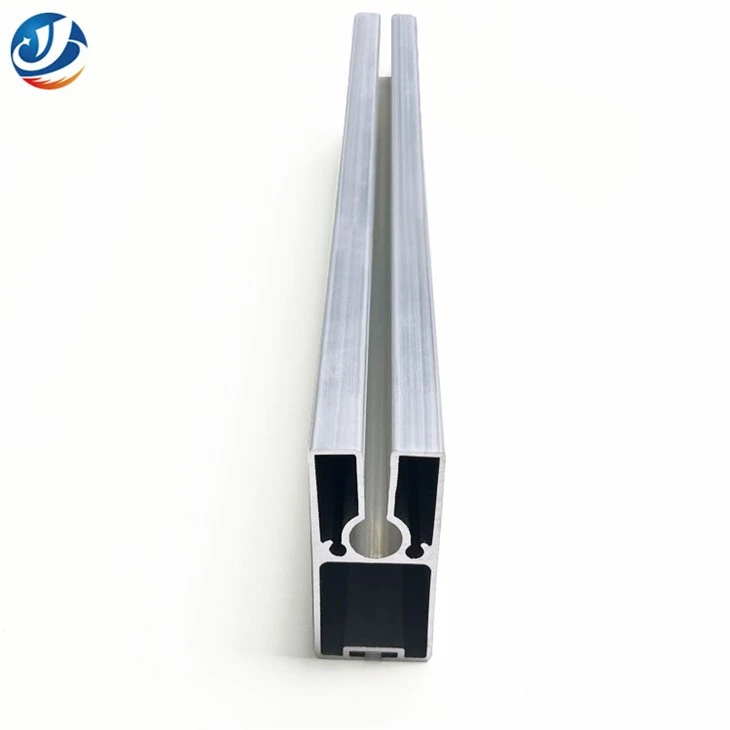
One important feature is the shape of the rail. For example, a Aluminum T Track Extrusion has a T - shaped groove that allows for easy installation of accessories. This type of rail is commonly used in industrial applications, such as machine tooling and automation systems.
Another design consideration is the addition of holes or slots. These can be used for mounting the rail to a surface or for attaching other components. By strategically placing holes and slots, you can make the installation process more efficient and ensure a secure fit.
Surface finish is also crucial. A smooth surface finish can reduce friction, making it easier for objects to move along the rail. This is especially important in applications where low - friction movement is required, such as in sliding doors or drawers. On the other hand, a textured surface finish can provide better grip, which might be necessary for applications where objects need to be held in place.
Customization for Specific Applications
One of the great things about extruded aluminum rails is their versatility. They can be easily customized to meet the specific needs of different applications.
For example, if you're designing a Curtain Track Aluminum Profiles, you might need to incorporate features like smooth curves and adjustable hangers. These features can make it easier to install the curtain track and ensure that the curtains move smoothly.
In the case of Aluminium Track Extrusions, customization might involve adding special coatings or treatments to improve wear resistance or appearance. You could also modify the cross - section of the rail to increase its strength or stiffness.

Manufacturing Processes
The manufacturing process can also have a significant impact on the quality and performance of the extruded aluminum rails.
Extrusion is the primary manufacturing process for aluminum rails. During extrusion, a heated aluminum billet is forced through a die to create the desired shape. The speed and temperature of the extrusion process need to be carefully controlled to ensure a uniform and high - quality product.
After extrusion, the rails might undergo additional processes, such as heat treatment or machining. Heat treatment can improve the strength and hardness of the aluminum, while machining can be used to add precision - cut features or to achieve a specific dimensional tolerance.
Quality Control
Quality control is essential to ensure that the extruded aluminum rails meet the required standards. This involves inspecting the rails at various stages of the manufacturing process, from raw material inspection to final product testing.
Some common quality control measures include visual inspection for surface defects, dimensional measurement to ensure accuracy, and mechanical testing to evaluate the strength and performance of the rail. By implementing a rigorous quality control system, you can ensure that your customers receive a high - quality product that meets their expectations.
Conclusion
Optimizing the design of extruded aluminum rails for specific applications is a multi - step process that involves understanding the requirements, choosing the right alloy, incorporating the appropriate design features, and implementing a high - quality manufacturing process.
As a supplier of extruded aluminum rails, I'm here to help you with all your rail design and manufacturing needs. Whether you need a standard rail or a custom - designed solution, we have the expertise and resources to deliver a product that meets your specific requirements.
If you're interested in learning more about our extruded aluminum rails or want to discuss a specific application, feel free to reach out. We're ready to work with you to optimize the design and bring your project to life.
References
- ASM Handbook, Volume 2: Properties and Selection: Nonferrous Alloys and Special - Purpose Materials.
- Aluminum Association: Design Guide for Structural Aluminum.