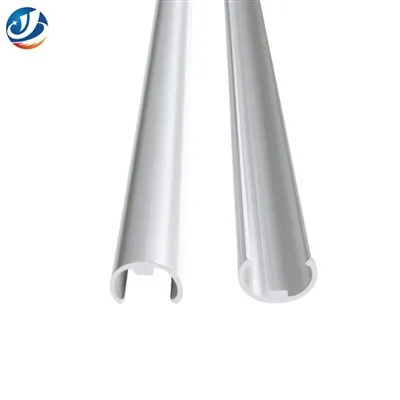
As a seasoned supplier of CNC aluminium profiles, I've witnessed firsthand the transformative power of broaching operations in the manufacturing process. Broaching is a machining process that uses a toothed tool, called a broach, to remove material from a workpiece. This process is particularly well-suited for CNC aluminium profiles due to the material's malleability and the precision required in modern manufacturing.
Understanding Broaching Operations
Broaching is a highly efficient and accurate machining method. Unlike other machining processes, broaching can produce complex shapes in a single pass. The broach is a long, slender tool with a series of teeth that gradually increase in size. As the broach is pulled or pushed through the workpiece, each tooth removes a small amount of material, resulting in a precise and smooth finish.
There are two main types of broaching: internal and external. Internal broaching is used to create holes or internal shapes, such as keyways, splines, and square or hexagonal holes. External broaching, on the other hand, is used to machine external surfaces, such as flat surfaces, grooves, and profiles.
Advantages of Broaching for CNC Aluminium Profiles
One of the primary advantages of broaching for CNC aluminium profiles is its high precision. The broaching process can achieve tight tolerances, typically within a few thousandths of an inch. This level of precision is essential for applications where accuracy is critical, such as in the aerospace and automotive industries.
Another advantage of broaching is its efficiency. Since the broaching process can produce complex shapes in a single pass, it is much faster than other machining methods, such as milling or turning. This can significantly reduce production time and costs.
In addition, broaching produces a smooth surface finish. The teeth of the broach are designed to cut the material cleanly, leaving a smooth and burr-free surface. This eliminates the need for additional finishing operations, such as sanding or polishing.
Applications of Broaching in CNC Aluminium Profiles
Broaching is widely used in the manufacturing of CNC aluminium profiles for various applications. One common application is the production of CNC Display Frame Aluminum Profile. These profiles are used in the construction of display frames, cabinets, and other structures. Broaching can be used to create precise grooves and channels in the profiles, which are used to mount glass, acrylic, or other materials.
Another application of broaching in CNC aluminium profiles is the production of Cnc Router Aluminium Profile. These profiles are used in the construction of CNC routers, which are used for cutting, engraving, and milling various materials. Broaching can be used to create precise slots and holes in the profiles, which are used to mount the router components.
Broaching is also used in the production of Cnc Small Aluminum Parts. These parts are used in a wide range of applications, such as electronics, automotive, and aerospace. Broaching can be used to create precise shapes and features in the parts, such as keyways, splines, and holes.
Broaching Process for CNC Aluminium Profiles
The broaching process for CNC aluminium profiles typically involves the following steps:
- Workpiece Preparation: The workpiece is first prepared by cutting it to the desired size and shape. The surface of the workpiece is then cleaned and deburred to ensure a smooth and even surface.
- Broach Selection: The appropriate broach is selected based on the shape and size of the desired feature. The broach must be carefully designed to ensure that it can produce the desired shape and finish.
- Setup: The broach is then mounted in a broaching machine. The workpiece is also mounted in the machine, and the broach is aligned with the workpiece.
- Broaching: The broach is then pulled or pushed through the workpiece. As the broach moves through the workpiece, each tooth removes a small amount of material, resulting in the desired shape and finish.
- Inspection: After the broaching process is complete, the workpiece is inspected to ensure that it meets the required specifications. Any defects or errors are corrected before the workpiece is used in the final product.
Challenges and Considerations
While broaching is a highly effective machining process, it also presents some challenges and considerations. One of the main challenges is the cost of the broaching tools. Broaching tools are typically more expensive than other machining tools, due to their complex design and high precision.
Another challenge is the need for specialized equipment. Broaching machines are typically large and expensive, and they require a skilled operator to operate them. In addition, the broaching process requires a significant amount of force, which can put stress on the machine and the workpiece.
Finally, the broaching process can produce a large amount of chips and debris. This can pose a safety hazard and can also damage the broaching machine and the workpiece. It is important to have a proper chip management system in place to ensure a safe and efficient broaching process.
Conclusion
Broaching is a powerful and versatile machining process that is well-suited for the production of CNC aluminium profiles. It offers high precision, efficiency, and a smooth surface finish. By understanding the broaching process and its applications, manufacturers can produce high-quality CNC aluminium profiles that meet the demands of modern manufacturing.
If you are interested in learning more about broaching operations for CNC aluminium profiles or are looking to purchase high-quality CNC aluminium profiles, please feel free to contact us. We would be happy to discuss your specific needs and provide you with a customized solution.


References
- "Machining Handbook," 31st Edition, Industrial Press Inc.
- "Manufacturing Engineering and Technology," 6th Edition, Pearson Education Inc.
- "Modern Machining Technology," 4th Edition, Goodheart-Willcox Co., Inc.