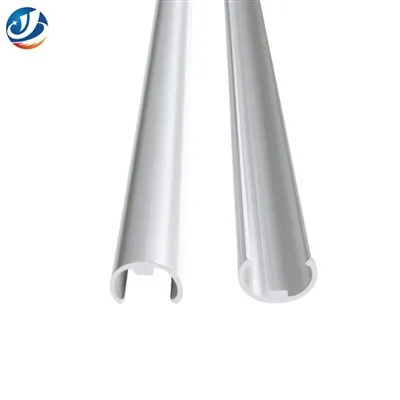
Hey there! If you're in the market for high - quality aluminium frame profiles, you've come to the right place. I'm a supplier of these amazing products, and today, I want to chat about the magnetic properties of aluminium frame profiles.
First off, let's get one thing straight. Aluminium is generally considered a non - magnetic material. Unlike iron, nickel, or cobalt, which are ferromagnetic, aluminium doesn't have a strong intrinsic magnetic field. Ferromagnetic materials can be easily magnetized and attracted to magnets because of the alignment of their atomic magnetic moments. Aluminium, on the other hand, has a more random arrangement of electrons, which means it doesn't respond strongly to magnetic fields in the same way.
However, when we talk about magnetic properties in the context of aluminium frame profiles, things aren't that simple. There are a few factors that can influence how aluminium interacts with magnetic fields in a practical sense.
One aspect is the presence of impurities. In real - world aluminium frame profiles, they're hardly 100% pure aluminium. There can be small amounts of other elements mixed in during the manufacturing process. Some of these impurities might have magnetic properties. For example, if there are trace amounts of iron or nickel in the aluminium alloy, it could potentially make the profile slightly more responsive to magnetic fields. But usually, these impurity levels are so low that the overall magnetic effect is still extremely weak.
Another thing to consider is the structure of the aluminium frame profile. Sometimes, the way the profile is fabricated can introduce some interesting magnetic behaviors. For instance, during the extrusion process, when the aluminium is forced through a die to create the desired shape, the internal structure of the material can be altered. This can lead to the formation of small areas with different crystal orientations and dislocation densities. In theory, these structural changes could have a minor impact on the way the profile interacts with magnetic fields, but again, it's not going to turn the non - magnetic aluminium into a magnet.
Now, you might be wondering why we even care about the magnetic properties of aluminium frame profiles. Well, in some applications, it actually matters quite a bit. Take the electronics industry, for example. Aluminium frame profiles are often used in the enclosures of electronic devices. Since electronics can generate electromagnetic fields, having a non - magnetic frame is crucial. A magnetic frame could interfere with the normal operation of the electronic components inside by distorting the magnetic fields they produce or are sensitive to.
In the construction industry, the non - magnetic nature of aluminium frame profiles is also an advantage. They can be used in buildings where magnetic interference needs to be minimized, such as in hospitals with sensitive medical equipment or in laboratories with high - precision scientific instruments.
Let's talk about our range of aluminium frame profiles. We offer a diverse selection that caters to different needs and applications. For example, our Aluminium Window Frame Decorative Strip not only adds a touch of style to your windows but also benefits from the non - magnetic properties of aluminium. It won't cause any magnetic interference, which is great if you have electronic window controls or sensors nearby.
Our Extruded Aluminum Cabinet Door Handles are another great product. They're made from high - quality aluminium alloys, offering durability and a sleek appearance. The non - magnetic nature ensures that they won't attract dust or other magnetic particles, which is ideal for keeping your cabinets clean and presentable.
And then there's our Double - Sided Stackable Slatwall. This is a versatile product that can be used in retail stores, warehouses, or even in your home garage. The fact that it's non - magnetic means it won't interfere with any electronic inventory systems or other magnetic - sensitive equipment in the vicinity.
In conclusion, the magnetic properties of aluminium frame profiles are mainly characterized by their non - magnetic nature. While there can be some minor exceptions due to impurities or fabrication - induced structural changes, these profiles are generally a great choice for applications where magnetic interference needs to be avoided.
If you're in the market for aluminium frame profiles, whether it's for a simple DIY project at home or a large - scale commercial construction, we're here to help. Our products are of the highest quality, and we pride ourselves on providing excellent customer service. Get in touch with us to start discussing your requirements and find the perfect aluminium frame profiles for your needs.


References:
- "Physical Metallurgy Principles" by Robert W. Cahn and Peter Haasen
- "Aluminium Alloys: Structure and Properties" by Glenn E. Totten and D. Scott MacKenzie