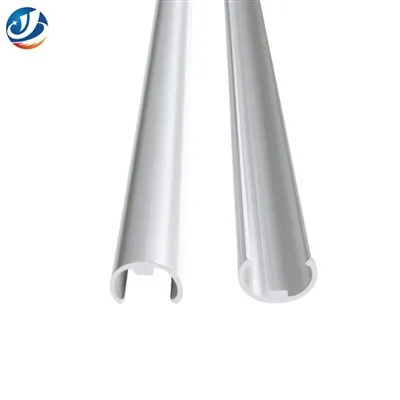
When it comes to construction projects, the reliability and strength of formwork materials play a crucial role in ensuring the safety and efficiency of the entire operation. As a leading supplier of Formwork Aluminium Beams, I often encounter inquiries about the bending strength of these essential components. In this blog post, I'll delve into the concept of bending strength, factors that affect it, and how our Formwork Aluminium Beams stack up in real - world applications.
Understanding Bending Strength
Bending strength, also known as flexural strength, is the maximum stress a material can withstand when subjected to bending forces before it fails. In the context of formwork aluminium beams, this property is of utmost importance. During construction, these beams are used to support concrete slabs, walls, and other structures. They need to hold the weight of the wet concrete, workers, and construction equipment without deforming or breaking.
The bending strength of a material is typically measured in units of force per unit area, such as megapascals (MPa) or pounds per square inch (psi). When a load is applied to an aluminium beam, it causes the beam to bend. The outer fibers of the beam experience tension (stretching), while the inner fibers experience compression. The bending strength indicates the point at which the beam can no longer resist these internal stresses and begins to deform permanently or break.
Factors Affecting the Bending Strength of Formwork Aluminium Beams
Alloy Composition
The alloy from which the aluminium beam is made significantly impacts its bending strength. Different aluminium alloys have different chemical compositions, which result in varying mechanical properties. For example, some alloys are designed to be more corrosion - resistant, while others are engineered for high strength. As a supplier, we carefully select alloys that offer an optimal balance of strength, durability, and cost - effectiveness for formwork applications. Alloys like 6061 and 6082 are commonly used in formwork aluminium beams due to their good combination of strength and workability.
Beam Geometry
The shape and dimensions of the beam also play a vital role in determining its bending strength. Beams with a larger cross - sectional area and a well - designed shape can distribute the bending forces more effectively, resulting in higher bending strength. For instance, an I - shaped beam, also known as an I - beam, is often used in construction because its design allows it to resist bending better than a solid rectangular beam of the same weight. The flanges (the top and bottom horizontal parts) of the I - beam carry most of the bending stress, while the web (the vertical part) provides stability.
Heat Treatment
Heat treatment is a process that can enhance the mechanical properties of aluminium beams. By subjecting the beams to specific heating and cooling cycles, we can change the internal structure of the alloy, improving its strength and hardness. Heat - treated aluminium beams can have significantly higher bending strength compared to non - heat - treated ones. However, the heat treatment process must be carefully controlled to avoid over - hardening, which can make the beam brittle and prone to cracking.


Measuring the Bending Strength of Formwork Aluminium Beams
To accurately determine the bending strength of our formwork aluminium beams, we use a variety of testing methods. One of the most common methods is the three - point bending test. In this test, a beam is placed on two supports and a load is applied at the center of the beam. The load is gradually increased until the beam fails, and the maximum load at failure is recorded. From this data, we can calculate the bending strength of the beam using engineering formulas.
Another method is the four - point bending test, which is similar to the three - point test but with two loads applied at equal distances from the center of the beam. This test is useful for simulating real - world loading conditions more accurately, as it creates a region of constant bending moment in the middle of the beam.
Real - World Applications and Our Product's Performance
In construction sites around the world, our Formwork Aluminium Beams have proven their worth. They are used in a wide range of projects, from small residential buildings to large commercial skyscrapers. Our beams are designed to meet or exceed industry standards for bending strength, ensuring the safety and stability of the formwork systems.
For example, in a recent high - rise building project, our formwork aluminium beams were used to support the concrete slabs on each floor. The beams were able to withstand the heavy load of the wet concrete, construction workers, and equipment without any signs of excessive bending or deformation. This not only ensured the safety of the workers but also contributed to the smooth progress of the construction project.
Comparing with Other Materials
When compared to traditional formwork materials such as wood and steel, aluminium beams offer several advantages in terms of bending strength. Wood beams are generally less strong than aluminium beams and are more prone to warping, rotting, and insect damage. Steel beams, on the other hand, are very strong but are much heavier than aluminium beams. The lightweight nature of aluminium beams makes them easier to handle and install, reducing labor costs and improving construction efficiency.
In addition, aluminium beams have better corrosion resistance than steel beams, especially in humid or coastal environments. This means that our formwork aluminium beams can be reused multiple times without significant loss of strength, making them a more cost - effective and sustainable choice in the long run.
Related Products: Aluminium Track Extrusions and Rails
If you're involved in construction or related industries, you might also be interested in our Aluminium Track Extrusions, Aluminium Rail Track, and Aluminum T Track Extrusion. These products are also made from high - quality aluminium alloys and offer excellent strength and durability. They can be used in conjunction with our formwork aluminium beams to create more versatile and efficient construction systems.
Conclusion and Call to Action
In conclusion, the bending strength of formwork aluminium beams is a critical property that determines their performance in construction applications. Our company, as a trusted supplier of Formwork Aluminium Beams, is committed to providing high - quality products that meet the strictest standards of bending strength and reliability.
Whether you're a contractor, builder, or engineer, choosing the right formwork materials is essential for the success of your project. Our Formwork Aluminium Beams offer a combination of high strength, lightweight design, and excellent corrosion resistance, making them the ideal choice for a wide range of construction projects.
If you're interested in learning more about our Formwork Aluminium Beams or have any questions about bending strength and other technical aspects, we encourage you to contact us. Our team of experts is ready to assist you in selecting the right products for your specific needs and to provide you with detailed technical information and support. Let's work together to ensure the success of your next construction project.
References
- "Aluminium Alloys: A Technical Guide" by ASM International.
- "Structural Analysis and Design of Buildings" by McCormac and Brown.
- Industry standards and guidelines for formwork design and construction.