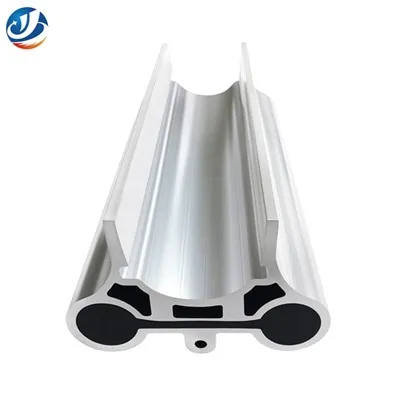
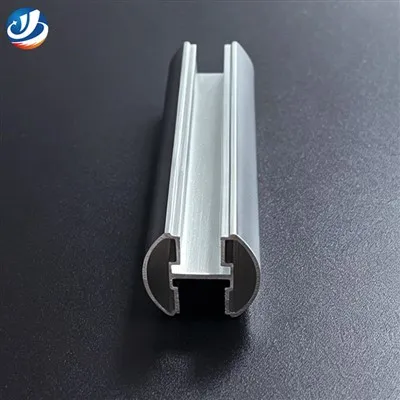
The energy storage lithium battery module end plate is a core structural component of the energy storage battery PACK module, mainly assembled at both ends of the battery module. A single standard module usually is equipped with two end plates, which, together with straps and bolts, complete the pressing and fixing of the battery cells.
一. Core Functions and Roles
In energy storage scenarios, batteries undergo many cycles, have long service lives, and operate under stable conditions. The functions of the end plates are specifically adapted to the long-term operational requirements of energy storage, with five core roles:
Anti-expansion and structural stability: Lithium batteries continuously expand and contract during charging and discharging. Energy storage cells are stacked in large numbers, resulting in significant cumulative expansion force. End plates provide a constant pre-tightening constraint to suppress cell swelling and deformation, maintain the overall alignment of the module, prevent loosening or misalignment after long-term cycles, and greatly extend battery lifespan.
Mechanical safety protection: They resist vibration, impact, and compression loads during equipment transportation and maintenance, protecting internal components such as cells, busbars, and sampling harnesses. This serves as the fundamental structural guarantee for the module to pass various safety and reliability tests.
Ensure stable electrical connections: End plates provide fixed installation references for busbars, sampling harnesses, and insulation accessories, preventing potential issues such as loose connections, poor contact, or overheating caused by module deformation or vibration. They are suitable for energy storage systems with high current and long-duration continuous operation.
Assist thermal management: Metal end plates have excellent thermal conductivity and can assist in dissipating heat from the cells, balancing the module's temperature field, reducing local heat accumulation, and lowering the risk of thermal runaway in energy storage batteries.
Adapt to automated production and assembly: Standardized end plates reserve positioning holes, gripping slots, and reference installation surfaces, suitable for automated stacking, assembly, and handling processes in energy storage PACK production lines, improving mass production efficiency and assembly accuracy.
二. Main Materials, Processes, and Suitable Scenarios
The selection of materials for energy storage end plates is based on the core principles of 'high strength, high insulation, corrosion resistance, lightweight, and low cost.' The mainstream types are divided into three categories, suitable for different energy storage power levels and scenarios.
1. Engineering plastic end plate
The material is mainly PA66 with 15%-30% glass fiber, molded using an integrated injection molding process. Its advantages are excellent insulation, no need for additional insulating spacers, corrosion resistance, lightweight, the ability to integrally form complex ribs and mounting hole structures, high yield, and low mass production cost. It is suitable for residential small-scale energy storage and lightweight integrated modules, and is also the mainstream choice for CTP integrated energy storage modules. The disadvantage is that its high-temperature resistance and extreme rigidity are weaker than metal materials, making it unsuitable for ultra-high-power heavy-duty energy storage modules.
2. Aluminum Alloy End Plates
Divided into die-cast aluminum and extruded aluminum processes, suitable for most commercial, industrial, and large power grid energy storage scenarios:
Die-cast aluminum alloy: Common materials include ADC12, ALSi10MnMg, A380. Capable of forming complex structures such as lifting holes, fixed bases, and weight-reducing grooves in a single casting without secondary assembly. It has high dimensional accuracy and strong structural integrity, suitable for large-power energy storage modules with complex structures.
Extruded aluminum alloy: Commonly used materials are 6061-T6 and 6063-T6, with 6061 having stronger rigidity and better compression performance. Standard wall thickness is 1.5-2mm, with high flatness and minimal deformation. It can stably withstand long-term expansion forces of battery cells, suitable for large energy storage plants with long service life and high reliability requirements.
3. Sheet Metal End Plate
Formed by bending aluminum plates, requiring no mold, with a short development cycle and very low cost, but overall rigidity is weak and resistance to deformation is poor, with no complex structural design. Only suitable for small, simple energy storage modules, prototype test units, and other scenarios with low structural strength requirements; rarely used in large-scale energy storage projects.
三. Core Design Points (Special Adaptation for Energy Storage)
1. Size and Structural Design
The end plate width is adapted to the total width of the stacked cells, with a height slightly lower than the cell height, leaving assembly clearance at the top and bottom to facilitate fixation of the module to the box beams and installation of the high-voltage seat. The load-bearing surfaces are designed as flat planes, with reinforcing ribs uniformly arranged on surfaces not in contact with the cells and evenly distributed to avoid uneven stress. The thickness is determined based on the number of module cells and expansion force calculations. Large energy storage modules require increased thickness to enhance load-bearing capacity. At the same time, the industry has seen differentiated thickness designs: thicker main areas ensure structural strength, while thinner edges accommodate the box, balancing protection and space utilization.
2. Selection of Installation Methods
Bolt-fixed: Removable, easy to maintain, suitable for standardized mass production of energy storage modules and later maintenance and replacement, and is the industry mainstream;
Welded: Extremely strong structural stability, no risk of loosening, suitable for fixed long-term energy storage power stations, but cannot be disassembled and has high maintenance costs;
Snap-fit: High assembly efficiency, suitable for lightweight, standardized small energy storage modules, with relatively weaker seismic performance.
3. Insulation and Safety Design
Plastic end plates have inherent insulation properties and do not require additional protection; metal end plates must be equipped with insulating spacers to prevent short-circuit risks caused by metal burrs piercing the 0.1mm blue film of the battery cell. This is a mandatory requirement for the safety design of energy storage PACKs.
4. Preload Matching Design
The energy storage module has a service life of over 10 years, and the battery cells exhibit irreversible swelling characteristics. The end plate design needs to match the precise preload, which can not only suppress the cycling swelling of the cells but also ensure continuous contact between the cells and the thermal interface and aerogel layer, guaranteeing thermal management efficiency and battery cycle life.
四. Core Industry Performance Indicators
The precision and performance of energy storage end plates directly determine module reliability. The commonly used mass production acceptance indicators in the industry are as follows:
Dimensional accuracy: Overall dimensional tolerance within ±0.1mm, flatness ≤0.05mm, ensuring assembly fit in automation and preventing uneven local stress;
Mechanical performance: Yield strength ≥200MPa, capable of stably withstanding the stacked expansion force of cells, with no significant deformation or cracking after thousands of cycles;
Surface quality: Metal end plates need sandblasting, plastic spraying, and anodizing treatment, eliminating burrs and sharp edges, enhancing insulation and corrosion resistance;
Lightweight balance: While meeting strength requirements, reduce weight through recessed grooves and local thinning design, decreasing the overall load of the energy storage system.
五. Industry Development Trends
Structural Integration: Gradually replacing traditional dual-end plate structures, adopting integrated end plates, compatible with multi-module splicing, improving space utilization of energy storage battery packs, and reducing the number of components and assembly costs;
Lightweight and High-Strength Materials: Promoting high-toughness aluminum alloys and modified fiberglass plastics in high-end energy storage scenarios, balancing strength, insulation, and weight reduction, meeting energy storage system cost reduction, efficiency improvement, and capacity expansion demands;
Refined Design: Differentiated thickness, zonal reinforcement, and precise pre-tightening matching becoming mainstream designs, specifically addressing long-term battery swelling and local stress concentration issues, suitable for ultra-long-life energy storage requirements;
Standardized Mass Production: Residential and commercial energy storage end plates gradually moving towards specification standardization, reducing custom mold costs, adapting to industry-scale and rapid delivery trends;
Adaptation to Integrated Architecture Upgrades: Following CTP and large-module technology iterations, lightweight plastic end plates and minimalist metal end plates gradually replace traditional heavy end plates, adapting to the integrated and flattened development direction of battery systems.