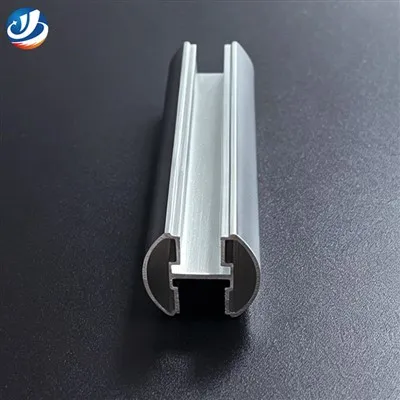
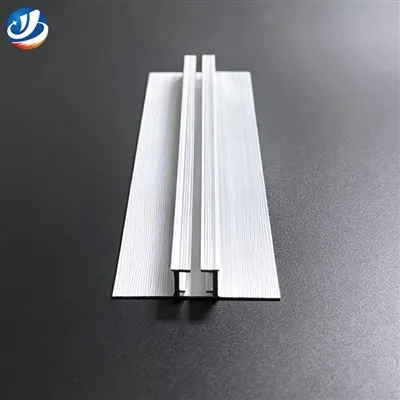
In today's era of highly integrated electronic devices and continuously increasing power density, heat dissipation performance has become a key factor determining device stability, service life, and operational efficiency. Aluminum profile heat sinks, with their excellent thermal conductivity, lightweight structure, flexible processing characteristics, and high cost-effectiveness, have become core components of thermal management solutions in various fields such as industrial manufacturing, electronic technology, and new energy. They quietly provide 'cooling support' for all kinds of devices, driving the industry toward efficiency, energy saving, and miniaturization.
1. Core Features: The Innate Advantages Conferred by Material and Craftsmanship
The excellent performance of aluminum profile radiators stems from the physical properties of aluminum itself and the precise processing technology, both of which complement each other to create its irreplaceable competitive advantage.
The inherent advantages of aluminum are particularly prominent. Aluminum's thermal conductivity is typically above 200 W/(m·K), much higher than common metals such as steel and iron, allowing it to quickly transfer the heat generated by components to the entire surface of the heat sink, laying the foundation for efficient cooling. At the same time, aluminum has a density of only 2.7 g/cm³, and for the same volume, its weight is about one-third that of copper, significantly reducing the overall burden of end devices, making it especially suitable for industrial sensor housings with limited space, compact power modules, and portable electronic devices. In addition, aluminum has good corrosion resistance and is easy to process, and its durability and heat dissipation performance can be further enhanced through surface treatment processes.
Innovations in processing technology have further unleashed the heat dissipation potential of aluminum materials. Mainstream extrusion processes can produce complex thin-walled structures and dense fins, maximizing space savings while ensuring structural strength, and simultaneously improving heat exchange efficiency by increasing the heat dissipation surface area; the popularization of vacuum brazing technology has significantly increased the density of radiator fins, extended corrosion resistance life to over 10 years, and achieved a processing yield of up to 98.5%; surface treatment processes such as anodizing, sandblasting, and electrophoretic coating not only create a dense protective layer to resist harsh environmental corrosion such as humidity and salt spray but also increase surface roughness, enhancing radiative heat dissipation, balancing practicality and aesthetics.
2. Working Principle: Efficient Heat Dissipation Mechanism of Three-Dimensional Coordination
The heat dissipation process of aluminum profile radiators is the result of the combined action of heat conduction, heat convection, and heat radiation. Its core logic is to quickly conduct the heat generated by the heat source and dissipate it into the environment, maintaining the equipment's operating temperature within a safe range.
The first step is heat conduction. The base of the heat sink is closely attached to the heat-generating components, and the microscopic gaps on the contact surface are filled with thermal grease or thermal pads, reducing interface thermal resistance and allowing the heat generated by the components to be quickly transferred to the heat sink itself. The efficiency of this step directly depends on the thermal conductivity of the aluminum material and the precision of the contact surface fit, making it the foundational step of heat dissipation. The second step is heat convection. The heat sink body transfers heat to the surface fins, which increase the contact area with the air, promote air flow, and carry away the heat. By optimizing the shape (such as straight fins, wavy fins, pin fins), spacing, and arrangement of the fins, the air circulation efficiency can be further improved, enhancing the convective heat dissipation effect. The third step is heat radiation. The heat absorbed by the heat sink surface is radiated to the surrounding environment in the form of thermal radiation. Optimizing the surface treatment process can effectively improve the efficiency of radiative heat dissipation, forming a three-dimensional heat dissipation system of "conduction, convection, and radiation" to ensure the rapid dissipation of heat.
Thermal resistance is a key parameter in measuring the performance of a heatsink; the lower its value, the stronger the heat dissipation capability. High-quality aluminum profile heatsinks can control the thermal resistance at a relatively low level through material optimization, structural design, and process upgrades, effectively preventing component aging, efficiency reduction, or failure caused by heat accumulation. According to estimations, for every 10℃ increase in electronic component temperature, its lifespan may be halved, while efficient aluminum profile heatsinks can stabilize the core temperature within a safe range, significantly extending the equipment's service life.
3. Application Scenarios: Heat Management Solutions Covering Multiple Fields
With the rapid development of industries such as electronic information, new energy, and industrial manufacturing, the application scenarios of aluminum profile radiators are continuously expanding. From consumer electronics to industrial equipment, from the livelihood sector to high-end manufacturing, their presence can be seen everywhere, becoming an indispensable core component in various industries.
In the field of electronics and IT equipment, aluminum profile heat sinks are core cooling components. In 3C electronics (computers, communications, and consumer electronics), thin cooling modules for laptops, heat-dissipating cases for smartphones, and CPU/GPU heat sinks for servers all rely on the lightweight and high thermal conductivity characteristics of aluminum profiles. For 5G communication base station AAU units and power modules, which have high power consumption and limited space, customized aluminum profile heat sinks can achieve efficient heat dissipation in confined spaces through structural optimization, supporting the stable widespread adoption of 5G technology.
In the field of new energy and the automotive industry, aluminum profile radiators play a key role. Equipment such as battery packs, motor controllers, and charging piles for new energy vehicles have very high requirements for heat dissipation stability and lightweight design. Aluminum profile heat dissipation modules can balance cell temperatures, ensuring fast-charging safety and cycle life; in the engine cooling systems of traditional vehicles, all-aluminum radiators replace traditional copper water tanks, reducing weight by 30%-50%, improving fuel efficiency, and lowering emissions; photovoltaic inverters, wind power equipment pitch systems, and others also rely on aluminum profile radiators to cope with extreme outdoor temperatures, ensuring long-term stable operation.
In the industrial and specialized fields, aluminum profile radiators meet the complex operational requirements. High-power devices in industrial equipment, such as transformers, inverters, and IGBT modules, generate concentrated heat and operate in harsh environments. Aluminum profile radiators can be customized in structure to adapt to scenarios with dust, oil, and other contaminants, enhancing equipment reliability. Locomotive converters in rail transportation, satellite electronic equipment in aerospace, and MRI equipment in medical devices all rely on aluminum profiles' lightweight, high strength, and corrosion-resistant characteristics to achieve efficient heat dissipation and stable operation, meeting the stringent demands of specialized scenarios.
In addition, aluminum profile heat sinks are also widely used in LED lighting, home appliances, renewable energy, and other fields--the heat dissipation module of LED street lights can reduce the junction temperature of the light source and extend its service life; the aluminum fins of air conditioner outdoor units balance cost and heat exchange efficiency; in kitchen appliances such as induction cookers and microwave ovens, aluminum heat sinks prevent electronic components from overheating and getting damaged, covering both daily life and industrial scenarios comprehensively.
4. Selection Guide: Key Points for Precisely Matching Requirements
To select a suitable aluminum heat sink, it is necessary to comprehensively consider factors such as device power consumption, installation space, and environmental conditions in order to achieve an optimal balance between cooling performance and cost, and to avoid insufficient heat dissipation or resource waste due to improper selection.
First, matching the heat source power is the primary principle. It is necessary to comprehensively assess the power consumption of the heating components, the allowable operating temperature, and the internal space of the device to ensure that the heat sink's cooling capacity meets or even exceeds the device's requirements-an undersized heat sink may lead to electrolysis drying in capacitors and failure of the rectifier bridge due to overheating, while over-design increases cost and volume. Secondly, attention should be paid to interface thermal resistance and contact precision. Applying thermal grease or using thermal pads at the contact surface between the heat sink and components to fill microscopic gaps can significantly improve heat transfer efficiency. This step is often overlooked but directly affects cooling performance.
Furthermore, select the model according to environmental factors. The installation orientation of the device, the distribution of nearby heat sources, and environments with dust/oil can affect heat dissipation efficiency-high-pollution scenarios require wide-spacing fin designs to avoid fin blockage; outdoor scenarios require heat sinks with special anti-corrosion treatment to resist harsh environmental erosion. Finally, consider both structure and process. Choose appropriate fin types and sizes based on installation space, such as fine-pitch fins for compact spaces, or wavy/needle fins for scenarios requiring strong convection; at the same time, prioritize products using mature processes such as extrusion or vacuum brazing to ensure cooling performance and service life.
5. Development Trends: Technological Iteration Drives Industry Upgrades
As various industries' demand for heat dissipation performance, lightweighting, and miniaturization continues to increase, the aluminum profile radiator industry is rapidly developing in the direction of material upgrades, structural optimization, and process innovation, showing three obvious trends.
In terms of materials, the research and application of high thermal conductivity aluminum alloys have become a focus. New materials such as aluminum-silicon alloys doped with nanomaterials and graphene composite aluminum can increase the thermal conductivity to over 250 W/(m·K), and even reach 620 W/(m·K), laying the foundation for the next generation of high-efficiency radiators; at the same time, improving the utilization of recycled aluminum can reduce production carbon emissions, aligning with the trend of green manufacturing.
In terms of structural design, bionics and topology optimization technology are widely applied. By simulating biological heat dissipation structures, the heat dissipation area can be increased by 60% and air resistance reduced by 35% within the same volume; structural topology optimization technology can accurately calculate material distribution, remove redundant parts, and arrange more cooling fins within limited space, improving heat dissipation efficiency per unit weight. In addition, the integrated design of "the casing as the radiator" can further save space, promoting the development of devices toward lighter and thinner forms.
In terms of processes, the levels of intelligence and precision continue to improve. The application of new technologies such as laser selective melting and 3D printing can achieve one-time forming of complex internal structures, reducing the delivery cycle of customized radiators from 14 days to 72 hours. Breakthroughs in automated stamping and welding technologies have increased production efficiency by more than 30%, with product precision controlled within ±0.05mm, ensuring product consistency and stability.
At the same time, the continuous improvement of industry standards is also forcing technological upgrades. The new national standard to be implemented in 2026 will mandatorily require new products to have a thermal resistance lower than 0.15℃/W, driving companies to increase R&D investment and enhance the core competitiveness of their products. With the continued development of industries such as 5G, AI, and new energy vehicles, customized, efficient, and environmentally friendly aluminum profile heat sinks will have a broader market space and become the core development direction in the field of thermal management.
6. Conclusion
Aluminum profile heat sinks are based on the innate advantages of aluminum, supported by precision craftsmanship, and centered on a three-dimensional heat dissipation mechanism. With features such as efficient thermal conductivity, lightweight, corrosion resistance, and customization, they have become the preferred solution for thermal management across various fields. From the everyday use of consumer electronics to the stable operation of industrial equipment, from the green travel of new energy vehicles to high-end aerospace manufacturing, aluminum profile heat sinks quietly bear the mission of "cooling and safeguarding," ensuring devices operate stably, efficiently, and with long service life.
In the future, as materials, processes, and design technologies continue to evolve, aluminum profile heat sinks will continue to break through performance bottlenecks, adapt to more high-end application scenarios, and play an increasingly important role in promoting technological upgrades and achieving green and low-carbon development, becoming an indispensable core component in the development of modern industry and electronic technology.