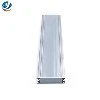
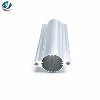
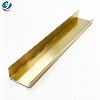
Advantages
Lightweight and high strength
Aluminum has a density of only about 1/3 of steel, but through alloying (such as adding magnesium, silicon, copper, etc.) and heat treatment, its strength can approach or even exceed that of certain steels, achieving a balance between light weight and high strength.
Application scenarios: Aerospace, automotive manufacturing (such as battery trays for new energy vehicles), high-end building structures, and other weight-sensitive fields.
Strong corrosion resistance
Aluminum naturally forms a dense aluminum oxide film on its surface, effectively isolating air and moisture and preventing further corrosion. In humid or corrosive environments (such as coastal areas or chemical plants), aluminum profiles have a significantly longer lifespan than ordinary steel.
Application scenarios: Building facades, bridge structures, offshore platforms, etc.
Excellent workability
High plasticity: Can be shaped into complex cross-sectional forms through extrusion, forging, stamping, etc., meeting diverse design needs.
Easy to process: Cutting, drilling, welding, and other operations are simple, and the material is less prone to cracks or deformation during processing.
Variety of surface treatments: Different colors and textures can be achieved through anodizing, spraying, electrophoresis, etc., enhancing both aesthetics and functionality.
Application scenarios: Custom furniture, electronic device enclosures, precision instrument brackets, etc.
Good electrical and thermal conductivity
Aluminum's conductivity is about 60% that of copper, but it is lighter and cheaper, commonly used in power transmission (such as high-voltage cables) and heat dissipation applications (such as LED heatsinks and computer CPU cooling fins).
Application scenarios: Power engineering, electronic cooling, heat exchangers, etc.
Environmentally friendly and recyclable
Aluminum can be 100% recycled, and the recycling process consumes low energy, aligning with sustainable development principles.
Application scenarios: Green buildings, circular economy industries, etc.
Easy installation
Aluminum profiles are often designed as modular structures that can be quickly assembled using bolts, clips, and other connectors, reducing construction time and costs.
Application scenarios: Industrial automation equipment frames, exhibition displays, temporary buildings, etc.
Disadvantages
High Cost
The price of aluminum raw materials is higher than that of ordinary steel, and the processing techniques (such as extrusion and surface treatment) are complex, resulting in a relatively high overall cost.
Comparison: In projects with limited budgets, steel or plastic may be preferred as alternatives.
Low Strength Limit
Pure aluminum has low strength. Although alloying can improve it, it still does not match high-strength steel or titanium alloys. In extreme load or impact environments (such as heavy machinery or main bridge beams), aluminum profiles may require additional reinforcement or alternative materials.
Comparison: Steel may be preferred in automotive crash beams, load-bearing columns in construction, and similar applications.
Poor Wear Resistance
Aluminum has low hardness, and long-term friction or contact with hard objects can easily cause scratches or wear, affecting appearance and performance.
Improvement Solution: Enhance wear resistance through anodizing or applying hard coatings (such as ceramic coatings).
Application Scenario: Tool handles or decorative parts that should avoid direct contact with sand, metal, or other abrasive materials.
High Thermal Expansion Coefficient
Aluminum's thermal expansion coefficient is about twice that of steel, and in environments with large temperature changes (such as outdoors or high-temperature workshops), it is prone to deformation or loosening of connections due to thermal expansion and contraction.
Improvement Solution: Allow expansion gaps in the design or use elastic connectors.
Application Scenario: Precision instruments that require strict temperature control or structures exposed to long-term sun and rain.
Difficult Welding
Aluminum has a low melting point (660℃), and the surface oxide film can hinder welding. During welding, pores and cracks are prone to form, requiring specialized equipment and skills.
Comparison: Steel welding processes are more mature and cost-effective.
Application Scenario: Complex structures or scenarios requiring high-strength connections may prefer mechanical connections (such as bolts or rivets).
Limitations in Conductivity
Although aluminum has good conductivity, in situations requiring extremely low resistance (such as high-voltage power lines), copper remains the first choice. Aluminum requires an increased cross-sectional area or special treatment (such as aluminum alloy conductors) to meet requirements.
Summary
Aluminum profiles are characterized by their lightweight, corrosion resistance, and ease of processing, making them suitable for applications that demand high requirements for weight, durability, or design flexibility. However, their cost, strength, and wear resistance limit their use in extreme environments or budget-sensitive projects. When choosing, it is necessary to comprehensively consider performance requirements, budget, and usage environment to achieve the best cost-performance ratio.