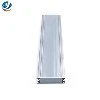
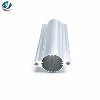
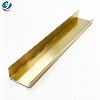
Solid aluminum alloy flat bars offer the perfect combination of lightweight design, corrosion resistance, and versatility, making them indispensable products in modern engineering and manufacturing. While they have limitations in terms of strength and cost compared to materials such as steel, their advantages often outweigh these drawbacks, especially in applications where weight reduction and durability are important.
advantage
Light weight and high strength:
Aluminum alloys have a high strength-to-weight ratio, making them ideal for applications where weight reduction is critical without compromising structural integrity.
This is especially beneficial in industries such as aerospace, automotive, and transportation.
Corrosion Resistance:
When exposed to air, aluminum naturally forms a protective oxide layer that is resistant to corrosion and weathering.
This makes it suitable for both outdoor and marine environments.
Thermal and electrical conductivity:
Aluminum alloys have good thermal conductivity, making them useful for heat exchangers, heat sinks, and electrical applications.
Although their electrical conductivity is lower than that of copper, they are still valuable in the fields of power transmission and electronics.
Machinability and machinability:
They are easy to machine, cut, drill, and shape for a variety of manufacturing processes.
This flexibility supports a wide range of design possibilities.
Aesthetic Appeal:
Aluminum has a modern, sleek look and can be anodized, painted, or powder-coated to enhance aesthetics and durability.
Recyclability:
Aluminum is 100% recyclable, making it an eco-friendly choice in line with sustainability goals.
shortcoming
Lower strength compared to steel:
While aluminum alloys are strong, they often do not match the tensile strength of steel, which limits their use in high-load applications.
Fatigue:
Under cyclic loads, aluminum can experience fatigue failure over time, so careful design consideration is required in dynamic applications.
Thermal Expansion:
The coefficient of thermal expansion of aluminum is higher than that of some other metals, which results in dimensional changes in an environment with varying temperatures.
Cost:
High-performance aluminum alloys can be more expensive than mild steel, although their lightweight nature often offsets this by reducing material usage and transportation costs.
Welding Challenges:
Aluminium welding requires specialized techniques (e.g. TIG welding) and is prone to defects such as porosity if not done properly.
Surface Hardness:
Pure aluminum is comparatively soft and prone to scratches or dents, although alloys and finishes can alleviate this.
When to use it
Aerospace:
Due to its light weight and high strength, it is used in aircraft structures, wings, fuselages, and internal components.
Automotive:
Applications in engine components, chassis and body panels to reduce vehicle weight and improve fuel efficiency.
Architecture and Construction:
Due to its corrosion resistance and aesthetics, it is ideal for window frames, doors, roofs, and decorative elements.
Electronic and Electrical Engineering:
Used in heat sinks, electrical connectors, and busbars (busbars) for efficient heat dissipation and conductivity.
Marine Applications:
Due to its resistance to saltwater corrosion, it is suitable for hulls, decks and fittings.
Consumable:
It is found in bicycles, sports equipment, kitchenware, and furniture because of its durability and lightweight properties.
Transportation (non-automobile):
Structural components and interiors for railway vehicles, trams and shipbuilding.
Renewable energy:
Due to its corrosion resistance and strength, it is used in solar panel frames and wind turbine components.