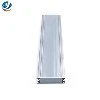
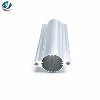
Expansion Joint
Definition: An expansion joint, also known as a movement joint, is a structural feature designed to accommodate thermal expansion and contraction, or other movements, in a building or structure.
Function: It allows for the expansion and contraction of materials without causing damage to the surrounding structure. This is particularly important in structures that experience significant temperature changes, such as bridges, roads, buildings, and pipelines.
Applications: Expansion joints are commonly used in concrete pavements, bridges, pipelines, and other structures where thermal expansion and contraction can cause stress and potential damage.
Expansion Joint Cover
Definition: An expansion joint cover is a protective covering or cap that is installed over an expansion joint to provide additional protection and to ensure that the joint functions correctly.
Function: It protects the expansion joint from debris, water, and other environmental factors that could compromise its integrity. Additionally, it can provide a finished appearance to the joint and help to maintain the structural integrity of the surrounding area.
Applications: Expansion joint covers are often used in exterior applications, such as on bridges, buildings, and other structures where the expansion joint is exposed to the elements.
Key Differences
Purpose: Both are related to expansion joints, but the expansion joints themselves are structural features that accommodate movement, and expansion joint covers are protective elements mounted on joints.
Functionality: The primary function of an expansion joint is to allow for movement without causing damage, while the function of an expansion joint cover is to protect the joint from environmental factors and to provide a finished appearance.
Applications: Expansion joints are used in a wide range of structures, while expansion joint covers are more specifically used in exterior applications where the joint is exposed to the environment.