




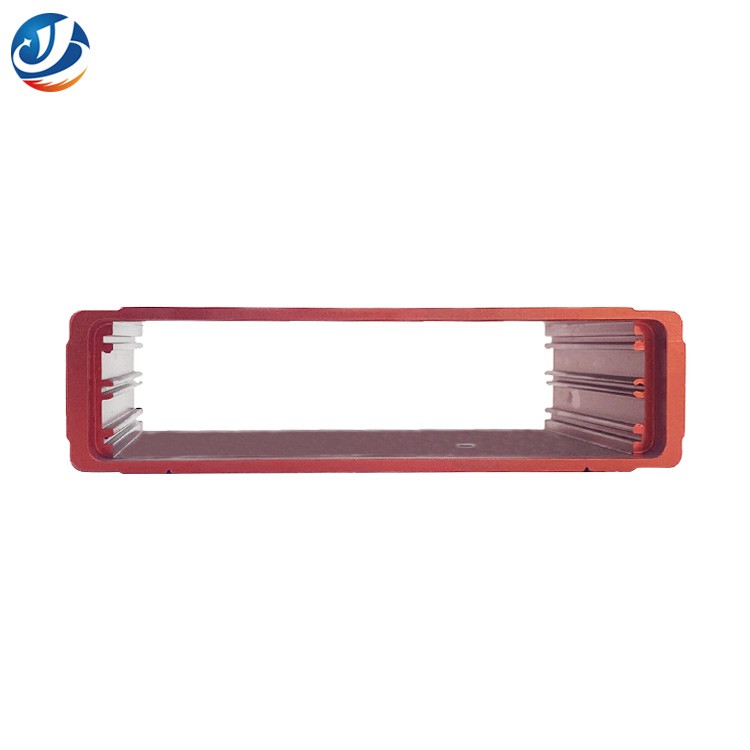
Aluminum Shell For Wire Box

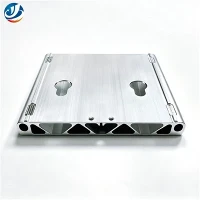
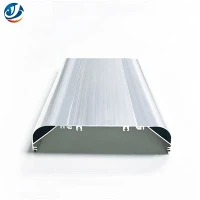
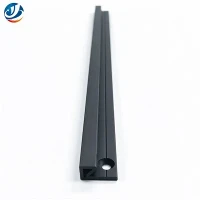
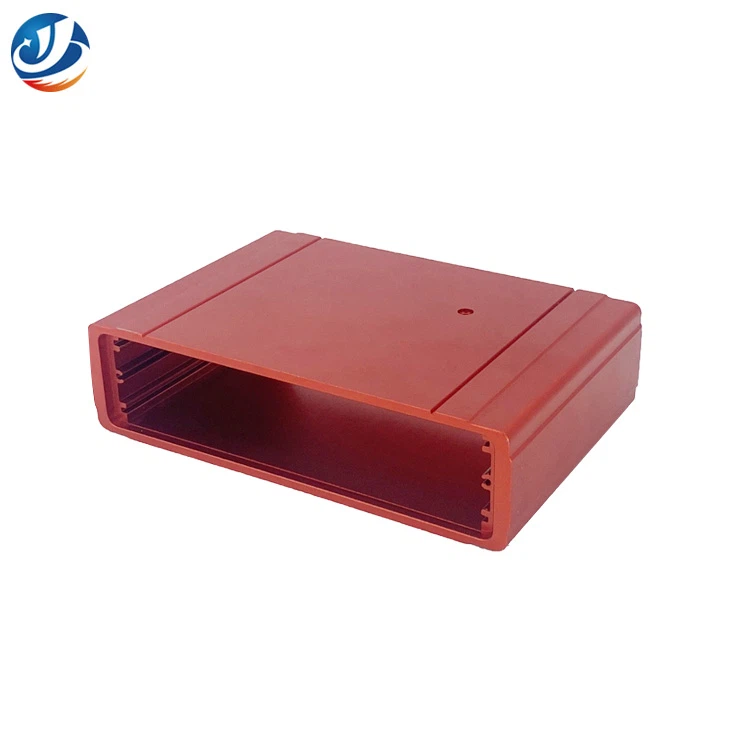
Aluminum Shell For Wire Box is a metal casing structure made primarily of aluminum, formed through specific processing techniques, and is used to encase, secure, and protect internal wires, circuit boards, or electronic components.
Product Specifications
| Products name | Aluminum Shell For Wire Box |
| Material | Aluminum 6061-T6 |
| Size | OEM |
| Color | Red, silver, white, etc. |
| Surface treatment | Processes such as anodizing, sandblasting, brushing, and powder coating. |
| Processing | Supports various methods such as extrusion, die casting, and CNC machining, enabling complex shapes and precise dimensional control. |
| Weather resistance | Short-term temperature range can reach -50℃ to 140℃, continuous operating temperature range is -50℃ to 80℃. |
| Environmentally friendly and recyclable | Aluminum can be 100% recycled and reused, and the recycling process consumes little energy, aligning with the concept of sustainable development. |
| MOQ | Mold development cycle 12-15 days, supports large-scale trial production . |


Aluminum material basics
Primarily composed of aluminum, it may include elements such as copper, magnesium, and zinc to form an alloy, enhancing strength, corrosion resistance, or thermal conductivity.
Surface Treatment
Through processes such as anodizing, sandblasting, brushing, and powder coating, a dense oxide film is formed to enhance wear and corrosion resistance, while also allowing for coloring to achieve a variety of colors.
Protective structure support
Aluminum Shell For Wire Box Achieves water and dust resistance through a sealed design, features impact resistance, provides secure positioning for internal components, and supports modular expansion.
Customizable
Various processed products can be custom-made according to customer requirements, with quick turnaround times. Customizable on demand, with a variety of specifications available.
Factory Advantages


Large quantity, favorable price
Direct supply from the source manufacturer with plenty of stock and immediate delivery
Big orders, great discounts.
Quality Control
Strictly control every step of the product's production process, striving for product quality.
Well-equipped
All supporting machines and necessary equipment are complete, providing one-stop service.
Thoughtful Service
A modern corporate management model that provides customers with convenient and efficient services.
Professional Customization
Can be processed and manufactured according to customer requirements, with redesign and mold making available.
Fast Shipping
Quick delivery, in-stock orders processed normally
Ships within 48 hours, mold development cycle 12-15 days, supports large-scale trial production.
Core Functions and Certificates


1. Material Performance Advantages
High Strength and Lightweight
Aluminum alloys (such as 6061-T6, 7075-T6) have a tensile strength of 290-572 MPa, while their density is only one-third that of steel, achieving a balance between structural strength and weight. For example, a certain brand of notebook shell made of 6061-T6 aluminum alloy weighs ≤300g for a 13-inch model, balancing portability and durability.
Application scenarios: consumer electronics (such as laptops, external hard drive cases), aerospace equipment (such as satellite antenna housings), and other weight-sensitive fields.
Corrosion and Weather Resistance
Anodizing creates a dense oxide layer that withstands salt spray, acidic, and alkaline environments. For example, a certain outdoor communication device housing passed the IEC 60529 standard salt spray test and can be used long-term in coastal or high-humidity environments.
Temperature Adaptability: Short-term temperature resistance ranges from -50℃ to 140℃, with continuous operating temperatures from -50℃ to 80℃, suitable for extreme temperature environments (such as polar research equipment).
Electromagnetic Shielding Performance
Metal materials naturally shield against electromagnetic interference, protecting the stability of internal electronic components. For instance, a certain industrial control box housing uses electromagnetic shielding design to ensure PLC modules operate normally in strong interference environments.
2. Heat Dissipation and Thermal Management
High Thermal Conductivity
Aluminum alloys have a thermal conductivity of 180-237 W/(m·K), much higher than plastics (0.2-0.3 W/(m·K)). For example, an M.2 SSD enclosure uses a triple heat dissipation structure (aluminum shell, thermal silicone, ventilation holes), keeping operating temperatures stable at 40-50°C and avoiding overheating throttling.
Heat Dissipation Design Examples:
- Heat fins: The shell of a certain amplifier improves heat conduction efficiency by increasing the heat dissipation area;
- Liquid cooling channels: The BMS enclosure of a certain electric vehicle integrates a liquid cooling system to maintain battery temperatures at 25-35°C.
Low Thermal Expansion Coefficient
Aluminum alloy has a linear expansion coefficient of 23-24×10⁻⁶/°C, close to silicon (2.6×10⁻⁶/°C), reducing loosening of connections caused by thermal expansion and contraction. For example, the shell of a certain photovoltaic inverter maintains structural stability under temperature differences from -40°C to 85°C.
3. Protection and Safety
Protection Ratings (IP/IK)
IP Protection: Common ratings range from IP44 (dust-proof, splash-proof) to IP68 (dust-proof, long-term water immersion). For example, a certain junction box has an IP67 rating, allowing it to be submerged in 1 meter of water for 30 minutes.
IK Rating: For instance, IK08 indicates it can withstand 5J of impact energy, suitable for physical collisions in industrial settings.
Explosion-Proof and Fire-Resistant
Some products are ATEX certified, suitable for explosive gas environments. For example, a certain explosion-proof junction box uses external grounding protection and isolates internal components from the exterior.
Flame Retardancy: Aluminum alloy has a melting point of 660°C, much higher than plastics (100-300°C), reducing fire risk.
Anti-Theft and Safety Design
Integrated locks, anti-theft bolts, and other structures prevent unauthorized access. For instance, the casing of a certain outdoor charging station uses anti-theft locks and supports remote monitoring and alarms.
4. Functional Expansion and Customization
Modular Design
Supports quick maintenance and functional expansion. For example, certain industrial control boxes reserve PCB board mounting positions and heat-dissipating fins, allowing users to integrate sensors or communication modules as needed.
Interface Customization: Provides modules such as waterproof connectors, ventilation holes, and cable management slots. For instance, a certain junction box allows users to customize the location and size of openings.
Variety of Surface Treatments
Anodizing: Enhances wear resistance and corrosion resistance while achieving colorful appearances (e.g., silver, black, gold);
Sandblasting: Increases surface roughness, optimizing grip or heat dissipation performance;
Laser Engraving: Supports customization of brand logos or function labels, such as a laptop case achieving precise touchpad positioning through laser engraving.
Lightweight Structural Optimization
Reduces material usage through topology optimization or bionic design. For example, a certain drone shell uses a honeycomb structure, reducing weight by 30% while maintaining strength.
Hot Tags: aluminum shell for wire box, China aluminum shell for wire box manufacturers, suppliers, factory, aluminium extrusion box, aluminum extrusion enclosure, extruded aluminium case, extruded aluminum chassis, Aluminum Camera Housing, extruded aluminum project box
You Might Also Like


Send Inquiry