

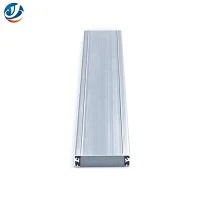
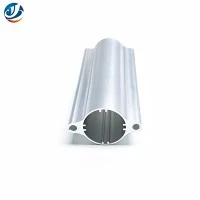


Extruded Aluminium Heatsink

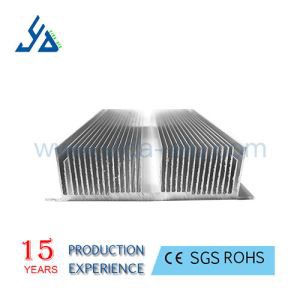
Extruded Aluminium Heatsink product is made using advanced aluminum extrusion technology in one piece, featuring an integrated fin structure, excellent thermal conductivity, lightweight design, and strong structural stability.
Product parameters
| Products name | Extruded Aluminium Heatsink |
| Material | 6063-T5, 6061-T6 Aluminium etc. |
| Size | OEM |
| Color | Black, silver, rose gold, etc. |
| Surface Finishing | Anodizing and powder coating |
| Processing | CNC, drilling, tapping, cutting |
| Heat Dissipation Performance | Aluminum alloy has a high thermal conductivity of 203–210 W/(m·K). The one-piece extruded dense fin structure maximizes the heat dissipation area, allowing for fast and even heat transfer. It can handle long-term continuous operation of high-power devices, and the cooling performance remains stable without degradation. |
| MOQ | 100pcs |


Material Selection and Quality
Made from high-purity industrial aluminum ingots, with no recycled impurities added, the material is pure and stable. 6063-T5 aluminum is highly workable with a smooth surface, giving the finished product a refined look; 6061-T6 aluminum is harder and stronger, offering good load-bearing capacity and resistance to deformation.
Corrosion-resistant and wear-resistant
It can undergo anodizing, sandblasting, electrophoresis, powder coating, conductive oxidation, and other surface treatments, greatly improving the product's resistance to oxidation, scratches, and wear, as well as its weather resistance. It can handle high temperatures, humidity, salt spray, and other tough outdoor and industrial environments for a long time.
Customization Capability
Extruded aluminium heatsinks can be customized in terms of fin height, slot width, wall thickness, and overall size according to your needs. We also offer one-stop precision machining services, including CNC milling, drilling, tapping, cutting, and slotting, perfectly fitting various equipment installation structures and cooling designs.
Stable Production Capacity
We have our own full set of aluminum extrusion production lines and a CNC precision machining workshop, equipped with a standardized inventory management system. This allows us to handle large-scale production and rush orders. Our mature production management system significantly shortens customization cycles, providing reliable supply for long-term partners.
Application Scenarios


LED lighting industry: linear lights, wall washer lights, high-power industrial fixtures, streetlights, floodlight heat dissipation housings
Communication equipment industry: base station equipment, optical modules, routers, signal amplifiers, communication cavity heat sinks
Power and electrical equipment: switching power supplies, inverters, photovoltaic energy storage equipment, motor drive heat dissipation modules
Automotive electronics: in-car power supplies, new energy vehicle control modules, automotive lighting heat dissipation parts
Industrial automation: PLC controllers, servo drives, instrument and meter heat dissipation structures
Smart home and consumer electronics: high-power adapters, heating devices, smart control device heat dissipation housings
Product inspection process status

一. Raw Material Inspection
1. Verification of Alloy Composition
X-Ray Fluorescence (XRF) Analysis: Use high-precision equipment (such as Hitachi EA1400) to detect the content of elements like aluminum, silicon, and magnesium, ensuring compliance with the target alloy standards (for example, the Si content in 6063 aluminum alloy must be within the range of 0.2-0.6%). The test precision should reach RSD≤2%.
Metallographic Analysis: Observe the grain structure using an optical microscope to verify whether casting defects (such as porosity and segregation) are within acceptable limits (for example, according to ASTM E112, the grain size should be ≥ grade 5).
Hardness Testing: Use a Vickers hardness tester (HV) or Rockwell hardness tester (HRB) to measure material hardness. The hardness of 6063 aluminum alloy should be ≥ HV80 or HRB50.
2. Surface Quality Inspection
Visual and tactile inspection: Check for scratches, cracks, burrs, and other defects on the surface of extruded profiles. Surface roughness must be ≤ Ra 1.6 μm.
Ultrasonic testing: Inspect key structural components for internal defects, with crack depth not exceeding 0.5 mm.
3. Material Compliance Certification
Environmental Standards: Provide RoHS and REACH certifications to ensure that the content of harmful substances such as lead and cadmium is below the limit (e.g., lead ≤ 0.1%).
Material Certification: Require suppliers to provide material reports certified according to EN 10088-1 or ISO 17025.
二. Process Inspection
1. Extrusion Process Monitoring
Mold Precision Inspection: Use a Coordinate Measuring Machine (CMM) to verify mold dimensions, with key tolerances controlled within ±0.1mm.
Temperature and Pressure Recording: Monitor extrusion temperature (450-500℃) and pressure (80-120MPa) in real time to ensure process stability.
2. Surface Treatment Inspection
Anodized Coating Thickness: Measured using an eddy current thickness gauge (e.g., TT260). The standard requirement is ≥10 μm, and for outdoor applications, ≥20 μm.
Salt Spray Test: Conducted according to GB/T 10125 standard for neutral salt spray test, with no white rust formation within 96 hours (rating ≥ 9).
Adhesion Test: Coating adhesion is measured using the cross-cut method (ASTM D3359), and the rating must be ≥ 4B.
3. Dimensions and Geometric Tolerances
Profile measurement: Measure fin height, spacing, and other parameters using a profilometer, with tolerances required to be ≤ ±0.15mm.
Flatness measurement: Use a laser flatness meter to measure the flatness of the base, with an error requirement of ≤ 0.1mm/m.
三. Finished Product Performance Testing
1. Thermal Performance Verification
Thermal Resistance Testing:
Steady-State Method: Using the heat flow meter method (ASTM D5470), the thermal resistance is tested under standard conditions (ΔT=64.5℃), with a requirement of ≤0.1℃·cm²/W.
Transient Method: Using the T3Ster thermal resistance tester (JESD51-1 standard), thermal resistance and thermal capacitance are analyzed through real-time temperature response curves.
Thermal cycling test: Conduct 1000 cycles within the range of -40℃ to 125℃, with thermal resistance change required to be ≤15%.
2. Mechanical Reliability Testing:Vibration Test:
Conduct sweep vibration according to IEC 60068-2-6 standard at a frequency range of 10-2000Hz, with an acceleration of 5g, lasting 20 minutes per direction, without any structural looseness.
Drop Test: Free fall from a height of 1.5 meters onto a concrete floor, testing 3 times without cracks or deformation.
Pressure Test: Apply 1.5 times the operating pressure (≥1.2MPa) to the water-cooled radiator, maintain pressure for 3 minutes without leakage.
3. Environmental Adaptability
TestingSalt Spray Test: According to the AEC-Q200 standard, conduct a 96-hour salt spray test (5% NaCl solution) on automotive electronic radiators, with no corrosion spots.
Damp Heat Aging: Place in an environment of 85°C/85% RH for 1000 hours, with thermal resistance change ≤5% and insulation resistance ≥100MΩ.
四. Packaging and Shipping Inspection:
Visual Inspection: Ensure the surface is free of scratches and oxide film peeling, and that label information is complete (model, batch, production date).
Anti-Corrosion Packaging: Use moisture-proof bags and foam padding to ensure a salt spray protection level of ≥IP65 in a marine shipping environment.
Hot Tags: extruded aluminium heatsink, China extruded aluminium heatsink manufacturers, suppliers, factory, heat sink extrusion, extruded aluminum heat sink, round extruded aluminum hea tsink, Aluminium Extruded Heat Sink, Aluminium Heat Sink Round, Aluminium Frame Profile
You Might Also Like




Send Inquiry