

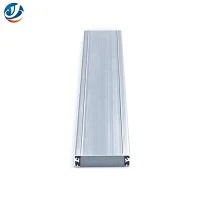
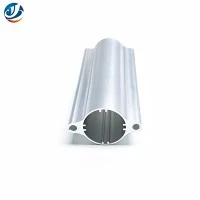


High-Density Fin Aluminum Profile Radiator

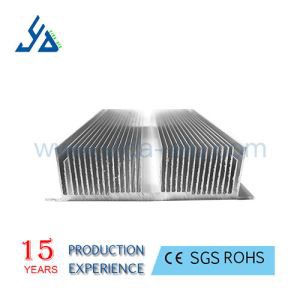
High-Density Fin Aluminum Profile Radiator is an aluminum heat dissipation component manufactured via precision extrusion technology. Its core feature lies in the integration of an ultra-thin and densely arranged fin array within a limited space, which maximizes the heat dissipation surface area and enhances heat exchange efficiency. It is suitable for thermal management requirements in high-power electronic devices, industrial equipment, and the new energy sector.
Products Description
| Products name | High-Density Fin Aluminum Profile Radiator |
| Material | Aluminum 6063,6061 |
| Size | OEM |
| Color | Silver, black, blue, gold, and so on, |
| Surface treatment | Anodizing, powder coating, electrophoresis, polishing, etc |
| Processing | Fine cutting, drilling, tapping, mechanical polishing, etc |
| Pressure resistance | The high-density design enhances structural strength, capable of withstanding higher operating pressures, suitable for industrial equipment cooling. |
| Deformation Resistance | Integrated extrusion molding process ensures a tight connection between the fins and the substrate, making them resistant to deformation and extending their service life. |
| Environmentally friendly and recyclable | Aluminum can be 100% recycled and reused, and the recycling process consumes little energy, aligning with the concept of sustainable development. |
| MOQ | Mold development cycle 12-15 days, supports large-scale trial production . |


Lightweight and high-strength
Made of aluminum alloy, it combines light weight, high thermal conductivity, and corrosion resistance. It also helps reduce overall weight, making installation and transportation easier.
01
Diverse surface treatments
Supports anodizing, spraying, electrophoresis, and other surface treatment processes, which not only enhance its corrosion and wear resistance but also enable it to adapt to various harsh environments.
02
Mold Design
High-strength, heat-resistant alloy steel molds are used to ensure the accuracy and surface quality of the fins. The molds need to undergo pre-treatment and inspection to avoid brittleness caused by excessive hardness or nitriding treatment.
03
Extrusion Process
High-Density Fin Aluminum Profile Radiator forms a dense fin structure through high-temperature extrusion, requiring strict control of temperature, pressure, and speed parameters to ensure the radiator's performance and quality.
04
Application Scenarios


Electronic cooling: Widely used in computer CPU heatsinks, LED light radiators, power semiconductor cooling, and other fields, effectively addressing the heat dissipation issues of high-power electronic components.
Industrial equipment: used for electromagnetic frequency conversion equipment, power electronic devices, industrial automation control cabinets, etc., ensuring that the equipment maintains a stable temperature during long periods of operation.
New energy sector: Plays an important role in the heat dissipation of new energy vehicle batteries and wind power generation equipment, improving energy use efficiency and equipment lifespan.
Architecture and Machinery: High-Density Fin Aluminum Profile Radiator is suitable for building curtain walls, bridge structures, construction machinery cooling systems, and more, balancing structural strength with heat dissipation requirements.
Our factory & quipment

1. Excellent Thermal Conductivity:
The thermal conductivity of aluminum alloy is approximately 200-237 W/(m·K), more than three times that of iron, second only to copper (about 400 W/(m·K)). This high thermal conductivity allows heat to quickly transfer from the heat source to the fins, and then achieve efficient cooling through convective heat transfer between the fins and the air. For example, with a 100W heat source, the substrate temperature can be maintained at ≤65℃ (when the ambient temperature is 25℃), with a cooling efficiency 20%-30% higher than that of traditional copper-aluminum composite heat sinks.
2. Significant Advantages of Lightweighting:
The density of aluminum alloy is only 2.7 g/cm³, about 1/3 that of copper and 1/4 that of steel. With the same heat dissipation performance, aluminum alloy radiators can reduce weight by 30%-50%, significantly lowering the overall load of the equipment. For example, in new energy vehicle battery management systems (BMS), lightweight design can improve vehicle range; in the aerospace field, reducing 1 kg of weight can save tens of thousands of yuan in operating costs.
3. Strong Corrosion Resistance:
The surface of aluminum alloy can naturally form a dense oxide film, effectively resisting corrosion from humid, salty, and other harsh environments. After anodizing treatment, the oxide film thickness can reach 7–23 μm, with a neutral salt spray test resistance of ≥500 hours, making it suitable for marine climates, chemical environments, and similar conditions. For example, in solar microinverters, aluminum alloy heat sinks can operate stably outdoors for long periods, with a lifespan exceeding 10 years.
4. High Structural Strength:
Aluminum alloy achieves high strength by adding elements such as copper, magnesium, and silicon (for example, 6063-T3 alloy contains 0.45-0.9% magnesium and 0.2-0.6% silicon), with tensile strength reaching over 205 MPa and elongation ≥7%. The high-density fin design (20-50 fins per inch) combined with an integrated extrusion process gives the fins strong resistance to torsion and tensile forces, making them suitable for vibration-prone environments (such as traction converters in rail transport). For instance, a certain model of radiator passed vibration tests (acceleration ≤5g) with no deformation or detachment of the fins.
5. Good Processing Performance:
Extrusion Molding: Can form high-density fin structures in one go, with uniform fin shapes and consistent spacing, avoiding increased thermal resistance from welding.
CNC Machining: Precisely trims the substrate to ensure that the contact surface with the heat source has a flatness of ≤0.05mm.
Brazing Process: Used for assembling the substrate and fins, enhancing the overall structural strength.
6. Diverse Surface Treatments:
Anodizing: Enhances corrosion resistance and surface hardness (HV≥300), while also improving radiative heat dissipation.
Conductive Oxidation: Suitable for scenarios requiring electromagnetic shielding, maintaining conductivity.
Sandblasting: Increases surface roughness, strengthens air turbulence effects, and improves convective heat dissipation efficiency.
Powder Coating: Provides additional protection and decorative finish, with a coating thickness of 60-120 μm.
7. Outstanding Economic Efficiency:
The cost of aluminum alloy materials is lower than that of copper, and the processing efficiency is high (mold development cycle is 15-30 days, and the unit cost for mass production is 50-200 RMB).
Hot Tags: high-density fin aluminum profile radiator, China high-density fin aluminum profile radiator manufacturers, suppliers, factory, round extruded aluminum hea tsink, Aluminium Heat Sink Round, extruded heat sink profiles, Aluminium Extrusion Heat Sink, Aluminium Heat Sink Radiator, extruded aluminum heat sink
You Might Also Like




Send Inquiry