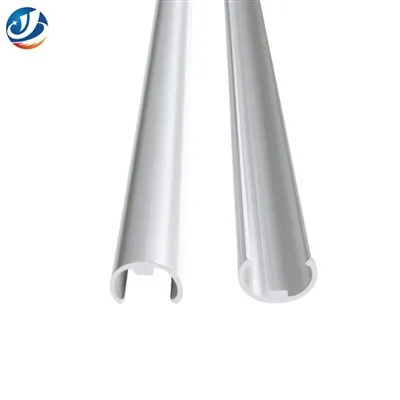
Can modular aluminum profiles be used in the food industry?
In recent years, the food industry has witnessed a continuous pursuit of innovation and improvement in production processes, equipment, and facilities. One area that has gained attention is the use of modular aluminum profiles. As a supplier of modular aluminum profiles, I have been closely observing the potential of these profiles in the food industry. In this blog post, I will explore whether modular aluminum profiles can be used in the food industry, considering their properties, advantages, and potential applications.
Properties of Modular Aluminum Profiles
Modular aluminum profiles are made from high - quality aluminum alloys. Aluminum is known for its excellent corrosion resistance. In the food industry, where equipment is often exposed to various substances such as water, acids, and salts, corrosion resistance is crucial. Aluminum forms a thin oxide layer on its surface, which acts as a protective barrier against corrosion, ensuring the longevity of the profiles.
Another important property is its light weight. Compared to steel or other metals, aluminum is significantly lighter. This makes it easier to handle during installation and maintenance. In a food production environment, where equipment may need to be moved, adjusted, or reconfigured frequently, the light weight of modular aluminum profiles is a great advantage.
Aluminum also has good thermal conductivity. In some food processing operations, such as heating or cooling processes, the ability to transfer heat efficiently can improve the overall process efficiency. Modular aluminum profiles can be designed to take advantage of this property, for example, in the construction of heat exchangers or cooling racks.
Advantages of Using Modular Aluminum Profiles in the Food Industry
-
Hygiene
Hygiene is of utmost importance in the food industry. Modular aluminum profiles have a smooth surface finish, which makes them easy to clean. There are no pores or crevices where bacteria or food residues can accumulate. Regular cleaning with common cleaning agents can effectively maintain a high - level of hygiene. Moreover, aluminum is non - toxic, which means it will not contaminate food products, ensuring the safety of the final food items. -
Customizability
Modular aluminum profiles are highly customizable. They can be easily cut, drilled, and assembled into various shapes and sizes according to the specific requirements of food production equipment. Whether it is a simple frame for a conveyor belt or a complex structure for a food storage system, modular aluminum profiles can be tailored to fit the exact needs. This flexibility allows food manufacturers to design and build equipment that is optimized for their production processes. -
Cost - effectiveness
In the long run, using modular aluminum profiles can be cost - effective. Although the initial investment may be slightly higher than some traditional materials, the low maintenance requirements, long service life, and ease of reconfiguration make them a more economical choice. There is no need for frequent replacement due to corrosion or wear, and the ability to reuse the profiles in different projects further reduces the overall cost. -
Sustainability
Aluminum is a recyclable material. In an era where sustainability is a growing concern, using modular aluminum profiles in the food industry can contribute to a more environmentally friendly production process. Recycling aluminum requires significantly less energy compared to primary aluminum production, which helps to reduce the carbon footprint of food manufacturing operations.
Potential Applications of Modular Aluminum Profiles in the Food Industry
-
Conveyor Systems
Conveyor systems are widely used in the food industry for transporting raw materials, semi - finished products, and finished goods. Modular aluminum profiles can be used to construct the frames of conveyor belts. Their light weight and customizability make it easy to design conveyor systems that can adapt to different production layouts and requirements. For example, they can be used to build inclined or curved conveyor belts, which are often needed in large - scale food processing plants. You can find related products like Formwork Aluminium Beams that may be useful in conveyor system construction. -
Food Storage Racks
In food warehouses and storage areas, modular aluminum profiles can be used to build storage racks. The corrosion resistance of aluminum ensures that the racks can withstand the humid environment often found in food storage facilities. The smooth surface of the profiles also prevents food packages from getting damaged during storage and retrieval. These racks can be designed to be adjustable in height and width, allowing for efficient use of storage space. -
Workbenches and Assembly Stations
Food processing and assembly operations require workbenches and stations that are clean, sturdy, and easy to reconfigure. Modular aluminum profiles are ideal for building these work areas. They can be equipped with various accessories such as drawers, shelves, and tool holders. The profiles can be easily connected to create a stable and functional workbench, and they can be disassembled and reassembled when production needs change. For more information on modular solutions, you can refer to Modular Aluminium Extrusions. -
Equipment Frames
Many food processing equipment, such as mixers, grinders, and packaging machines, need a stable frame. Modular aluminum profiles can provide the necessary structural support. Their light weight does not compromise the strength of the equipment, and they can be designed to meet the specific load - bearing requirements of different machines. Additionally, the ability to customize the profiles allows for easy integration of electrical and mechanical components into the equipment frames. -
Cleanroom Partitions
In food production areas where strict hygiene standards are required, such as cleanrooms for the production of high - value or sensitive food products, modular aluminum profiles can be used to build partitions. These partitions can separate different production zones, control the flow of air and personnel, and maintain a clean and controlled environment. The smooth surface of the profiles is easy to clean and disinfect, which is essential for maintaining the cleanliness of the cleanroom. You can explore Aluminium Formwork Accessories that can be used in conjunction with the profiles for partition construction.
Challenges and Considerations
While modular aluminum profiles offer many advantages in the food industry, there are also some challenges and considerations. One of the main challenges is the initial cost. As mentioned earlier, the upfront investment for modular aluminum profiles may be higher than some traditional materials. However, as discussed, the long - term cost - effectiveness often outweighs the initial expense.
Another consideration is the compatibility with other materials. In food processing equipment, modular aluminum profiles may need to be combined with other materials such as rubber, plastic, or stainless steel. It is important to ensure that there is no chemical reaction or galvanic corrosion between different materials, especially in a wet or acidic environment.
The design and installation of modular aluminum profiles also require some expertise. Improper design or installation can lead to structural instability or reduced functionality. Therefore, it is advisable to work with experienced suppliers or contractors who have knowledge of both modular aluminum profiles and the food industry requirements.
Conclusion


In conclusion, modular aluminum profiles can definitely be used in the food industry. Their properties such as corrosion resistance, light weight, and thermal conductivity, combined with the advantages of hygiene, customizability, cost - effectiveness, and sustainability, make them a suitable choice for a wide range of applications in food production, storage, and processing. Although there are some challenges and considerations, with proper planning and expertise, these can be overcome.
If you are in the food industry and are interested in exploring the use of modular aluminum profiles for your operations, I encourage you to contact us. We are a professional supplier of modular aluminum profiles and have extensive experience in providing solutions for various industries, including the food industry. We can work with you to design and build customized equipment and structures that meet your specific needs.
References
- "Aluminum in the Food Industry: Properties and Applications", Journal of Food Engineering
- "Advantages of Modular Construction in the Food Processing Sector", Food Manufacturing Magazine
- "Sustainable Materials in the Food Industry: The Role of Aluminum", Environmental Science and Food Technology Journal