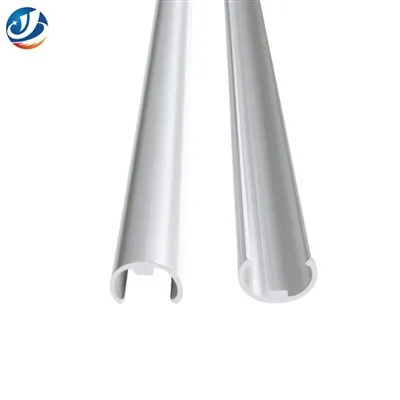
Extruded aluminum channels are widely used in various industries due to their versatility, durability, and cost - effectiveness. One of the often - overlooked but crucial properties of these channels is their anti - static characteristics. As a supplier of extruded aluminum channels, I am well - versed in the science behind these anti - static properties and their practical applications.
The Basics of Electrostatic Phenomena
To understand the anti - static properties of extruded aluminum channels, we first need to grasp the fundamentals of static electricity. Static electricity is the imbalance of electric charges within or on the surface of a material. When two materials come into contact and then separate, electrons can be transferred from one material to the other. This transfer creates an excess of electrons on one material (negative charge) and a deficiency on the other (positive charge).
Materials can be classified as conductors, insulators, or semiconductors based on their ability to conduct electricity. Conductors, like metals, have a large number of free electrons that can move easily through the material. Insulators, on the other hand, have very few free electrons, and it is difficult for charges to move through them. Semiconductors have properties between conductors and insulators.
Why Aluminum is a Good Conductor
Aluminum is a metal, and as such, it is an excellent conductor of electricity. The atomic structure of aluminum consists of a lattice of positively charged aluminum ions surrounded by a "sea" of free electrons. These free electrons are not bound to any particular atom and can move freely throughout the metal.
When an electrostatic charge builds up on an object in contact with an extruded aluminum channel, the free electrons in the aluminum can quickly redistribute the charge. This means that the static charge is dissipated across the surface of the aluminum channel, preventing the build - up of a large electrostatic potential.
Anti - Static Applications of Extruded Aluminum Channels
Electronics Industry
In the electronics industry, static electricity can be extremely damaging. A small electrostatic discharge (ESD) can cause irreversible damage to sensitive electronic components such as integrated circuits, transistors, and microprocessors. Extruded aluminum channels are often used in electronic enclosures and racks. The anti - static properties of the aluminum help to protect the electronic components inside from ESD. For example, an Extruded Aluminum Channel Profiles can be used to build a frame for a server rack. The aluminum channels will quickly conduct any static charge away from the servers, reducing the risk of damage.
Cleanrooms
Cleanrooms are used in industries such as pharmaceuticals, biotechnology, and semiconductor manufacturing. These environments require strict control of contaminants, including electrostatic particles. Extruded aluminum channels are used in the construction of cleanroom partitions, workbenches, and equipment frames. The anti - static nature of the aluminum helps to prevent the attraction and accumulation of dust and other particles that could be carried by static charges. An Anodized Extruded Aluminum Channel can be particularly useful in cleanrooms. The anodized surface not only provides additional corrosion resistance but also helps to maintain the anti - static properties of the aluminum.
Packaging
In the packaging industry, static electricity can cause problems such as product sticking to the packaging material, dust attraction, and even sparking, which can be a fire hazard. Extruded aluminum channels can be used in packaging machinery. For instance, they can be part of the conveyor systems that move products through the packaging process. The anti - static properties of the aluminum prevent static charges from building up on the machinery, ensuring smooth operation and reducing the risk of product damage.
Factors Affecting the Anti - Static Properties of Extruded Aluminum Channels
Surface Finish
The surface finish of an extruded aluminum channel can have an impact on its anti - static properties. A smooth surface finish allows for better charge distribution compared to a rough or textured surface. Anodizing, as mentioned earlier, is a common surface treatment for aluminum. Anodizing creates a thin, porous oxide layer on the surface of the aluminum. This layer can improve the anti - static properties by providing a more uniform surface for charge dissipation.
Alloy Composition
The alloy composition of the extruded aluminum channel also plays a role. Different aluminum alloys have different electrical conductivities. Alloys with higher copper or magnesium content, for example, may have slightly different anti - static properties compared to pure aluminum or other alloys. The choice of alloy depends on the specific requirements of the application, such as strength, corrosion resistance, and anti - static performance.
Environmental Conditions
Environmental factors such as humidity and temperature can affect the anti - static properties of extruded aluminum channels. In low - humidity environments, static charges are more likely to build up because the air is less conductive. Higher temperatures can also affect the mobility of the free electrons in the aluminum, which may impact the charge dissipation rate. However, aluminum generally maintains its anti - static properties over a wide range of environmental conditions.


Comparing Extruded Aluminum Channels with Other Materials
Plastic Channels
Plastic is a common alternative to aluminum for channels. However, most plastics are insulators, which means that they can easily accumulate static charges. In contrast, extruded aluminum channels are conductors and can quickly dissipate static charges. For applications where anti - static properties are crucial, such as in the electronics industry, aluminum is a much better choice than plastic.
Steel Channels
Steel is also a conductor, but it has a higher density and is more prone to corrosion compared to aluminum. Extruded aluminum channels offer a good balance of anti - static properties, light weight, and corrosion resistance. In addition, aluminum is more malleable than steel, which makes it easier to extrude into complex shapes.
Maintenance of Anti - Static Properties
To ensure that the extruded aluminum channels maintain their anti - static properties, proper maintenance is required. Regular cleaning is important to remove any dirt, dust, or contaminants that could interfere with the charge dissipation process. Mild detergents can be used for cleaning, followed by a thorough rinse with water.
It is also important to avoid scratching the surface of the aluminum channels. Scratches can disrupt the smooth surface and affect the charge distribution. If the aluminum channels are anodized, special care should be taken to avoid damaging the anodized layer.
Conclusion
The anti - static properties of extruded aluminum channels are a valuable asset in many industries. Their ability to quickly dissipate static charges makes them ideal for applications where electrostatic discharge can cause damage or pose a safety risk. As a supplier of extruded aluminum channels, I am committed to providing high - quality products that meet the specific anti - static requirements of our customers. Whether you need Anodized Extruded Aluminum Channel, Extruded Aluminum Channel Profiles, or Metric Extruded Aluminum Channel, we have the expertise and the products to meet your needs. If you are interested in learning more about our extruded aluminum channels or have specific requirements for your project, please feel free to contact us for a detailed discussion and procurement negotiation.
References
- Ashby, M. F., & Jones, D. R. H. (2012). Engineering Materials 1: An Introduction to Properties, Applications, and Design. Butterworth - Heinemann.
- Sze, S. M., & Ng, K. K. (2007). Physics of Semiconductor Devices. Wiley - Interscience.
- Metals Handbook: Properties and Selection: Nonferrous Alloys and Pure Metals. ASM International.