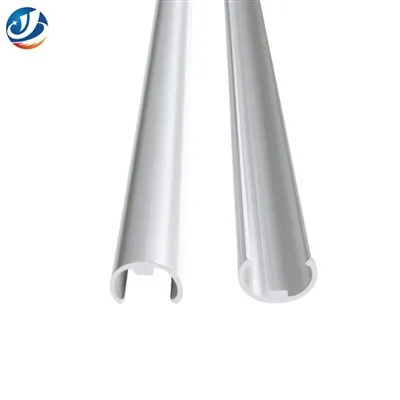
Hey there! I'm a supplier of Modular Aluminum Profiles, and I've been in this industry for quite some time. Today, I want to have an open chat about the limitations of modular aluminum profiles. It's not all sunshine and rainbows, you know? Even though these profiles are super popular and have tons of advantages, they do come with a few drawbacks.
Cost Considerations
Let's start with the elephant in the room: cost. Modular aluminum profiles can be pretty pricey. The initial investment for setting up a production line for these profiles is high. You need specialized equipment for extrusion, cutting, and finishing. And then there are the raw material costs. Aluminum itself isn't the cheapest metal out there, especially when you're looking for high - quality alloys that are suitable for modular applications.
Moreover, the cost of tooling for custom - shaped modular aluminum profiles can be a significant expense. Each unique profile shape requires a specific die, and these dies can be expensive to manufacture. If you're a small business or a startup, these costs can really add up and might make it difficult to justify using modular aluminum profiles in your projects.
Limited Strength in Certain Applications
While aluminum is a strong and lightweight metal, it has its limits when it comes to strength. In applications where extremely high strength is required, such as in heavy - duty construction or high - stress machinery, modular aluminum profiles might not be the best choice.
For example, in a large - scale industrial building where there are heavy loads to bear, steel might be a more suitable option. Steel has a higher tensile strength than aluminum, which means it can handle greater forces without deforming. Even though there are high - strength aluminum alloys available, they still can't match the strength of steel in some extreme cases. So, if your project involves a lot of heavy lifting or high - stress situations, you might have to look elsewhere.
Surface Finish and Durability
The surface finish of modular aluminum profiles can be a bit of a double - edged sword. On one hand, aluminum can be easily anodized or powder - coated to give it a nice, durable finish. But on the other hand, these finishes can wear off over time, especially in harsh environments.
In outdoor applications where the profiles are exposed to the elements, such as rain, snow, and UV rays, the surface finish can start to deteriorate. This not only affects the appearance of the profiles but also their corrosion resistance. Corrosion can weaken the profiles over time and reduce their lifespan. Even with proper maintenance, it can be a challenge to keep the surface finish in top condition in these tough environments.
Design Flexibility Constraints
Although modular aluminum profiles offer a certain degree of design flexibility, there are still some limitations. The standard sizes and shapes of these profiles are somewhat restricted. If you have a very unique or complex design in mind, you might find it difficult to achieve it using off - the - shelf modular aluminum profiles.
Custom - made profiles can solve this problem to some extent, but as I mentioned earlier, the cost of tooling for custom profiles is high. Also, the lead time for custom - made profiles can be long, which might not be suitable for projects with tight deadlines. So, if you're looking for a completely free - form design, modular aluminum profiles might not be able to fully meet your needs.
Compatibility Issues
When using modular aluminum profiles in a project, compatibility can be a real headache. These profiles need to work well with other components, such as fasteners, connectors, and other building materials.


For example, if you're using aluminum profiles in a project that also involves steel components, you need to be careful about galvanic corrosion. When two different metals come into contact in the presence of an electrolyte (like moisture), a chemical reaction can occur that causes corrosion. This can damage both the aluminum profiles and the other components in the project.
Finding the right fasteners and connectors that are compatible with modular aluminum profiles can also be tricky. You need to make sure that the fasteners are made of a material that won't cause corrosion and that they can provide a secure connection. Otherwise, you might end up with a wobbly or unstable structure.
Recycling Challenges
While aluminum is a highly recyclable material, recycling modular aluminum profiles can be a bit more complicated. The profiles often have different alloys and surface finishes, which need to be separated and processed properly during the recycling process.
Sorting through different types of aluminum profiles to ensure that the recycling process is efficient can be time - consuming and costly. Also, if the profiles have been contaminated with other materials during their use, it can further complicate the recycling process. This means that although aluminum is theoretically recyclable, in practice, recycling modular aluminum profiles might not be as straightforward as you'd think.
Thermal Conductivity
Aluminum is a good conductor of heat. In some applications, this can be an advantage, such as in heat sinks for electronics. However, in other cases, it can be a drawback.
For example, in buildings where energy efficiency is a priority, the high thermal conductivity of aluminum profiles can lead to heat transfer. This means that in cold weather, heat can escape through the aluminum profiles, and in hot weather, heat can enter the building. This can increase the energy consumption of the building and make it less comfortable for the occupants.
Noise and Vibration Transmission
Modular aluminum profiles can transmit noise and vibration quite easily. In applications where noise reduction is important, such as in offices or residential buildings, this can be a problem.
When the profiles are subjected to vibrations, they can act as a conductor and transfer the vibrations throughout the structure, creating a noisy environment. This can be particularly annoying in a workplace where concentration is key or in a home where peace and quiet are desired.
Despite these limitations, modular aluminum profiles still have a lot of great uses. They're lightweight, easy to install, and can be used in a wide range of applications. If you're interested in learning more about our Aluminium Formwork Accessories, Modular Aluminium Extrusions, or Formwork Aluminium Beams, don't hesitate to reach out. We can work together to find the best solutions for your projects, taking into account both the advantages and limitations of modular aluminum profiles.
References
- "Aluminum Alloys: Structure and Properties" by John E. Hatch
- "Engineering Materials and Their Applications" by Lawrence G. Herreshoff
- "Handbook of Aluminum" edited by Jorge E. Hatch