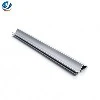
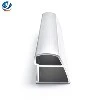
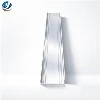
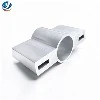
Aluminum tube extrusion is the most mainstream way to shape aluminum tubes. The core principle is: soften the aluminum rod at high temperature, then push it through a die with a high-pressure extrusion machine to form the tube in one go. The whole process can be simply divided into ten steps, making it suitable for production, quality inspection, and beginners learning the ropes.
一. Complete Simple Process Flow
1. Aluminum Rod Preparation
Choose qualified aluminum alloy cast rods, cut them to the production length, and check for cracks, pores, or impurities to ensure the raw material is up to standard. Some alloys undergo homogenization heat treatment to make the material more uniform and easier to extrude.
2. Heating Up
Preheat the aluminum rods and extrusion molds. Heating the rods softens them to reduce extrusion resistance, while preheating the molds prevents surface scratches and uneven wall thickness, which is key to ensuring appearance and dimensions.
3. Hot extrusion forming (core process)
High-temperature aluminum rods are fed into the extrusion machine and pushed through the die and mandrel under high pressure, directly producing hollow aluminum tubes.
There are two types:
Seamless aluminum tubes: Extruded with a piercing pin, no welds, high pressure resistance, used for hydraulics and high-pressure pipelines.
Regular aluminum tubes: Extruded with a flow-splitting die, cost-effective, used for construction, supports, and regular pipelines.
4. Online Cooling
The freshly extruded hot aluminum tubes are quickly cooled with air or water mist to lock in material properties, ensuring the subsequent hardness and strength meet the standards, while also preventing deformation of the tubes.
5. Stretching and Straightening
After cooling, the aluminum tubes may be slightly bent or twisted. They are slightly stretched with a stretching machine to correct straightness and roundness, and to eliminate internal stress.
6. Cutting to Length
Once fully cooled, the tubes are accurately cut to the length required by the customer, removing end waste, burrs, and flash, and finishing the tube ends.
7. Aging Heat Treatment
For commonly used alloys like 6061 and 6063, tubes are heated in an aging furnace to increase hardness and mechanical strength, making the product sturdy and durable. Pure aluminum and anti-rust aluminum don't need this step.
8. Cleaning and Defect Inspection
Tubes are cleaned of surface oil and oxidation residue. High-end, pressure-bearing aluminum tubes undergo eddy current testing to detect internal wall cracks and hidden defects, preventing leaks. At the same time, outer diameter, wall thickness, and roundness are rechecked.
9. Surface Treatment (Optional)
Depending on the use, processes like anodizing, spraying, electrophoresis, and polishing are applied to prevent corrosion, wear, and improve appearance, extending product lifespan.
10. Inspection, Packaging, and Storage
A final check of appearance, dimensions, and performance is done. Once qualified, the tubes are sealed, wrapped, packed, labeled with specifications and batch number, and then stored for shipment.
二. Common Simple Causes in Production
Uneven wall thickness, oval shape: unstable temperature, mold misalignment, fluctuating pulling speed
Surface pitting, peeling: impurities in the aluminum rod, insufficient mold temperature, extrusion too fast
Tube bending: uneven cooling, improper straightening
Insufficient hardness: cooling too slow, aging temperature/time not meeting standards
三. Summary
The core of aluminum tube extrusion is: preparing the billet → heating → extrusion → cooling and straightening → sawing and aging → finishing and packaging. Temperature, extrusion speed, and heat treatment are the three key factors that determine the quality of aluminum tubes. The process is simple and highly repeatable, making it suitable for large-scale production.