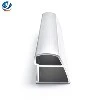
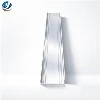
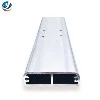
Bull nose
Definition: Bullnose usually refers to a rounded or curved edge or surface.
Apply:
Commonly used on countertops, especially kitchens and bathrooms, the rounded edges provide a smoother, safer finish.
Present in tiles, especially those used for floors or walls, rounded corners can add a decorative touch and reduce the risk of injury.
Commonly found in architectural elements such as door and window frames, curved edges can soften the overall appearance of a structure.
Features: The rounded design of the bull's nose is smooth and seamless, blending seamlessly with adjacent surfaces.
Stair nose
Definition: A stair nose, also known as a step nose, is a decorative piece used for the edge of a staircase, especially on the front edge of each step.
Apply:
Primarily used to cover the bare edges of stair treads, providing a finished and protective look.
Helps prevent damage to stair treads and also acts as a visual separator between steps.
A variety of materials, such as wood, metal, or plastic, are often used to match the overall staircase design.
Features: Stair noses usually have a straight or slightly curved profile that overhangs the edge of the stair treads. It is designed to be durable and resistant to wear and tear, ensuring the safety and longevity of the staircase.
Summary of differences
Shape: Bullnoses are rounded or curved in shape, while stair noses are usually straight or have slight curves around the edges.
Function: The bullnose is more about providing a smooth, decorative, and secure edge, whereas the stair nose is specifically designed to cover and protect the edges of the stair treads.
Application: Bullnoses are commonly used for countertops, tiles, and architectural elements, while stair noses are specifically used for stair treads.