

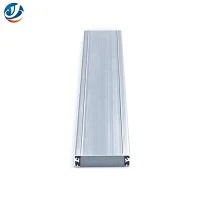
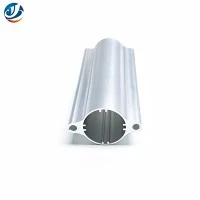


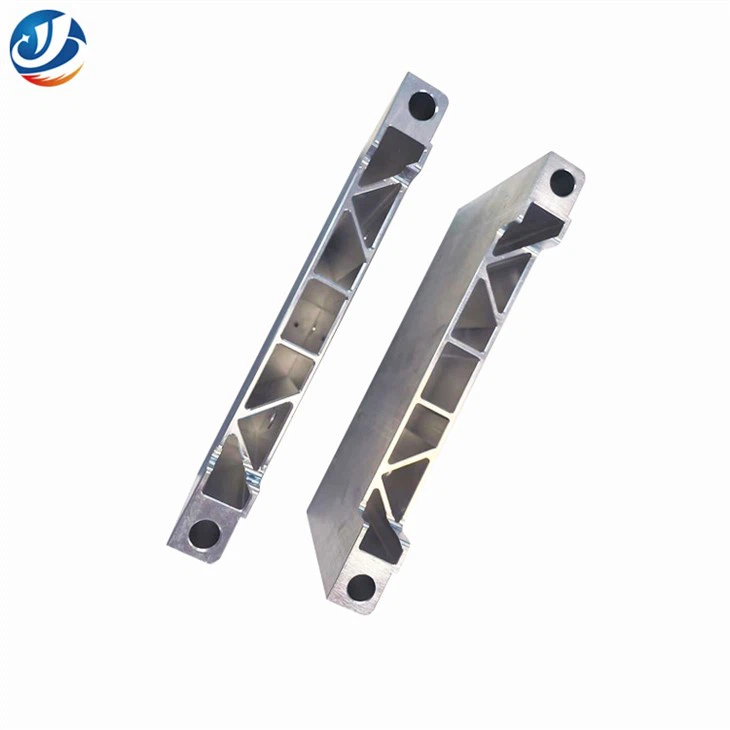
Aluminum End Plate For Battery Module

The core role of the "end support and functional integration carrier" of the Aluminum End Plate for Battery Module (the smallest energy unit composed of cells, connectors, shells, etc.) is to ensure the structural stability, cell safety and work efficiency of the module through physical fixation, force bearing, auxiliary heat dissipation and other functions.
Product parameters
| Products name | Aluminum End Plate for Battery Module |
| Material | Aluminum 6061.6063, etc |
| Size | OEM |
| Surface Treatment | Anodizing, electrophoresis, spraying, polishing, grinding |
| Electrical connection | Some end plates are integrated with copper-aluminum composite bar design to achieve low resistance conductivity, while taking advantage of the lightweight characteristics of aluminum to reduce the overall weight. |
| Heat dissipation structure | The surface of the end plate is designed with heat dissipation fins or channels, which are coordinated with heat dissipation fans, liquid cold plates and other components to form an efficient heat dissipation system, saving space and cost. |
| Molding Process | Supports various processes such as extrusion, die casting, and machining, which can make complex shapes to meet customized needs. |
| Installation method: | Bolt-on type: connected to the module frame by bolts, easy to disassemble and maintain. Snap type: Quick installation design, suitable for standardized modules, improve assembly efficiency. |
| Material cost | The cost of aluminum alloy is lower than that of composite materials such as carbon fiber, and the processing performance is excellent, reducing the cost of mold development and production. |
| Recyclability | Recycling rate of aluminum alloy exceeds 90%, meeting environmental requirements and helping enterprises achieve carbon neutrality goals. |
| Temper | O,H12,H13,H14,H16,H18,H24,H32,H34,H19,H38,G36,F,H111,H112,H192,H392,H393,H321 etc |
| Application | Heat exchange, Radiator, Condenser, Evaporator,Kitchenware, food and chemical products processing and storage devices Aircraft fuel tanks, oil pipe, rivets, wire; Cans cover, car body panels, steering plates, stiffeners, brackets and other components; |
drawings

W10025

W10024

W10023

W10022

W10021

W10013


Carefully selected materials
Aluminum profile is used, the surface does not crack or blister, is sturdy and easy to use, and has high gloss. High hardness, good corrosion resistance, and durability.
Good electrical and thermal conductivity
It can be used as a component of equipment such as battery board trays, effectively improving the operating efficiency and service life of the equipment.
Product has a smooth surface
Good spraying technology and chemical technology, the surface treatment is flat and burr-free, using brushing oxidation, polishing, etc., process treatment, not easy to fade.
Rugged and customizable
Aluminum End Plate for Battery Module has strong corrosion resistance, good heat dissipation performance, and good extrudability, and customers can also customize it according to the size they need.
Product Schematic Diagram

1.Cell compatibility
Square cells: Adopt a flat structure with stiffeners (such as 4-6mm thickness), which is tightly fixed to the cell through bolts or cable tie slots to prevent displacement.
Pouch cells: It is necessary to design exhaust pressure relief holes (such as oblique holes perpendicular to the expansion direction of the battery cell) to avoid pressure accumulation and deformation of the module; At the same time, an integrated insulation plate (e.g. polyamide PA) prevents short circuits in the tabs.
Cylindrical cells: The end plate needs to reserve locating pins or buckles to ensure that the cells are neatly arranged, typical cases such as the 280Ah module uses 169.5×175×19.5mm aluminum profile end plates, which are fixed by laser welding.
2.Functional integration
Heat dissipation design: Set up a deflector or embed thermally conductive silicone on the surface of the end plate, and use the high thermal conductivity of aluminum (200-240W/(m・K)) to direct the heat to the liquid cold plate and reduce the temperature difference of the module (recommended ≤5°C).
Electrical integration: Integrated voltage collection line buckles, BMS mounting positions, and copper bar fixing holes to reduce the number of parts. For example, the end plate of a soft package module fixes the square nut through a plastic insulation board to realize the rapid assembly of the positive and negative copper bars.
Installation compatibility: The universal end plate can be adapted to different sizes of cells by adjusting the spacing of the positioning holes (e.g., ±5mm), reducing the cost of mold development.
Company strength
R&D and innovation
Yida company usually has a professional R&D team, which is committed to product R&D and innovation, and constantly introduces new products and technologies to meet market demand.
Advanced production technology
It has advanced production equipment and technology, such as extruders, cutting machines, surface treatment equipment, etc., to ensure the quality and performance of aluminum profiles.

Strict inspection and testing
Usually a perfect quality control system has been established, and strict inspection and testing of raw materials, production process, finished products, etc., to ensure that the product quality meets customer requirements.
Provide a full range of services
It has a complete service network, including pre-sales consultation, in-sale service, after-sales support, etc., to provide customers with a full range of service support.
Hot Tags: aluminum end plate for battery module, China aluminum end plate for battery module manufacturers, suppliers, factory
You Might Also Like


Send Inquiry