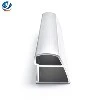
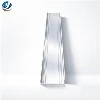
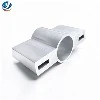
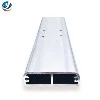
Aluminum profiles are aluminum bars that are processed through melting and extrusion to obtain aluminum materials with different cross-sectional shapes. So, compared to traditional mechanical manufacturing materials, what advantages do aluminum profiles have?
Compared with traditional mechanical manufacturing materials such as carbon steel and stainless steel, using high-strength industrial aluminum extrusion profiles has the following advantages:
1. Simple manufacturing process: It only requires designing, cutting/drilling, and assembling; whereas traditional materials typically go through a complex process including designing, cutting/drilling, welding, sandblasting/surface treatment, coating, and anodizing.
2. Reusable materials: Since components made from industrial aluminum profiles do not undergo thermal welding during the entire manufacturing process, all parts can be easily disassembled, and all materials and accessories can be reused. In contrast, traditional materials are rarely reused due to cutting deformation and high dismantling costs.
3. Time-saving: The simple manufacturing process can save a significant amount of labor costs; especially when rework is required due to manufacturing errors, it can save several times the labor compared to using traditional materials.
4. High manufacturing precision: Since the process does not involve thermal welding, the materials do not deform, resulting in high assembly accuracy. Traditional materials that require thermal welding inevitably experience deformation, which affects the final assembly precision.
5. Attractive appearance: Equipment made from industrial aluminum profiles has a more modern appearance, and its unique anodized coating is more durable and stable than various existing painting methods.