

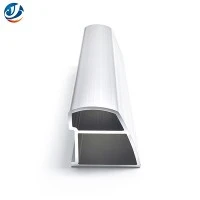
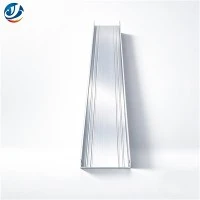
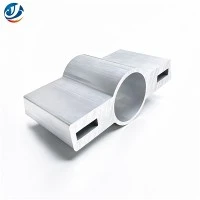
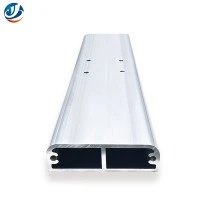


Aluminium Extrusions Round Tube

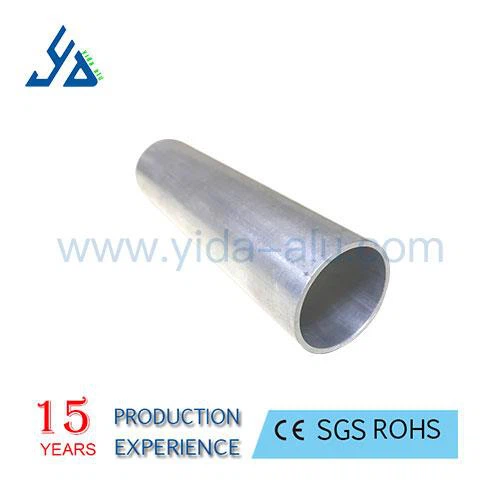
Aluminum Extrusions Round Tube is formed in one step using advanced hot extrusion technology. It has uniform internal structure, stable dimensional accuracy, and excellent mechanical properties. It is an ideal material for structural components, transportation pipelines, heat dissipation components, and decorative frames in many industries.
Product parameters
| Products name | Aluminium Extrusions Round Tube |
| Material | Aluminium 6061, 6063, 5052, etc. |
| Size | OEM |
| Color | Silver, champagne, gold, black, bronze,etc. |
| Surface treatment | Anodizing, wood grain finish, powder coating, sandblasting, electrophoretic coating, wire drawing, polishing, etc. |
| Process | Extrusion , Roll straightening, Cutting , Drilling , Tapping, CNC Milling, Deburring |
| Tensile strength | 160MPa - 310MPa (depending on aluminum alloy model). |
| Hardness | 60 - 90 HB (Brinell hardness). |
| Mechanical processing | Drawing, polishing, sandblasting, etc., suitable for different textures |
| Lead Time | 7-15 days (standard); 20-30 days (custom). |
| MOQ | 100 pcs |


Material selection
Aluminum Extrusions Round Tube has different mechanical properties and corrosion resistance, and also has good bending properties. It is easy to install and transport, and can meet the installation needs of various application scenarios.
01
Corrosion resistance
The natural oxide film on the surface can provide basic anti-corrosion properties. When combined with surface treatments such as anodizing, it can further resist salt spray, moisture and chemical corrosion.
02
Processing performance
Supports various secondary processing such as CNC drilling, milling, bending, tapping, and welding. The processing deformation rate is low and it is suitable for the production and manufacturing of complex structural parts.
03
Flexible customization
In addition to standard off-the-shelf specifications, the product's outer diameter, wall thickness, alloy grade, heat treatment status, and surface treatment can be fully customized to meet project needs from micro electronic components to building structures.
04
Products Description


一. Core Hot Extrusion Production Process
1 Raw Material Preparation, Melting and Casting
Aluminum ingots and alloy elements that meet the national standard purity are selected, and are smelted into liquid aluminum at a high temperature of 720-760°C in a smelting furnace. The impurity content is controlled through refining, degassing, and slag removal processes, and then cast into cylindrical aluminum cast rods.
2 Homogenization Treatment
Aluminum billets are fed into a homogenizing furnace for high-temperature homogenization treatment. This process eliminates intragranular segregation inside the billets, distributes alloying elements uniformly, improves extrusion workability, and enhances the consistency of mechanical properties in the final products.
3 Die Design and Preheating
Precision extrusion dies (porthole dies or piercing mandrel dies) are custom-engineered to match the outer diameter and wall thickness specifications of the round tube. Dies are made of H13 tool steel and treated with vacuum quenching to guarantee strength and wear resistance. Before extrusion, the die is preheated to 450–500℃ to ensure uniform metal flow, extend die service life, and avoid surface tearing defects caused by cold dies.
4 Hot Extrusion Forming (Core Process)
The aluminum billet is heated to a plastic state at 400–500℃, loaded into the extrusion press container, and forced through the die cavity at a constant speed under high pressure applied by a hydraulic ram, forming a continuous hollow round tube profile in a single pass.
Porthole die extrusion: cost-efficient and highly productive, suitable for conventional structural and decorative round tubes;
Seamless extrusion with piercing mandrel: weld-free with high pressure-bearing capacity, suitable for high-strength scenarios such as hydraulic systems and high-pressure pipelines.
Temperature and extrusion speed are monitored and adjusted in real time throughout the process, dynamically calibrated to alloy grade and wall thickness to ensure product surface finish and dimensional accuracy.
5 On-line Quenching and Cooling
Immediately after exiting the die, the round tube undergoes quenching cooling. Forced air cooling, water mist cooling or spray cooling is selected based on alloy grade and performance requirements. Rapid cooling locks the alloy strengthening phases within the solid solution, laying the foundation for subsequent heat treatment while preventing deformation of the high-temperature profile.
6 Stretching and Straightening
Cooled profiles typically exhibit minor bending, torsion and residual internal stress. A stretcher applies quantitative stretching and straightening to correct straightness and roundness, relieve residual internal stress, improve dimensional stability, and prevent deformation during downstream processing or end use.
7 Cut-to-Length Cutting
Long profiles are cut to customer-specified lengths using precision sawing equipment, delivering flat, burr-free cuts with length tolerance controlled within ±0.5mm.
8 Age Hardening Heat Treatment
Artificial aging is performed according to the target temper condition (T5, T6, etc.):
T5 temper: artificial aging applied directly after extrusion cooling - simple process, moderate cost, medium strength;
T6 temper: solution treatment + quenching + artificial aging - achieves maximum strength and hardness, suitable for high-load structural components.
The aging furnace maintains precise temperature control to ensure uniform hardness and mechanical properties across the entire production batch.
二. Supporting Surface Treatment Processes
Diversified surface treatments are available to match application scenarios and appearance requirements, enhancing corrosion resistance, wear resistance and decorative performance:
Anodizing Film thickness ranges from 5μm to 25μm, available in natural, black, silver and custom colors. A dense aluminum oxide film forms on the aluminum surface, greatly improving corrosion and wear resistance. It is the most widely used surface treatment for industrial and outdoor applications.
Powder Coating Available in matte, glossy and textured finishes with a wide color palette. The coating features strong adhesion, excellent weather resistance, UV resistance and salt spray tolerance, ideal for architectural decoration, outdoor equipment and similar scenarios.
Electrophoretic Coating Delivers a uniform, smooth film with excellent leveling, outstanding corrosion protection and high gloss, mostly used for decorative round tubes with strict requirements for appearance and corrosion resistance.
Mechanical Surface Finishing Includes brushing, polishing, sandblasting, shot blasting and other processes to achieve distinct surface textures, meeting functional needs such as decoration, anti-slip, and primer preparation for subsequent coating.
三. Secondary Deep Processing Processes
To fulfill one-stop procurement demands, a full range of secondary deep processing services are offered:
CNC precision machining: drilling, milling, turning, tapping, chamfering, etc., with tolerance up to ±0.05mm;
Forming processes: bending, flaring, necking, knurling, etc.;
Assembly support: pre-assembly with matching connectors to deliver ready-to-use components.
FAQ
Q:Why do you use 6000 series aluminium extrusion alloy?
A: 6000 series aluminium extrusion alloys are well suited to fabrication such as welding, are versatile and hard-wearing enough for use in a variety of commercial and industrial applications, and offer good corrosion resistance and formability.
Hot Tags: aluminium extrusions round tube, China aluminium extrusions round tube manufacturers, suppliers, factory, Aluminum Hollow Round Tube, Aluminium Alloy Round Tube, Aluminium Half Round Tube, Extruded Aluminum Rail, Aluminium Extrusions Round Tube
You Might Also Like



Send Inquiry